


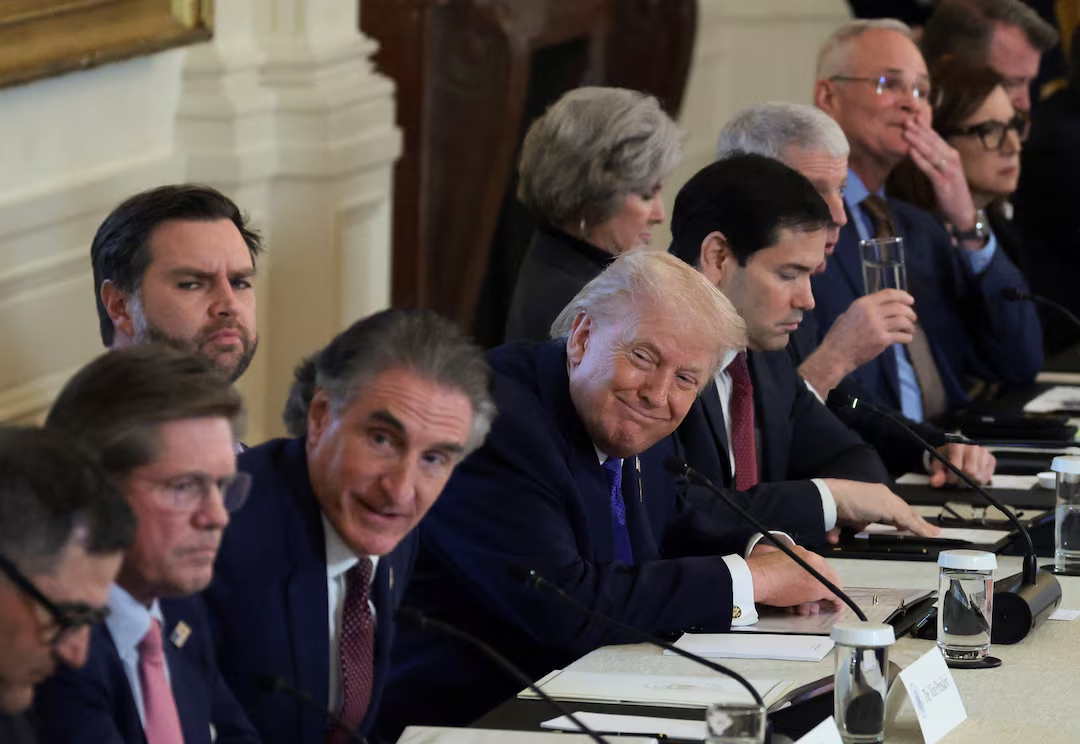
United States President Donald Trump met with senior executives from some of the world’s largest oil companies at the White House on Friday, urging them to commit as much as $100 billion to revive Venezuela’s struggling energy industry and dramatically boost oil output.
Trump has placed oil at the center of his strategy toward the South American nation following the January 3 operation in which US forces seized Venezuelan leader Nicolás Maduro in an overnight raid in Caracas.
“American companies will have the chance to rebuild Venezuela’s decaying energy infrastructure and eventually push production to levels never seen before,” Trump said at the start of the meeting.
The president was joined by top executives from Exxon Mobil, ConocoPhillips, and Chevron, along with other industry leaders. Trump said the administration would decide which firms would be allowed to operate in Venezuela under the new framework.
Oil supply and enforcement measures
Trump highlighted a deal with Venezuela’s interim leadership to supply 50 million barrels of crude oil to the United States, noting that many US refineries are specifically designed to process Venezuelan crude. He said shipments were expected to continue without a set end date.
“One of the benefits for the United States will be even lower energy prices,” Trump said.
Meanwhile, US authorities have continued intercepting Venezuelan oil tankers to enforce an embargo, announcing the fifth seizure on Friday. Administration officials said Washington intends to maintain control over Venezuela’s oil sales and revenue streams to ensure compliance with US priorities, including efforts to curb corruption and drug trafficking.
Some Democratic lawmakers have criticized the approach as coercive, while energy analysts have warned that ongoing political uncertainty could deter long-term investment.
Industry hesitation and past losses
Despite the administration’s push, major oil companies remain cautious. Firms including Chevron, Vitol, and Trafigura are competing for US licenses to market existing Venezuelan crude, but broader investment commitments have been slow.
At the White House meeting, Exxon chief executive Darren Woods described Venezuela as currently “uninvestable,” citing the company’s history in the country.
“Our assets were seized twice,” Woods said. “To return again would require very significant changes.”
Exxon and ConocoPhillips exited Venezuela nearly two decades ago after the government nationalized their assets. Chevron, however, remains the only major US oil producer still operating in the country. Vice Chairman Mark Nelson said Chevron is committed to continued investment under the right conditions.
Several smaller independent firms and private-equity-backed companies were also invited to the meeting. Many executives praised Trump’s Venezuela policy and said they were prepared to invest and help market the country’s oil.
Production decline and financing options
Venezuela, a member of OPEC, holds the world’s largest proven oil reserves but currently contributes only about one percent of global supply. Years of underinvestment have sharply reduced output from a peak of 3.5 million barrels per day in the 1970s to roughly a third of that level today.
Trump said the US would guarantee both physical and financial security for companies investing in Venezuela, though he did not provide specifics.
Earlier on Friday, Energy Secretary Chris Wright told Fox News there was a “real possibility” the US Export-Import Bank could be used to help finance large oil projects, potentially lowering risks for investors.
Trump said discussions with oil executives are aimed at securing firm commitments.
“We have to get them to invest, and then we have to get their money back as fast as possible,” he said. “After that, the benefits can be shared between Venezuela, the United States, and the companies involved.”