


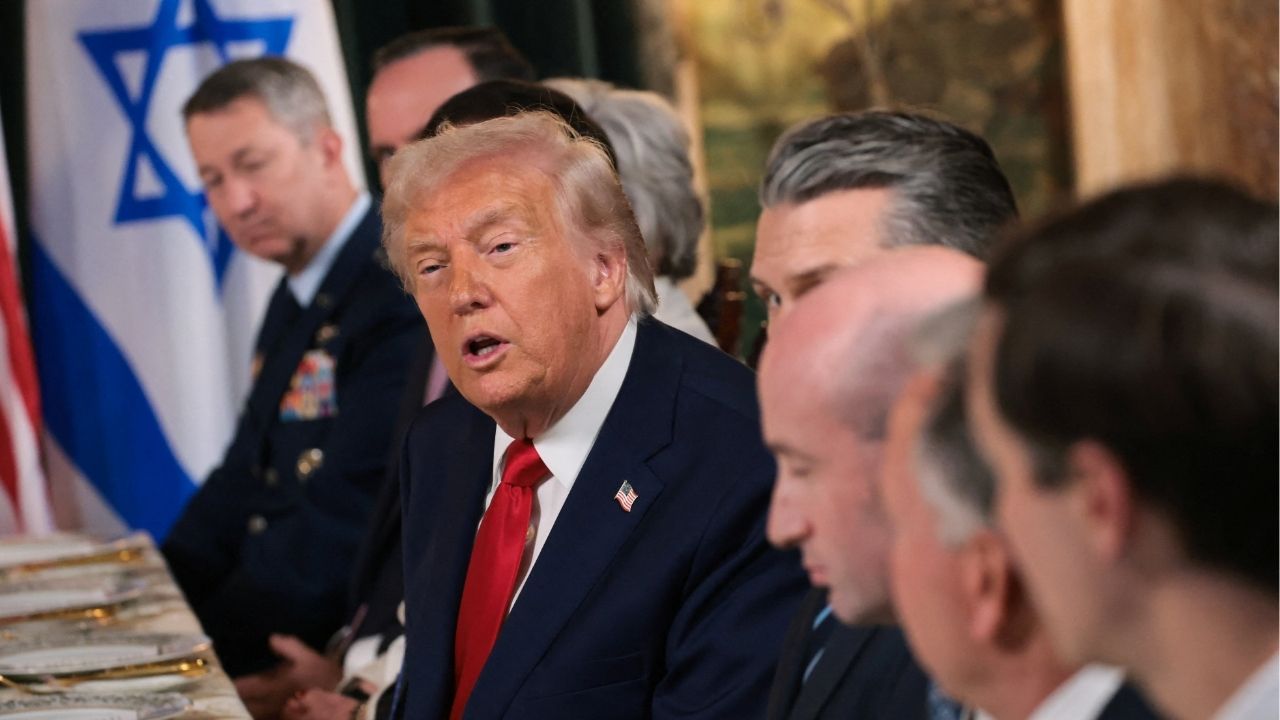
U.S. President Donald Trump on Monday delivered renewed warnings toward Iran and reiterated calls for Hamas to disarm, following a high-profile meeting with Israeli Prime Minister Benjamin Netanyahu at Trump’s Mar-a-Lago estate.
Speaking to reporters alongside Netanyahu, Trump said the United States could back further military action against Iran if it resumes rebuilding ballistic missile systems or nuclear-related programs. He also issued a direct message to Hamas, warning of serious consequences if the group does not disarm.
Iran Buildup Claims Surface, Evidence Not Publicly Provided
Trump told reporters he had seen open-source reports suggesting Iran may be trying to rebuild weapons capacity after a major U.S. strike in June 2025 affected several Iranian military-linked sites.
“If they’re rebuilding, they’re not using the places we hit last time — they may have shifted elsewhere,” Trump said.
“We can track what they’re doing, and I hope the reports are wrong. I don’t want to waste fuel sending B-2 bombers for nothing.”
Trump referenced the long travel distance required for B-2 operations, describing it as a logistical challenge he does not want to repeat without certainty. He did not publicly share documents or intelligence confirming the allegations.
Iran has not issued public comments responding to Trump’s remarks at the time of publication.
Hamas Disarm Pressure Reiterated as Gaza Talks Continue
Trump said his discussions with Netanyahu also centered on advancing Gaza’s ceasefire roadmap, originally brokered by the U.S. in October 2025. The plan includes phased withdrawals, aid access, and long-term security arrangements.
He urged Hamas to follow through on disarmament commitments, a point he says Israel has already accepted in negotiation channels.
“If they do not disarm as discussed, there will be consequences — and we want to avoid that,” Trump said.
When asked about next steps if Hamas refuses, he repeated: “There will be a heavy price.”
Hamas has not issued public comments responding to Trump’s remarks at the time of publication.
Nuclear Plant and Territorial Issues Still Unresolved in Diplomacy
Zelensky has previously said that the Zaporizhzhia nuclear plant and territorial questions around Donbas remain among the last unresolved negotiation points between Kyiv and Moscow. No major progress was publicly reported after the Florida talks.
U.S. officials say multilateral security guarantees for Ukraine could extend into 2026, while Russian diplomats have said negotiations will continue, despite disagreements over sequencing, port access, and military pressure rhetoric.

Aid Access Remains a Key Humanitarian Issue
Although a ceasefire began in October, local authorities and aid groups report that winter storms and displacement pressures have continued to disrupt daily life in Gaza camps. Humanitarian organizations have asked repeatedly for expanded access to shelter equipment, medical logistics, and essential supplies to prevent further deterioration in civilian conditions.
Diplomacy Also Touched on Syria and Security Coordination
Trump said the talks also included Syria, where Netanyahu expressed interest in maintaining stable borders. Trump added that the U.S. hopes for reduced escalation in the region, while encouraging continued diplomatic coordination between Gulf partners, Israel, and South Asian allies involved in energy-corridor security discussions.
Officials Urge Caution Over Framing and Intervention Language
Diplomacy scholars warn that using war-on-terror comparisons in drug or nuclear diplomacy without confirmed multilateral agreements could expand mistrust, potentially derailing negotiations instead of accelerating them.
Process Continues Without Immediate Conclusions
Both Washington and regional partners reiterated that diplomacy will continue, though no short-term outcome has been publicly finalized, and the next stage of talks is expected to move into 2026.