


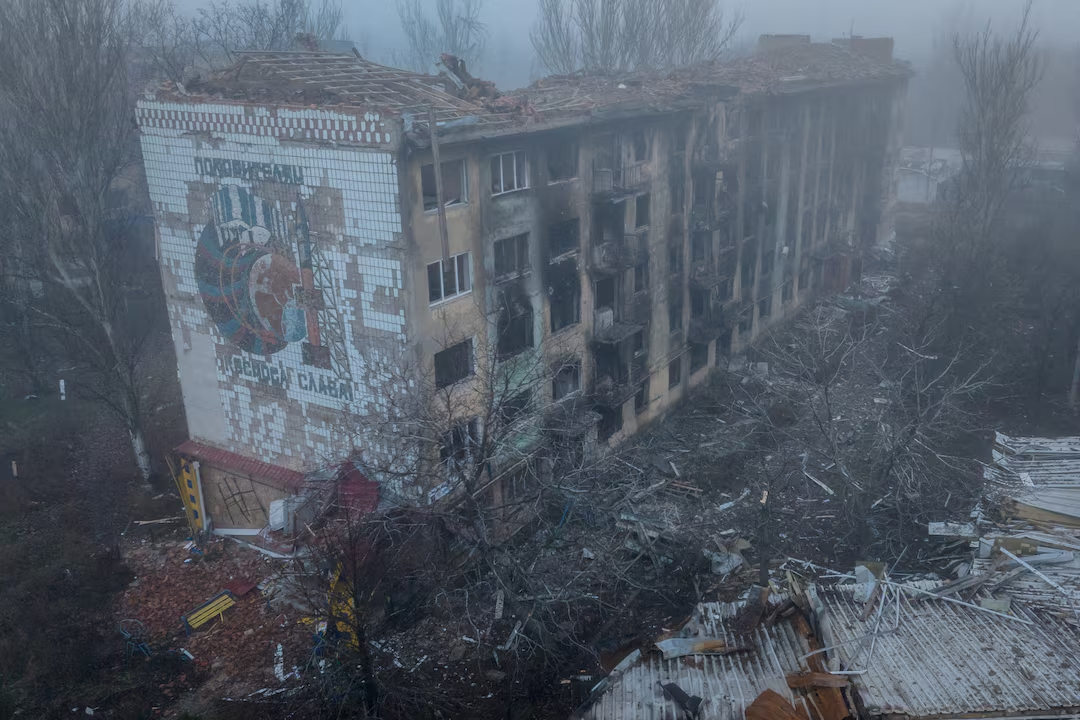
Europe is increasingly concerned that Donald Trump renewed effort to end the war in Ukraine could lead to a settlement that fails to punish or weaken Russia as many European leaders had hoped, potentially putting the continent’s security at greater risk.
Some European officials also fear they may have to accept a deepening economic partnership between Washington and Moscow — a scenario that many EU governments and NATO consider extremely worrying.
Although Ukraine and European allies pushed back against several points in the original 28-point U.S. plan — criticized for leaning heavily toward Russia — any future agreement still carries significant risks for Europe.
However, Europe has limited power to shape the negotiations. It was not represented during the U.S.-Ukraine talks in Florida over the weekend, and it will again be watching from the sidelines as U.S. Special Envoy Steve Witkoff meets Russian President Vladimir Putin on Tuesday.
“I sense that Europeans are slowly realizing an ugly deal may eventually come,” said Luuk van Middelaar of the Brussels Institute for Geopolitics.
“Trump clearly wants a deal — and he approaches it with great-power logic: ‘We are the U.S., they are Russia.’”
RUBIO TRIES TO CALM EUROPEAN FEARS
U.S. Secretary of State Marco Rubio has said Europe will be included in discussions about NATO’s future role and the EU’s place in a settlement.
But European diplomats remain uneasy. They warn that every part of a potential agreement — from territorial concessions to U.S.-Russian economic cooperation — will directly impact European security.
The initiative has also reignited doubts about U.S. commitment to NATO.
Despite Trump reaffirming Article 5 earlier this year after Europe agreed to boost defense spending, Rubio’s decision to skip this week’s NATO foreign ministers’ meeting has raised further concerns.
German officials worry Russia may target a NATO country next.
Their intelligence services warn Moscow is “keeping open the option of war against NATO” by 2029.
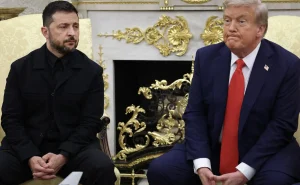
EUROPE FEARS TERRITORIAL CONCESSIONS WILL EMPOWER PUTIN
European governments see no sign Putin is ready to end the invasion. But if he does, they fear any deal that does not fully respect Ukraine’s borders will embolden Moscow to attack again.
It now appears likely that any peace agreement would allow Russia to retain control of territory it has seized — whether or not borders are officially redrawn.
The Trump administration has also not rejected Russia’s claims over the remaining parts of Donbas.
Additionally, Trump and other U.S. officials have openly discussed potential business opportunities with Russia once the war ends — a prospect that deeply alarms European leaders.
EU foreign policy chief Kaja Kallas warned:
“If Russia’s military stays this large and well-funded, they will use it again.”
EUROPE STRUGGLES TO EXERT INFLUENCE
Despite providing around 180 billion euros in aid to Kyiv since 2022, Europe still has little influence over peace talks.
The EU has one major bargaining tool — billions in frozen Russian assets — but member states have failed to reach agreement on using them to fund a crucial 140-billion-euro loan for Ukraine.
In an effort to show military commitment, France and Britain have promised to deploy a limited “reassurance force” as part of postwar security guarantees.
Russia rejected the proposal, and even if the force were deployed, it would remain modest and require U.S. backing.
Claudia Major from the German Marshall Fund summed it up:
“Europeans are paying the price for not investing in military power for years.
They are not at the table because — in Trump’s words — they don’t have the cards.”