


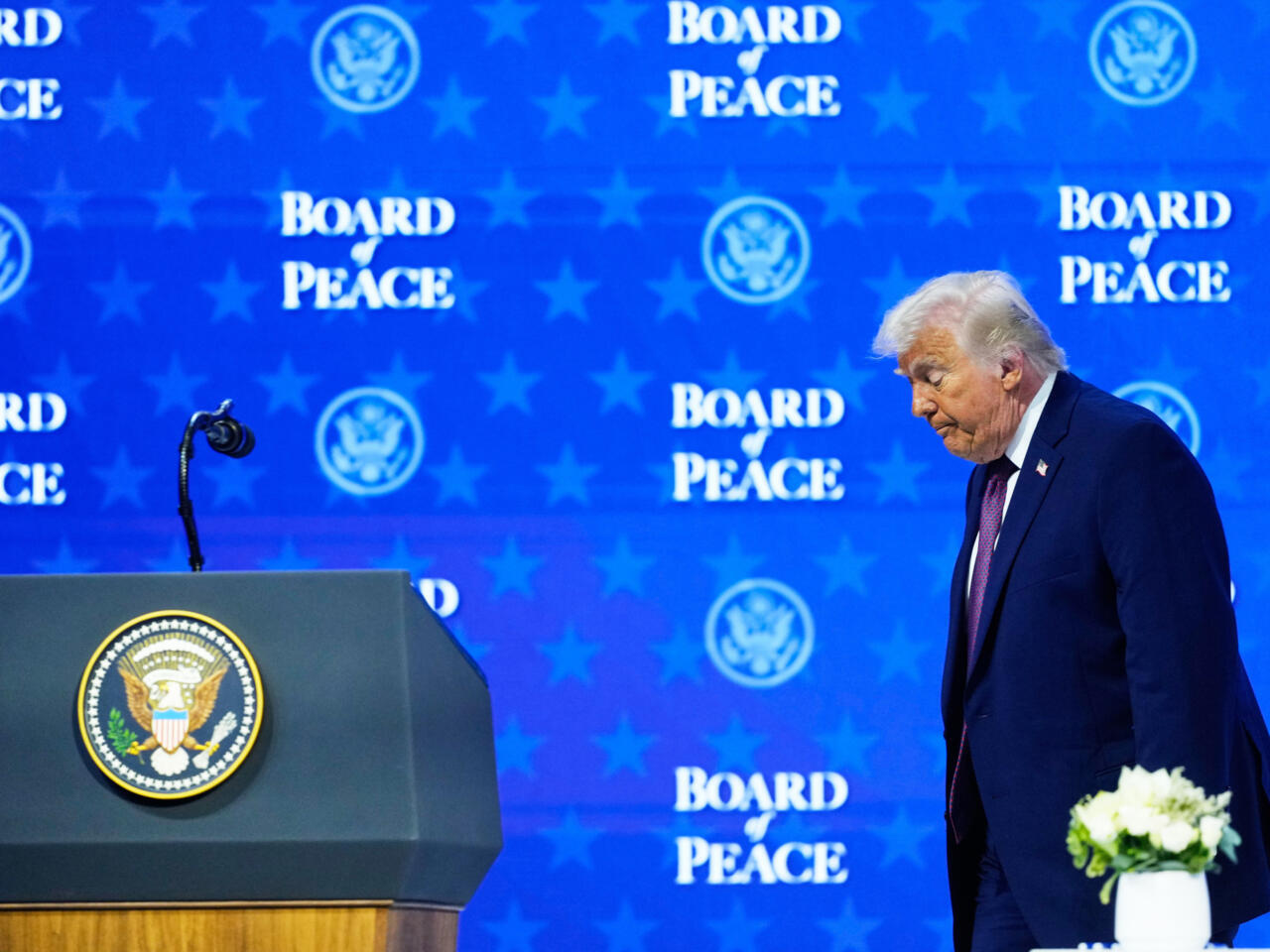
United States President Donald Trump is set to host the first official meeting of his proposed “Board of Peace” in Washington on Thursday, bringing together representatives from participating countries to outline reconstruction plans for Gaza and broader conflict-resolution initiatives.
The gathering will take place at the US Institute of Peace and is expected to include delegates from multiple regions, although several Western allies have chosen to keep a cautious distance from the initiative. Despite that hesitation, a number of Middle Eastern and other nations have confirmed their participation in the inaugural session.
Trump, who has positioned himself as the board’s indefinite chair, has promoted the initiative as a major international platform with long-term global ambitions. In public remarks, he described the body as having significant potential and suggested it could evolve into a highly influential international forum.
Core Agenda: Gaza Reconstruction and Stabilisation Plans
The primary focus of the meeting will be a large-scale reconstruction strategy for Gaza, which has suffered extensive destruction during the ongoing conflict. According to officials, the United States is expected to announce a funding commitment of approximately $5bn from member states to support humanitarian relief and rebuilding efforts in the territory.
Another key discussion point will be the proposed creation of an International Stabilization Force, designed to oversee security arrangements in Gaza under a broader plan previously outlined by the Trump administration. That framework reportedly includes a phased ceasefire, the disarmament of Hamas, and the establishment of a transitional governance structure to manage Palestinian territories during a rebuilding period.
The Board of Peace concept was formally introduced on the sidelines of the World Economic Forum in Davos earlier this year. During that event, Jared Kushner, a senior member of the initiative, presented a reconstruction vision that included large-scale infrastructure and development projects in Gaza, a proposal that has drawn criticism from some advocacy groups.
Trump has also stated that several member countries have pledged personnel to support both stabilization forces and local policing mechanisms aimed at maintaining security in Gaza. Rebuilding the territory is expected to be a massive undertaking, with United Nations estimates suggesting costs could reach around $70bn.
Expanding Mandate Beyond Gaza
Although initially framed as a body to help mediate the Gaza conflict and support regional stability, the board’s scope has reportedly expanded to include broader global peace initiatives. Trump has indicated that the organisation’s long-term mission could extend beyond Gaza to address conflicts in other regions.
This expanded charter has sparked debate among analysts, some of whom view the initiative as potentially overlapping with or rivaling existing international institutions. Critics have questioned the structure, membership selection, and long-term governance of the body.
Participation: Who Is Attending and Who Is Holding Back
The White House has invited around 50 countries to join the Board of Peace, with dozens expressing interest and over two dozen designated as founding members. However, participation remains uneven, particularly among European nations.
The European Union has opted not to join as a member, citing concerns about the board’s mandate and structure. Several major European countries, including France, Germany, the United Kingdom, and Spain, have declined membership invitations. Nevertheless, the EU is sending a representative as an observer, signaling limited engagement while maintaining diplomatic caution.
Some individual European states, such as Hungary and Bulgaria, have agreed to participate as members, while others including Italy, Greece, Cyprus, and Romania are sending observers. Religious leadership, including the Pope, has also reportedly declined involvement, emphasizing that major international crises should continue to be addressed through established global institutions like the United Nations.
Middle Eastern and Asian Engagement
In contrast to Western hesitation, several Middle Eastern countries have joined the initiative. Delegations from Israel, the United Arab Emirates, Morocco, Bahrain, Egypt, Saudi Arabia, Turkiye, Jordan, Qatar, and Kuwait are expected to attend the Washington meeting.
Analysts suggest that regional participation may reflect both pragmatic diplomacy and a desire to maintain strong relations with Washington, while also engaging in discussions related to Gaza’s future and regional stability.
From Asia and Oceania, multiple leaders and representatives are also attending, including officials from Central Asia, Southeast Asia, and Pakistan. Indonesia’s president and Pakistan’s prime minister are among those travelling to Washington, while some countries, such as India and Australia, are still reviewing their positions on membership. New Zealand has declined its invitation, citing the need for further clarity regarding the board’s structure and objectives.
Domestic and Political Implications
For several participating nations, involvement in the Board of Peace carries domestic political significance. Governments in countries such as Indonesia and Pakistan, where public support for the Palestinian cause is strong, may face internal scrutiny over decisions related to Gaza’s governance and reconstruction.
Policy decisions emerging from the Washington meeting could therefore have diplomatic as well as domestic repercussions, particularly if proposals involve international security forces or administrative arrangements in Palestinian territories.
As the inaugural session begins, the Board of Peace is positioned as a new diplomatic platform centered on Gaza’s reconstruction and conflict resolution, though questions remain about its long-term role, global legitimacy, and alignment with existing international frameworks.