


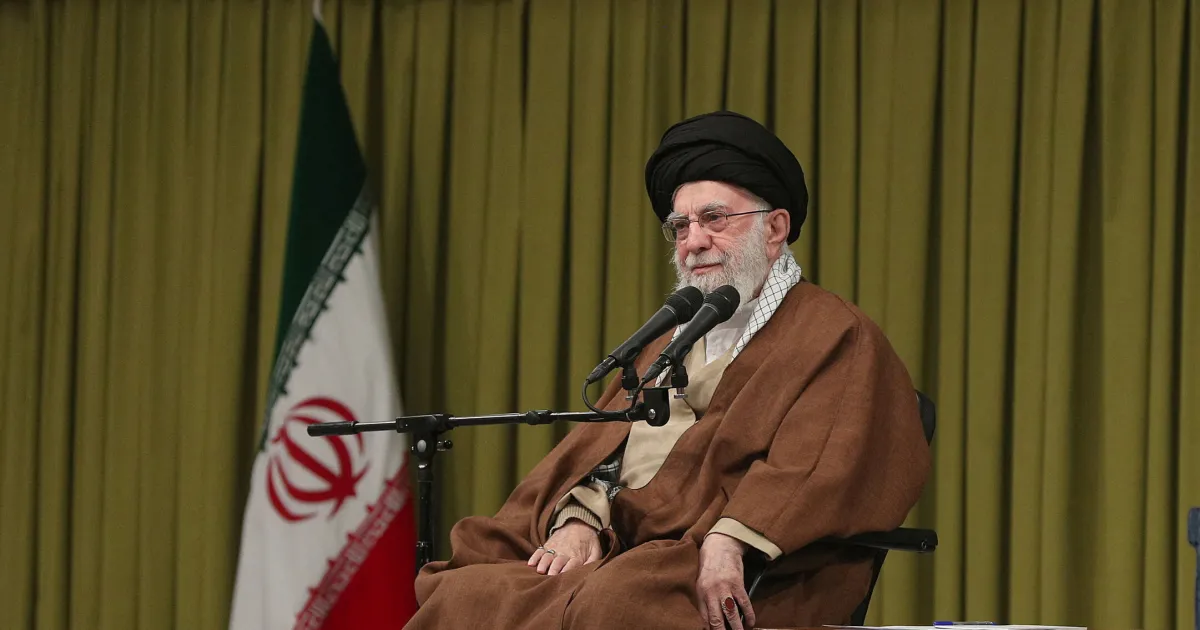
The U.S. detention of Venezuelan President Nicolás Maduro has triggered global political shock, drawing warnings from both Israeli and Latin American leaders and intensifying concern over a potential confrontation with Iran.
Shortly after Washington confirmed that Maduro had been extracted to the United States, Israeli politician Yair Lapid urged Iran’s leadership to closely observe the developments unfolding in Venezuela.
“Iran’s leadership should watch this situation carefully,” Lapid said, framing the event as a moment that may influence Washington’s stance toward other sanctioned governments.
The comment came less than a week after U.S. President Donald Trump hosted Israeli Prime Minister Benjamin Netanyahu in Florida, where he issued renewed warnings to Iran, saying the country could face retaliation if it rebuilds its missile or nuclear programs.
Analysts Warn the Raid Reduces Diplomatic Pathways
Political observers say that while Venezuela and Iran face U.S. pressure for different reasons, the removal of Maduro through a high-profile raid has raised concerns that Washington may adopt similar tactics elsewhere in the hemisphere.
Jamal Abdi, president of the National Iranian American Council (NIAC), said the intervention introduces a new instability factor.
“A shift toward unchecked foreign actions creates a less predictable world, and the risk of conflict grows,” Abdi said.
He also suggested that Maduro’s detention could prompt Iran to pursue stronger military deterrence strategies, which could, in turn, increase the chance of military escalation if regional tensions spike further.
Senior foreign policy analyst Negar Mortazavi, from the European Institute of Peace, described the current diplomatic climate as bleak.
“Iran does not appear interested in negotiations that signal full surrender,” she said, noting that regional stakeholders are increasingly positioned on opposing paths that may lead to conflict rather than compromise.
U.S. Officials Insist the Mission Was Not a War Move
Secretary of State Marco Rubio defended the extraction as a law enforcement operation rather than a military invasion.
“This was not an invasion. This was not a war against Venezuela. This was a detention tied to an existing legal warrant,” Rubio told international media Sunday.
He also pointed to economic pressure points, including a continued restriction on Venezuelan oil tankers, as part of Washington’s broader strategy to influence the country’s next political steps.
Cuba Mourns Losses, Venezuela Rejects U.S. Claims of Oversight
Cuba—one of Maduro’s closest sanctioned allies—declared national mourning after reporting that 32 Cuban nationals had died during the same raid. Havana said the deaths would likely influence future diplomatic relations across the region.
Despite Trump’s statement that the United States would temporarily oversee Venezuela’s transition, top Venezuelan officials have publicly rejected the claim.
Venezuela’s Supreme Court named Delcy Rodríguez as interim national leader over the weekend, though she reiterated that Maduro remains the country’s only president.
“There is only one president here, and his name is Nicolás Maduro,” Rodríguez said Saturday, standing alongside civilian leaders and senior military commanders.
She also alleged that the U.S. action carried political undertones tied to oil interests, a concern echoed by some American lawmakers.
U.S. Domestic Politics Divided Ahead of Midterms
Republican lawmakers have largely praised the raid, while Democratic leaders questioned the legality of removing a foreign head of state without congressional authorization.
House Minority Leader Hakeem Jeffries said Sunday that the operation “went beyond narcotics enforcement” and described it as a military intervention carried out without congressional approval.
Senate Minority Leader Chuck Schumer echoed similar concerns, criticizing the administration’s shift toward foreign military actions, despite Trump’s long history of opposing such interventions.
Both Democrats signaled they would support legislation aimed at restricting further military action in Venezuela unless Congress grants approval.
Oil Markets, Iran, and Strategic Bandwidth
The energy question has also taken center stage.
Abdi noted that Venezuelan oil could theoretically provide a temporary buffer if conflict disrupts exports in the Gulf region, but cautioned that “it is too early to judge whether this will materialize.”
Other critics, including Republican Congresswoman Marjorie Taylor Greene, argued that Venezuelan oil access could help stabilize global energy markets ahead of future geopolitical friction involving Iran, though analysts stress the outlook remains uncertain.