


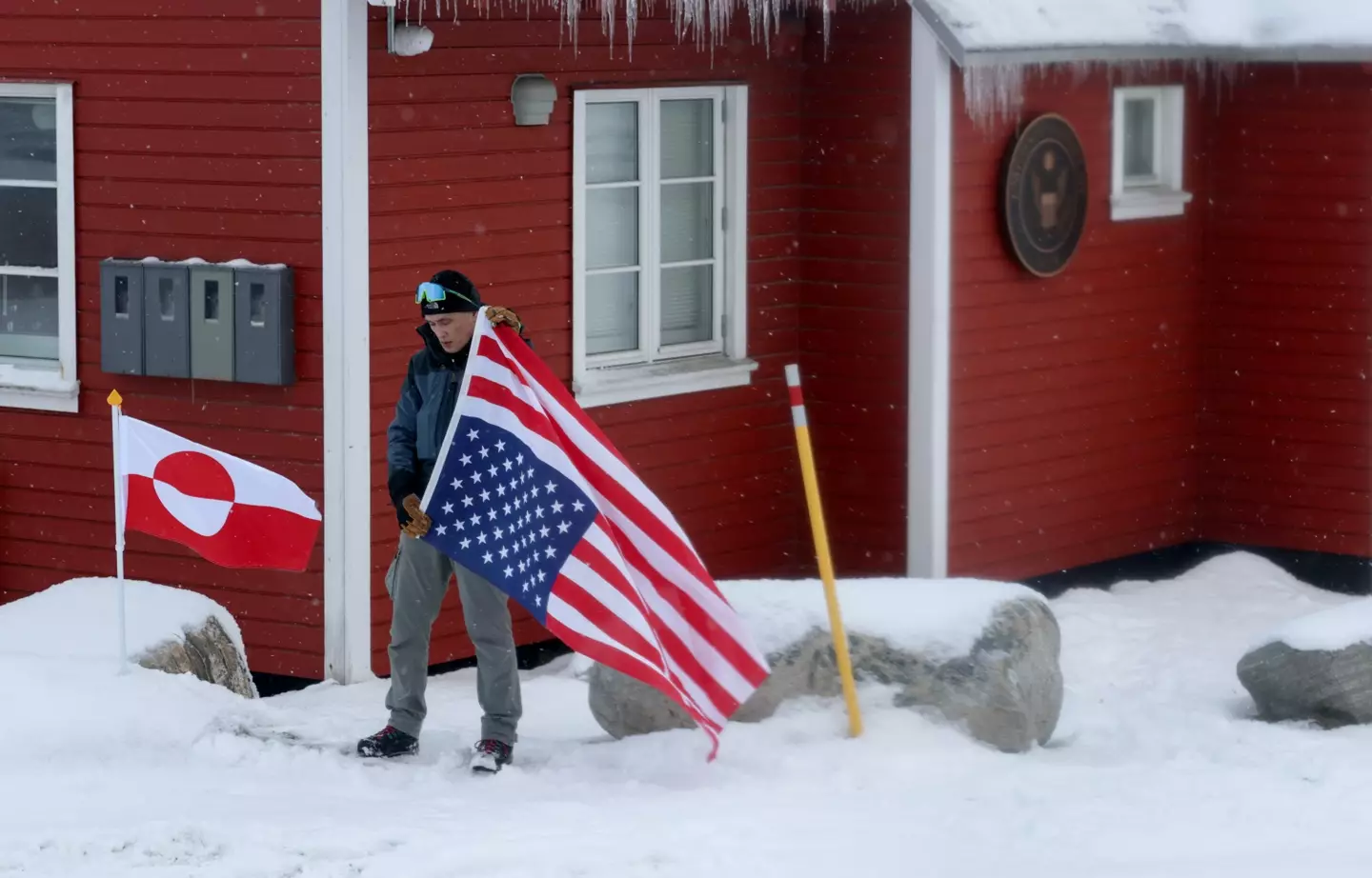
Donald Trump said he is weighing the use of new trade tariffs against countries that resist his push for the United States to take control of Greenland, intensifying a dispute that has already strained relations with key allies.
Speaking at the White House on Friday, Trump said the United States “needs Greenland” for national security reasons and suggested economic pressure could be used to bring other countries in line with Washington’s position.
“I may put a tariff on countries if they don’t go along with Greenland,” Trump said during an event focused on healthcare policy. He added that tariffs had previously proven effective in forcing cooperation from other governments on issues such as lowering prescription drug prices in the United States.
The comments marked the first time Trump publicly floated the idea of using import taxes to advance his Greenland ambitions. He did not specify which countries could be targeted or what legal authority would be used to impose such measures.
Strategic Value of Greenland
Trump has repeatedly argued that U.S. control of Greenland would bolster American and allied security. The island, a semiautonomous territory of Denmark, sits at a strategic crossroads between North America and the Arctic and is considered vital for missile early-warning systems and maritime surveillance.
Greenland is also rich in natural resources, including oil, gas and rare-earth minerals that are critical to modern technologies and defense industries.
Despite Trump’s assertions, the proposal has met strong resistance. Denmark and Greenland have both rejected the idea, and a recent CNN poll found that only about a quarter of Americans support U.S. control of the island.
Strain on Alliances
Trump’s remarks have further unsettled Europe’s long-standing security architecture. By raising the prospect of the most powerful member of NATO acquiring territory from another alliance member, critics say the U.S. president risks undermining decades of transatlantic cooperation.
European leaders have reacted with alarm. Denmark has warned that any attack on Greenland would effectively signal the end of NATO, and earlier this week announced plans to expand its military presence on the island in coordination with allies.
Several European countries — including France, Germany, the Netherlands, Finland, Norway and Sweden — have since confirmed they are deploying military personnel to Greenland. Canada and France have also said they plan to open consulates in Nuuk, Greenland’s capital, in the coming weeks.
Diplomatic Efforts Continue
Earlier this week, Danish Foreign Minister Lars Løkke Rasmussen and Greenland’s foreign affairs minister Vivian Motzfeldt met with U.S. Vice President JD Vance and Secretary of State Marco Rubio in Washington.
Rasmussen described the talks as “frank but constructive,” though he acknowledged that fundamental disagreements remain. He said the sides agreed to establish a high-level working group to explore whether U.S. security concerns could be addressed while respecting Denmark’s sovereignty over Greenland.
Military Posture Unchanged
Despite Trump’s rhetoric, Danish military officials say cooperation with the United States remains intact. Major General Søren Andersen, head of Denmark’s Joint Arctic Command, told CNN that Denmark continues to invite U.S. forces to take part in military exercises on the island.
He said the Arctic Endurance mission is designed to deter Russian activity and safeguard NATO’s northern flank, adding that there is currently “no immediate threat to Greenland.”
Limits on Tariff Powers
Trump’s ability to impose sweeping, country-specific tariffs could soon face legal constraints. The U.S. Supreme Court is expected to rule on a landmark case that may narrow presidential authority over trade measures.
Even if the court restricts that power, analysts say Trump would still have alternative — though more limited — tools to raise tariffs.
For now, Trump’s comments have added a new economic dimension to an already volatile geopolitical dispute, raising fresh questions about the future of U.S. relations with its closest allies and the stability of the transatlantic alliance.