


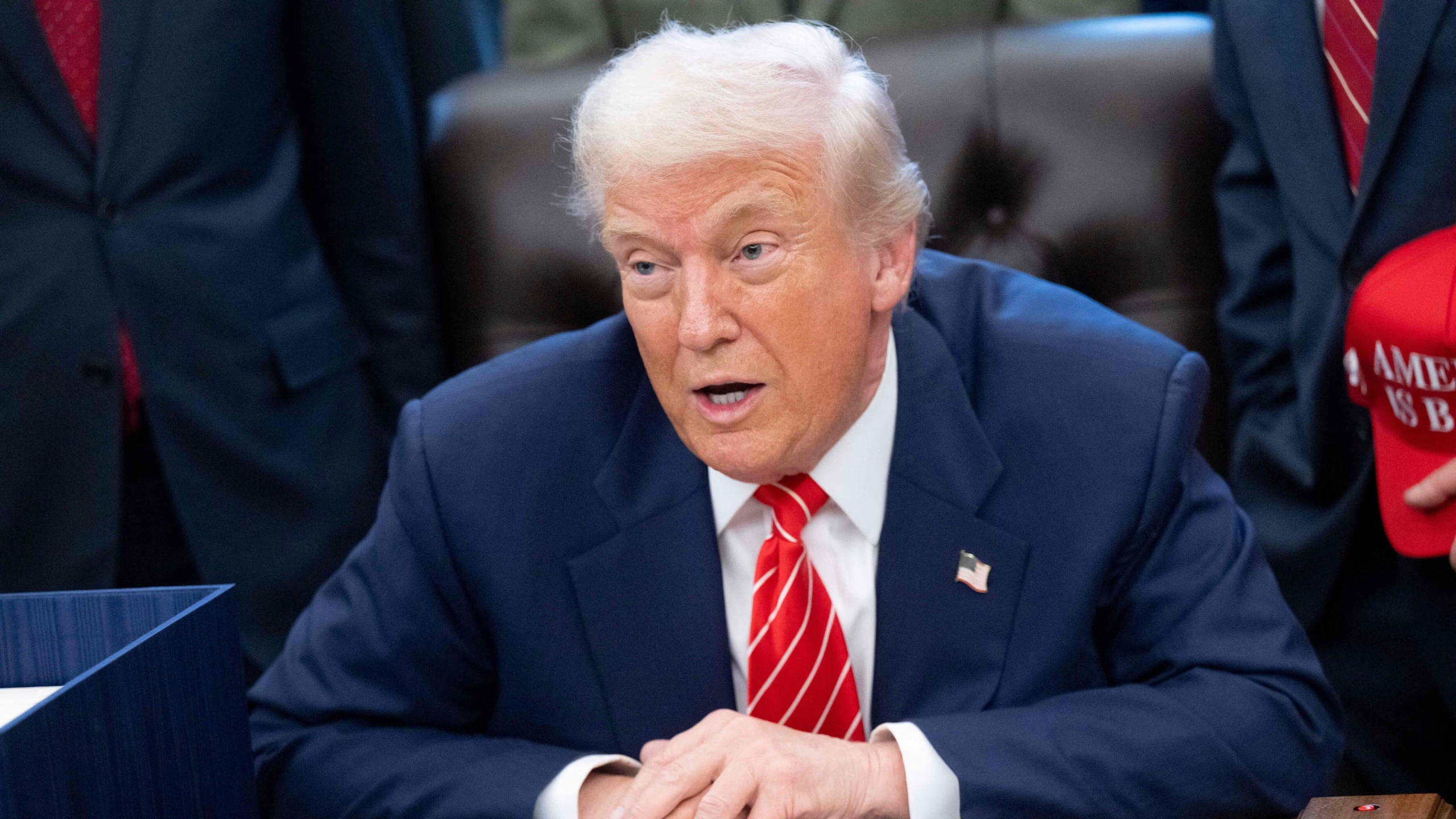
US President Donald Trump has confirmed that negotiations with Iran are ongoing to reduce tensions in the Gulf, even as the US military said it shot down an Iranian drone that approached an American aircraft carrier in the Arabian Sea.
Speaking to reporters at the White House on Tuesday, Trump said Washington was in discussions with Tehran “right now,” though he declined to disclose where the talks were being held.
“The talks are happening in many places,” Trump said. “They want to do something. We’ll see whether something comes out of it.”
He added that Iran had previously missed an opportunity for diplomacy and warned against a repeat of what he called “Midnight Hammer,” referring to US strikes last June on three Iranian nuclear facilities.
Rising Military Presence, Signs of De-escalation
Trump has been pressing Tehran to return to negotiations over its nuclear programme and has repeatedly threatened military action following Iran’s recent crackdown on anti-government protests.
Last week, Washington deployed the USS Abraham Lincoln to the region, intensifying concerns about a potential confrontation. The carrier strike group brought roughly 5,700 additional US troops and joined several destroyers and littoral combat ships already operating in the area.
Despite the military buildup, tensions have shown signs of easing in recent days as regional actors push for diplomatic solutions.
Earlier on Tuesday, Iranian President Masoud Pezeshkian said he had instructed the country’s foreign minister to seek negotiations with the US, provided the conditions were appropriate.
“These negotiations must be fair and equitable, conducted with dignity, prudence and expediency, and aligned with our national interests,” Pezeshkian said.
Drone Shot Down Near Carrier
The Iranian president’s statement came as US Central Command said a US fighter jet operating from the Abraham Lincoln shot down an Iranian drone.
CENTCOM said the Shahed-139 “aggressively approached” the carrier, which was sailing about 800 kilometres from Iran’s southern coast, and continued toward the ship despite US attempts to de-escalate the situation.
The drone was destroyed “in self-defence to protect the aircraft carrier and personnel on board,” the command said. No US service members were injured and no equipment was damaged.
Iranian authorities did not immediately comment. Iran’s Tasnim News Agency reported that contact had been lost with a drone in international waters after it transmitted data back to the Islamic Revolutionary Guard Corps, adding that an investigation was under way.
Separate Incident in Strait of Hormuz
CENTCOM also reported a separate incident hours later in the Strait of Hormuz, where IRGC forces allegedly harassed a US-flagged and US-crewed merchant vessel.
According to the US military, two IRGC boats and an Iranian Mohajer drone approached the tanker Stena Imperative at high speed and threatened to board it.
Iran’s Fars News Agency, citing unnamed officials, said the vessel had entered Iranian territorial waters without proper permits and left after being warned, without any security incident.
Talks Expected to Proceed
The incidents do not appear to have derailed plans for diplomatic talks expected later this week.
White House Press Secretary Karoline Leavitt told Fox News that Trump’s special envoy, Steve Witkoff, is still scheduled to hold discussions with Iranian officials.
Iranian officials said consultations were ongoing to determine the location of the talks, with Turkiye, Oman and other regional states offering to host.
The Associated Press reported that foreign ministers from several Gulf and regional countries may also attend if the talks proceed.
Qatar’s Foreign Ministry said it was working closely with regional partners to prevent escalation. “We are making the right contacts at the highest levels to play a positive role,” said ministry spokesman Majed Al Ansari.
Uncertain Path Forward
While Iranian officials have said they want talks to focus strictly on nuclear issues, Washington is reportedly seeking broader discussions that include Iran’s missile programme and regional alliances.
Analysts remain sceptical about the prospects for progress.
Alex Vatanka, a senior fellow at the Middle East Institute, told Al Jazeera that neither side appears ready to soften its core positions.
“Unless there is a significant shift in red lines by either Washington or Tehran, it’s hard to see how diplomacy alone can resolve this crisis,” he said, noting that the US is currently “flexing muscle” more visibly than in previous negotiations.