


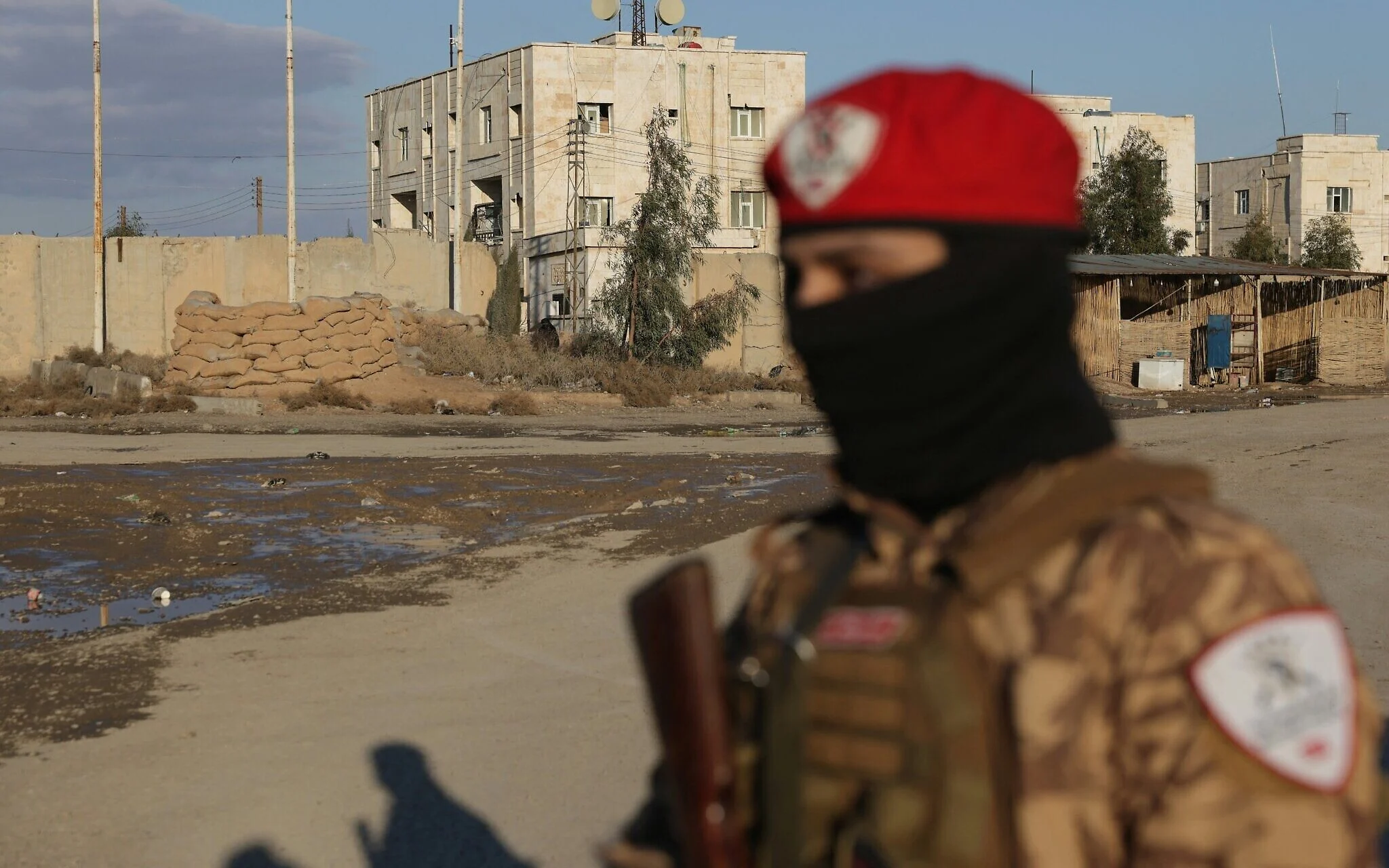
The Syrian government says it has taken control of al-Aqtan prison in the northeastern city of Raqqa, a facility holding a number of detainees linked to ISIL, following the withdrawal of Kurdish-led forces under a ceasefire agreement.
In a statement posted on Telegram on Friday, Syria’s Interior Ministry said officials from the Prisons and Correctional Facilities Administration had assumed responsibility for the prison. The officials have begun reviewing detainees’ conditions and examining case files, according to the state-run SANA.
Ceasefire Leads to Shift in Control
The prison transfer came as part of a four-day ceasefire between Syrian government forces and the Syrian Democratic Forces (SDF), which took effect late Tuesday. The truce followed a rapid advance by Syrian troops last week that saw them reclaim large areas previously held by the SDF.
Witnesses reported convoys of buses and vehicles carrying more than 1,000 SDF personnel leaving Raqqa. Syrian forces granted them safe passage to the Kurdish-majority city of Kobane near the Turkish border.
Syria’s military operations authority said SDF elements were also being transferred from the prison and nearby areas to Ain al-Arab, east of Aleppo, in accordance with the ceasefire terms.
Security Vacuum Quickly Filled
Reporting from Raqqa, Al Jazeera correspondent Zein Basravi said Syrian forces moved swiftly to fill the power vacuum left by the departing SDF.
Demining teams began clearing explosives and dismantling munitions inside the prison complex. Basravi described the handover as relatively smooth and said it marked a rare instance of acknowledged cooperation between Syrian forces and the SDF.
He noted that both sides publicly confirmed coordination to ensure the safe withdrawal of SDF fighters — a development he said was unusual after weeks of tension.
Calm Returns After Days of Tension
The prison, which had seen clashes earlier in the week, was calm by Friday, Basravi said. He contrasted the situation with chaotic scenes observed a day earlier, when crowds of civilians gathered outside barricades manned by Syrian soldiers while SDF fighters remained inside.
Some civilians attempted to breach the barriers, seeking information about relatives detained at the facility. Several families said they had not heard from loved ones for days and accused the SDF of wrongful detention.
One man, Mohammad Ali, told reporters his son had been detained at an SDF checkpoint while travelling to Hasakah, allegedly because he carried a photo of Syrian President Ahmed al-Sharaa.
Gunfire was heard in the distance during the standoff, according to journalists on the ground.
ISIL Detainees and International Pressure
During the unrest, US aircraft dispatched by CENTCOM were heard overhead as suspected ISIL detainees were transferred from northeastern Syria to Iraq. The move forms part of broader efforts to secure thousands of detainees amid instability at Kurdish-run detention sites.
With the prison now under government control, Syrian authorities face competing pressures. On one hand, Damascus is expected by the international anti-ISIL coalition — which Syria joined last year — to ensure that suspected fighters remain securely detained.
On the other, local families are demanding transparency and review of cases they say involve unjust detention under previous SDF control.
Officials Review Detainee Files
Basravi said a visit by senior officials to the prison on Friday, along with the Interior Ministry’s pledge to review detainee records, was viewed by locals as a positive step.
However, he warned that tensions could resurface if families remain without information about the condition or legal status of those held.
Broader Implications for Northeast Syria
Speaking from Beirut, analyst Armenak Tokmajyan said the SDF appeared to be negotiating in good faith, having been pushed into limited areas in northeastern Syria.
He cautioned, however, that the ceasefire remains fragile, with unresolved issues including governance, weapons control and the integration of Kurdish fighters into the Syrian state.
Tokmajyan said developments in the northeast are being closely watched by minority communities across Syria, including in the south, as they may shape whether the country moves toward a centralised system or one allowing regional autonomy.
“The military gains are significant for President al-Sharaa and his backers,” he said, “but the outcome will ultimately depend on how Kurdish forces and communities are reintegrated into Syria.”