


A series of attacks on commercial vessels in Gulf and Iraqi waters has raised fresh alarm over maritime security, after six ships were reportedly hit in incidents involving projectiles, suspected explosive boats and possible sea mines.
According to reports, two fuel tankers caught fire in Iraqi waters late on Wednesday after being attacked near the country’s southern oil terminals. The vessels were identified by Iraqi port officials as the Safesea Vishnu, sailing under the Marshall Islands flag, and the Zefyros, which one security source said was registered in Malta. Both ships had reportedly loaded fuel cargoes in Iraq before the incident.
Rescue efforts began soon after the attack. Iraqi officials said one crew member was found dead in the water, though it was not immediately known which ship the victim belonged to. Search teams continued looking for other missing seafarers as emergency crews worked around the burning vessels.
Farhan al-Fartousi, head of Iraq’s state-run ports company, said an Iraqi rescue boat pulled 25 crew members from the two ships. He also confirmed that both tankers remained on fire after the attack. Iraqi officials later described the incident as an act of sabotage and said it took place inside Iraqi territorial waters, calling it a serious breach of the country’s sovereignty.
Fuel Export Activity Disrupted After Attack
The strikes also disrupted activity at Iraq’s oil ports. Iraqi officials said operations at oil terminals were fully halted following the incident, although commercial ports were still functioning.
The developments came amid growing regional tension tied to the conflict involving Iran, the United States and Israel. Reports have increasingly focused on threats to vessels moving through the Gulf and the Strait of Hormuz, one of the world’s most important shipping lanes for oil and gas supplies.
Reuters reported that the attacks may have involved explosive-laden unmanned surface vessels, often described as drone boats. Such systems have become more widely known in recent years because of their effectiveness in naval warfare. The same report also said Iran had taken steps to block oil shipments moving through the Strait of Hormuz.
Fresh Claims Over Sea Mines in the Strait of Hormuz
The tension deepened further after Reuters, citing unnamed sources, said Iran had deployed around a dozen sea mines in the Strait of Hormuz. At the same time, US President Donald Trump said American forces had struck 28 Iranian vessels allegedly involved in laying mines.
The Strait of Hormuz remains one of the most sensitive waterways in the world, handling a major share of global oil and gas shipments. Any disruption there can quickly affect international shipping, energy markets and regional stability.
Iran’s Islamic Revolutionary Guard Corps, or IRGC, also reportedly warned that any vessel passing through the strait could become a target. That warning added to already mounting concerns among ship operators and maritime security groups.
More Ships Damaged Across the Region
The attacks were not limited to the two tankers in Iraqi waters. Early Thursday, the United Kingdom Maritime Trade Operations centre said a container ship was hit by an unidentified projectile about 35 nautical miles north of Jebel Ali in the United Arab Emirates. The strike caused a small fire, though all crew members were reported safe.
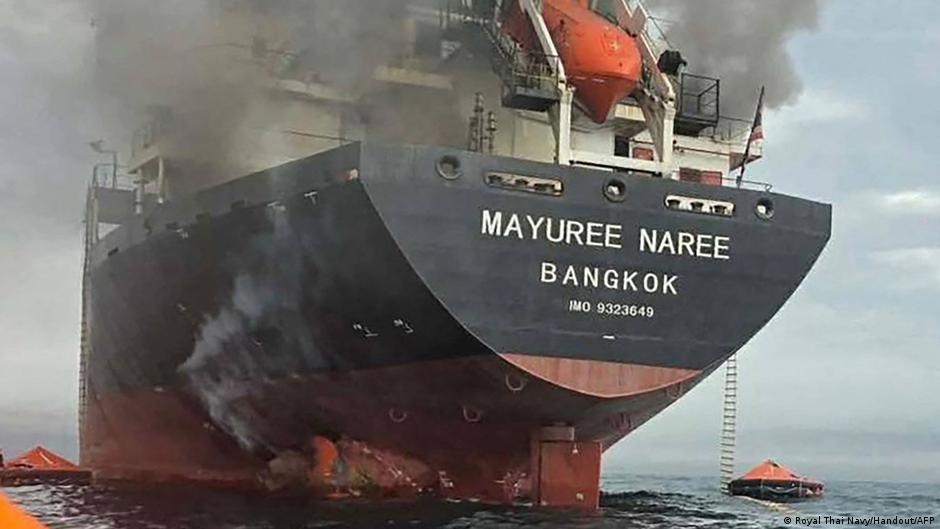
Another vessel, the Thai-flagged dry bulk ship Mayuree Naree, was hit by two projectiles of unknown origin while passing through the Strait of Hormuz on Wednesday. Its operator, Precious Shipping, said the attack caused a fire and damaged the engine room. The company also said three crew members were missing and were believed to be trapped inside the vessel at the time of the statement.
The remaining 20 crew members were evacuated safely and taken ashore in Oman. The company said it was working with the relevant authorities to locate and rescue the missing men.
In a further sign of escalation, the IRGC later said the Mayuree Naree had been fired on by Iranian forces. If confirmed, that would mark a rare case of the group publicly acknowledging a direct attack on a merchant vessel.
Other Commercial Ships Also Reported Hit
Two more commercial vessels also suffered damage in separate incidents. The Japan-flagged ONE Majesty was reportedly struck by an unknown projectile while anchored in Gulf waters northwest of Ras Al-Khaimah in the UAE. Maritime security firms said the ship sustained minor damage above the waterline, but its crew remained safe and the vessel continued operating.
The Star Gwyneth, a bulk carrier registered in the Marshall Islands, was also hit by a projectile northwest of Dubai. Maritime risk analysts said the ship’s hull was damaged, while the owner confirmed the strike hit the hold area. No injuries were reported, and the ship remained stable.
Shipping Fears Grow as Escort Requests Are Rejected
With attacks increasing, concern is spreading across the shipping industry. Reuters reported that the US Navy has declined repeated requests from commercial operators for military escorts through the Strait of Hormuz since the war involving Iran intensified. According to sources, the current level of risk is considered too high for naval escort operations at this stage.
The attacks on six vessels in just a short period underline how dangerous the Gulf has become for international shipping. As investigations continue and rescue operations remain underway, the situation is being watched closely by governments, shipping firms and energy markets around the world.