


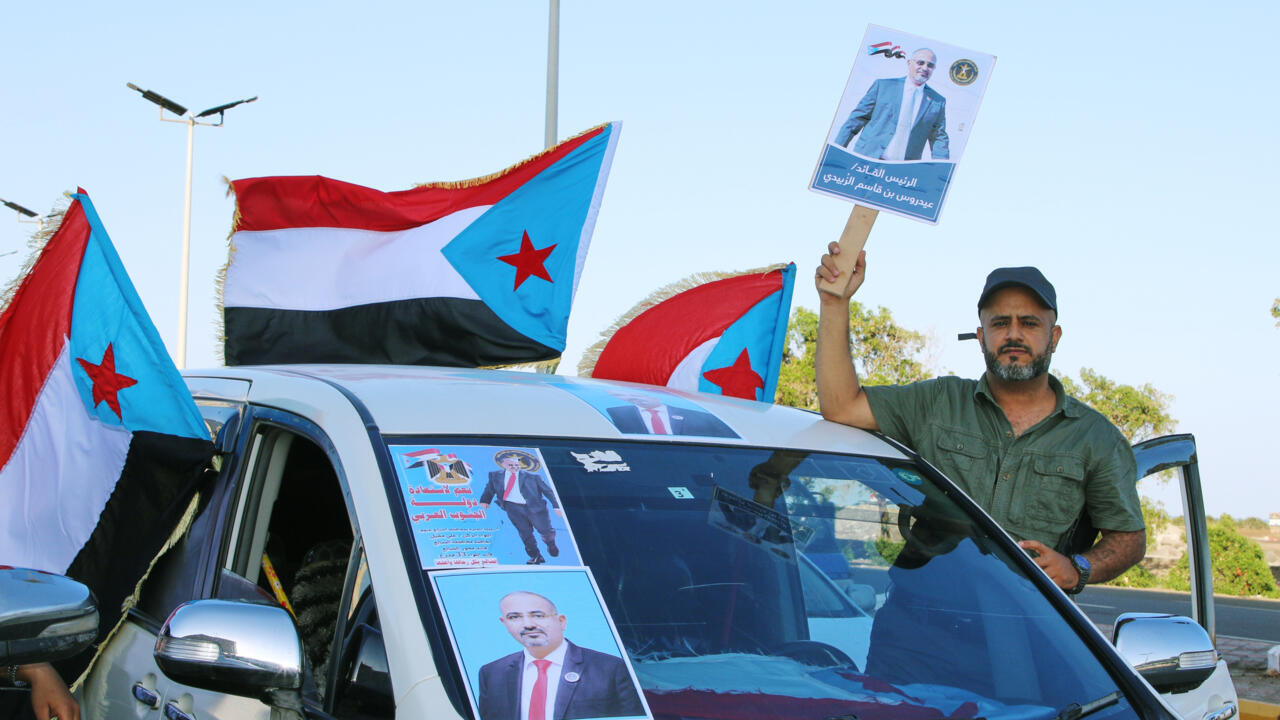
Saudi Arabia has formally welcomed a request from Yemen’s Presidential Leadership Council (PLC) to host a peace forum in Riyadh, as internal divisions in southern Yemen continue to intensify.
In a statement issued on Saturday, the Saudi foreign ministry encouraged all southern Yemeni factions to take part in the proposed forum. Riyadh said the initiative is aimed at producing a shared roadmap for fair and sustainable solutions to the southern political dispute, locally referred to as the “southern cause.”
Earlier on Saturday, PLC Chairman Rashad al-Alimi publicly called for southern leaders, political actors, and tribal figures to gather in Riyadh for mediation talks. The announcement was relayed by Saba News Agency, Yemen’s state media outlet.
According to Saba, al-Alimi stressed the legitimacy and strategic importance of the southern issue, while rejecting any proposal that advances one group at the expense of another. He warned that excluding key stakeholders would only deepen instability.
STC Offensive Triggers Alarm
The latest diplomatic push comes after the Southern Transitional Council (STC), a separatist-aligned political and military group, launched a wide territorial operation across Hadramout and al-Mahra provinces. Together, the two regions account for nearly 50 percent of Yemen’s total land area.
Hadramout, Yemen’s main oil-producing province, shares a long border with Saudi Arabia. The region holds historical value for the kingdom, as numerous prominent Saudi families trace ancestral roots there. STC control over the province last month was seen in Riyadh as a possible national-security threat.
The STC remains part of the anti-Houthi coalition in southern Yemen, but it has increasingly promoted plans for a separate southern state. The ambition has caused repeated friction with the PLC-led Yemeni government, which is internationally recognized.
UAE–Saudi Tensions Escalate
Saudi Arabia has accused the UAE, a member of the same coalition, of supplying arms to STC forces. Riyadh warned that the STC’s military campaign risks fragmenting Yemen into three zones of control, raising concerns about border security and long-term political cohesion.
The UAE has denied the allegations. In a separate statement on Saturday, Abu Dhabi said it supports Saudi Arabia’s security interests and expressed “deep concern” over the recent escalation. The UAE urged Yemeni groups to prioritize restraint, wisdom, and dialogue.
Casualties Reported, Military Exit Announced
On Friday, the STC claimed that Saudi-aligned coalition air operations killed 20 of its fighters. Additional air strikes in the region reportedly caused 20 fatalities in total, according to STC sources.
Late on Friday, the UAE announced the full return of its military personnel from Yemen, signaling a potential easing of friction with Saudi Arabia. The Emirati defense ministry said the withdrawal follows a strategic decision to conclude counter-terrorism missions and was coordinated to ensure personnel safety.
However, the STC unilaterally declared it intends to hold a referendum on southern independence within the next two years.
Analysts Warn of Wider Impact
Former Yemeni diplomat and parliament member Ali Ahmed al-Amrani dismissed the STC referendum plan, stating it “does not represent national consensus” and fails to address the broader Yemeni crisis.
Political analyst Hisham al-Omeisy described the situation as a “proxy conflict within a proxy conflict,” warning that continued fighting could redraw power maps in the south and destabilize neighboring states.
“This is prolonged fighting,” al-Omeisy said, noting that rival factions are attempting to gain territory and political leverage simultaneously. He warned the consequences could extend beyond Yemen, potentially affecting Gulf security dynamics and key maritime routes.
European Institute of Peace researcher Hisham Al-Omeisy echoed the concern, warning that southern clashes could mark the start of a more dangerous phase, driven by territorial competition and fractured alliances.