


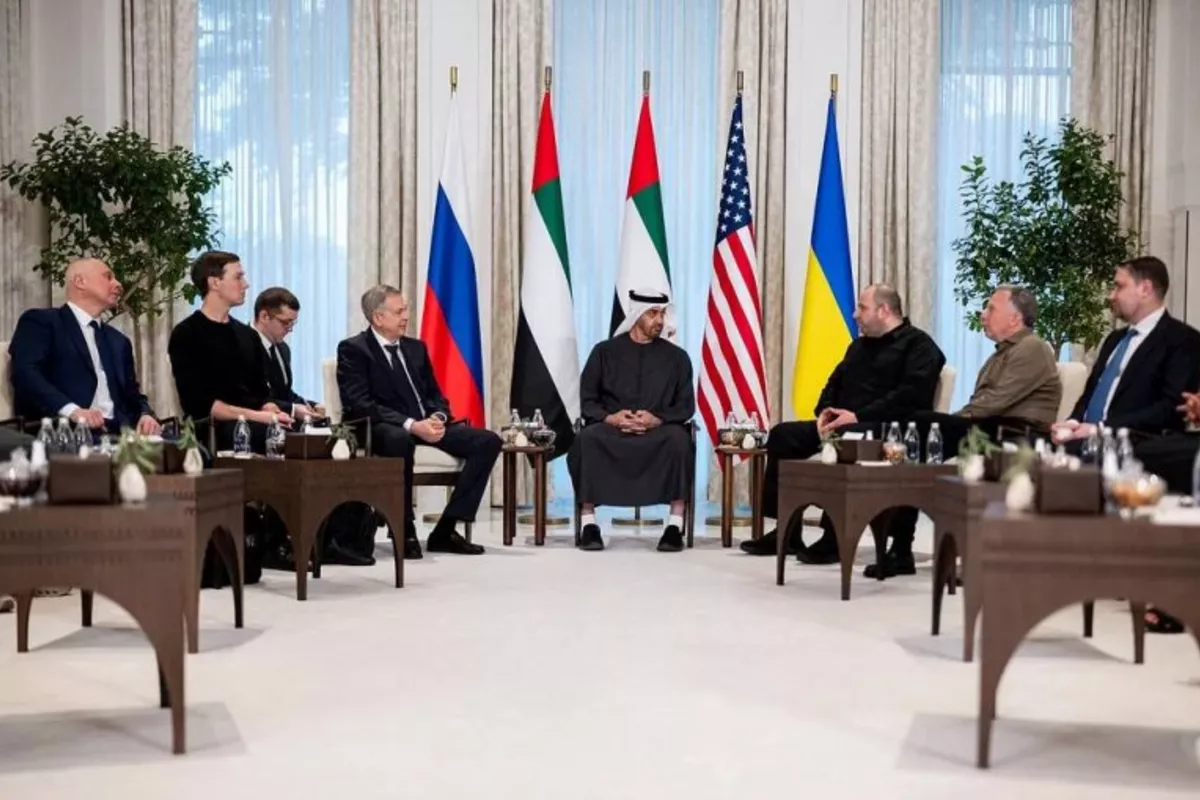
Negotiators from Russia and Ukraine have started a second round of United States-brokered peace discussions in the United Arab Emirates, as efforts to end Moscow’s nearly four-year war against Ukraine face renewed strain from ongoing fighting.
Delegations from both countries arrived in Abu Dhabi on Wednesday morning, according to Russian state media and a spokesperson for Ukraine’s negotiating team. It was not immediately clear when representatives from the United States would join the talks.
“Another stage of negotiations has begun in Abu Dhabi,” said Rustem Umerov, head of Ukraine’s delegation, writing on social media. He said Kyiv’s aim remains “a just and lasting peace”.
The two-day trilateral meetings come at a tense moment, with Ukrainian President Volodymyr Zelenskyy accusing Moscow of breaching a US-mediated understanding to halt attacks on energy infrastructure.
Fighting Overshadows Diplomacy
In the days leading up to the talks, Russia launched a large wave of drone and missile strikes against Ukraine’s power grid, cutting electricity and heating in sub-zero temperatures and dimming hopes for diplomatic progress.
“Every such strike shows that nothing has changed in Moscow,” Zelenskyy said on Tuesday. “They continue to rely on war and destruction and do not take diplomacy seriously.”
He added that Ukraine’s negotiating approach would be adjusted in response, without providing further details.
Reporting from Kyiv, Al Jazeera correspondent Audrey MacAlpine said many Ukrainians are hoping the Abu Dhabi talks could lead to another pause in attacks on energy facilities.
However, she noted that expectations remain low after “very little progress” was achieved during the first round of discussions.
Stalled Progress Since First Round
The initial talks, held in the UAE last month, marked the first public, direct negotiations between Moscow and Kyiv on a proposal put forward by US President Donald Trump to bring the conflict to an end — Europe’s deadliest war since World War II.
Despite sustained pressure from Washington over the past year, major differences remain unresolved as the fourth anniversary of Russia’s full-scale invasion approaches.
Core Disputes Remain
The most contentious issue is territory in eastern Ukraine, large portions of which are occupied by Russian forces. Security guarantees to prevent future Russian attacks are also a major sticking point.
Moscow is demanding that Ukraine withdraw its troops from parts of the Donbas region, including heavily fortified cities rich in natural resources, and is seeking international recognition of territory it has unilaterally annexed.
Kyiv has rejected those terms, proposing instead that the conflict be frozen along current front lines and ruling out any unilateral pullback.
Russia’s delegation is led by Igor Kostyukov, while Ukraine’s team is headed by Umerov, who also leads the country’s National Security and Defence Council.
Russian presidential envoy Kirill Dmitriev met US officials in Florida over the weekend. While details were not disclosed, US special envoy Steve Witkoff described those discussions as “productive and constructive”.
Battlefield Pressure Continues
Russia currently occupies about 20 percent of Ukrainian territory and has warned it could attempt to seize the remainder of the Donetsk region if talks collapse.
Ukraine has countered that conceding land would only embolden Moscow and insists it will not accept any agreement that fails to deter future aggression.
Public opinion in Ukraine largely opposes a peace deal that trades territory for an end to the fighting, according to recent surveys.
On the battlefield, Russian forces have made gradual gains at heavy human cost, while Kyiv’s military remains under pressure. Zelenskyy has continued urging Western allies to increase military aid and intensify economic and political pressure on the Kremlin.
For now, diplomacy in Abu Dhabi proceeds under the shadow of continued warfare — and with expectations on both sides firmly restrained.