


Russia confirmed on Friday that it fired its hypersonic Oreshnik missile at Ukraine overnight, striking targets in western parts of the country close to the Polish border. The attack came at a sensitive moment, as diplomatic efforts to reach a peace settlement show little progress.
Military analysts say the decision to deploy the Oreshnik appears intended not only to hit Ukrainian targets, but also to send a warning signal to Ukraine’s European and Western backers.
Below is an overview of what happened, why the missile’s use is significant, and why the escalation matters beyond the battlefield.
What happened
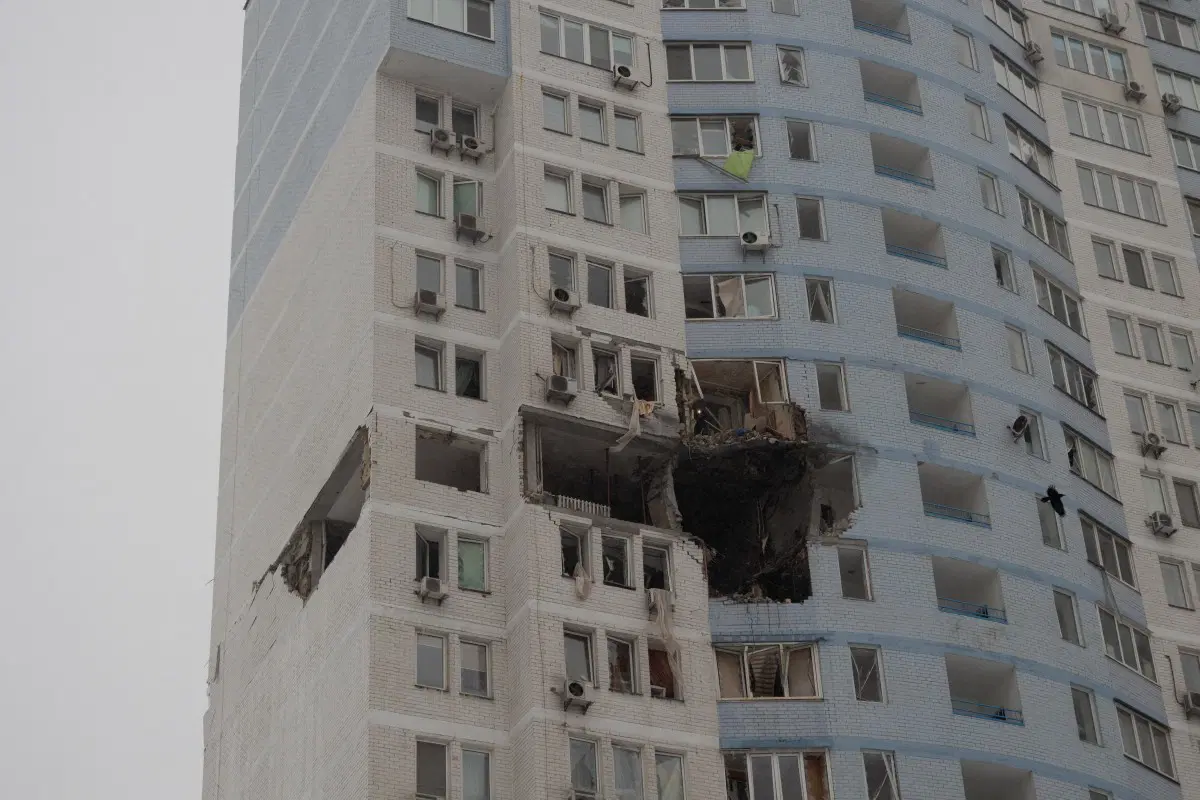
Moscow said the strike formed part of a broader wave of attacks on Ukrainian energy facilities and drone production sites in and around Kyiv.
Russian officials claimed the assault was retaliation for an alleged Ukrainian drone attack on the residence of President Vladimir Putin in Novgorod in December 2025. Ukrainian authorities denied carrying out such an operation, a denial echoed by US President Donald Trump, who said there was no evidence the incident occurred.
Ukrainian officials reported that the strikes killed four people and wounded at least 22 in Kyiv.
In addition, critical infrastructure in the western city of Lviv was hit by a high-speed ballistic missile travelling at roughly 13,000km/h, according to Mayor Andriy Sadovyi and Ukraine’s air force, which said it was still working to identify the exact weapon used.
Where was the Oreshnik strike
Russia said the Oreshnik missile was used in the attack on Lviv. The city lies about 550km west of Kyiv and roughly 70km from the Polish border, placing the strike uncomfortably close to NATO territory.
What is the Oreshnik missile
The Oreshnik—named after the Russian word for hazel tree—is an intermediate-range ballistic missile capable of carrying multiple warheads that descend in streaks of light.
As a hypersonic weapon, it travels at speeds exceeding Mach 5 and can manoeuvre in flight, making interception extremely difficult. The system is also nuclear-capable, even if it is not always armed with a nuclear payload.
Based on observed use, analysts estimate the Oreshnik has a range of between 1,000 and 1,600 kilometres. Russia first deployed the missile in combat in November 2024, when it said it struck a Ukrainian military facility.
The Pentagon has previously assessed the Oreshnik as a variant of the RS-26 Rubezh missile system. Putin has claimed the missile is effectively impossible to intercept and that its destructive power with conventional warheads rivals that of nuclear weapons.
In December 2025, Russia stationed the Oreshnik system in Belarus, a move that expanded Moscow’s ability to threaten targets across Europe.

Why this strike is significant
During the November 2024 launch, Ukrainian sources cited by Reuters said the Oreshnik missiles were fitted with dummy warheads, limiting the damage.
If the latest strike used live explosives, it would mark the first time Russia deployed the Oreshnik at its full non-nuclear destructive capacity against Ukraine.
The location of the strike also adds to its significance. Unlike earlier launches aimed at central or eastern Ukraine, this attack occurred near the border of Poland, a NATO member.
Ukraine’s Foreign Minister Andrii Sybiha described the strike as a serious threat to European security, calling for a strong response from Ukraine’s allies.
“This is a test for the transatlantic community,” he said, warning that Moscow was deliberately escalating close to EU and NATO territory.
Analysts say the choice of weapon was likely meant as a message to the West. “Putin is using this to communicate with Europe and the United States,” said Cyrille Bret of the Montaigne Institute, noting that Russia could have achieved similar military effects with conventional missiles.
Leaders of the United Kingdom, France and Germany condemned the attack as escalatory and unacceptable during a joint call on Friday, according to a UK government spokeswoman.
Why it matters now
The missile strike comes as efforts to negotiate an end to the war continue to stall. By February, the conflict will enter its fifth year.
Observers say the escalation risks further undermining ceasefire talks, particularly as both sides remain far apart on territorial issues. Trump’s peace proposal unveiled in November 2025 called for Ukraine to cede territory currently occupied by Russia as well as some areas under Ukrainian control—terms President Volodymyr Zelenskyy has repeatedly rejected.
Analysts remain sceptical that negotiations are making progress. Marina Miron of King’s College London said disagreements over core issues mean there is little left to derail.
Political scientist Mikhail Alexseev argued that Moscow’s aim is not to end talks but to use them as cover while continuing military pressure.
“Russia started the war, and Putin could end it quickly if he chose to,” Alexseev said, adding that agreeing to an unconditional ceasefire proposed by Trump earlier this year would immediately halt the fighting.
For now, the use of the Oreshnik missile underscores how fragile the diplomatic track remains—and how quickly the conflict can escalate despite ongoing negotiations.