


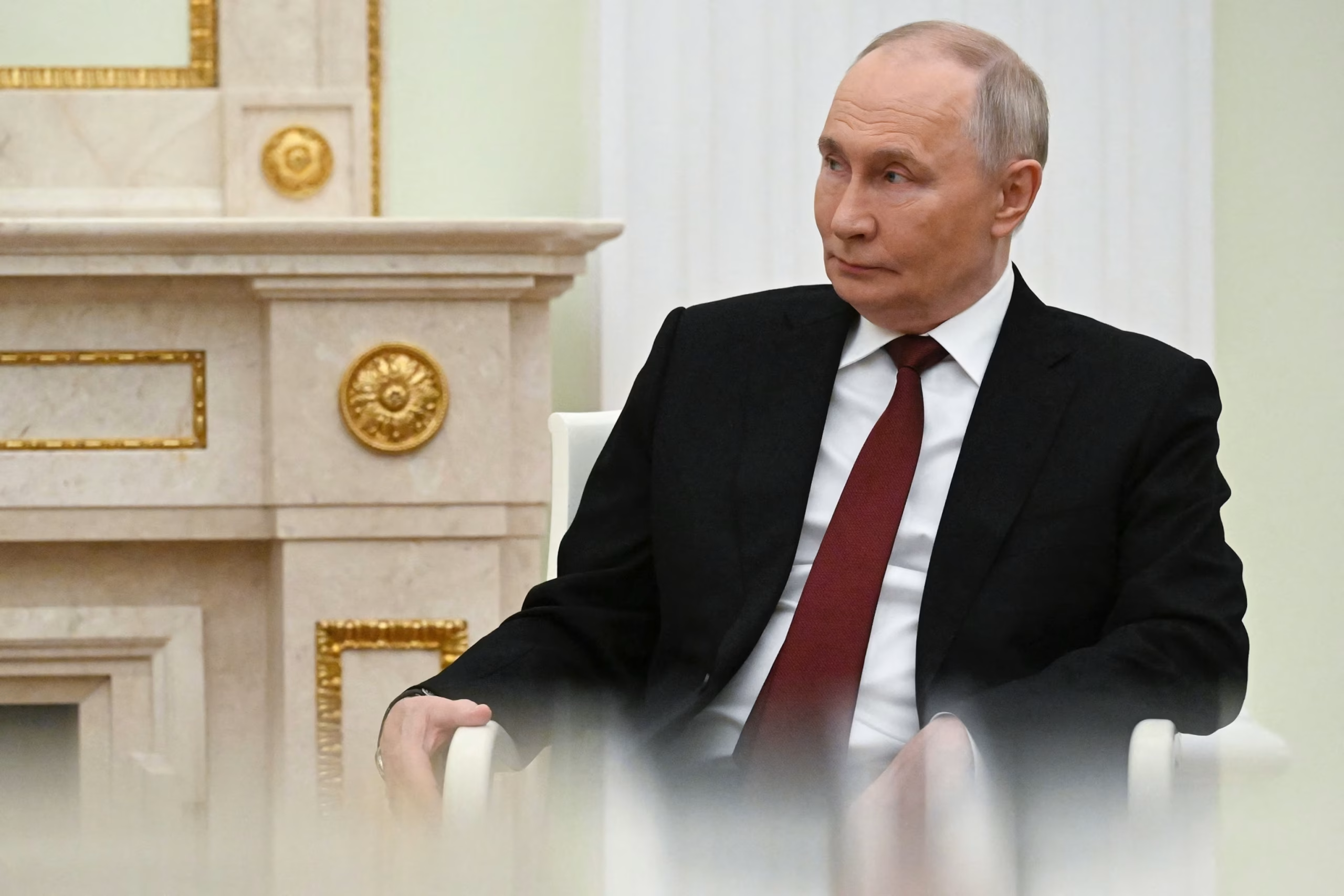
Russian President Vladimir Putin is scheduled to meet US special envoy Steve Witkoff in Moscow on Tuesday, as Washington signals confidence in progress toward a potential deal to end the war in Ukraine. The White House said it remains “very optimistic” about ongoing negotiations.
Jared Kushner, former adviser and son-in-law to US President Donald Trump, is also expected to join the meeting. He has been involved in recent diplomatic efforts behind the scenes.
The high-level talks come shortly after two days of discussions in Florida between Ukrainian officials and the US team—including Witkoff and Kushner—to refine a US-backed peace proposal originally viewed as overly favorable to Moscow.
Ukrainian President Volodymyr Zelensky described the negotiations as “constructive,” but admitted that “tough issues still need to be resolved.”
Meeting Set for Tuesday in Moscow
Kremlin spokesman Dmitry Peskov confirmed that Witkoff will meet Putin in the second half of Tuesday, Reuters reported.
Speaking alongside French President Emmanuel Macron in Paris, Zelensky stressed that Ukraine’s non-negotiable priorities include preserving national sovereignty and securing robust security guarantees.
The most difficult issue, he said, remains territory. Moscow continues to push for Kyiv to concede eastern regions that Ukraine still controls—terms that Kyiv has repeatedly rejected.
Reactions from Washington and Europe
Witkoff also held talks with UK Prime Minister Sir Keir Starmer, President Zelensky, and Ukraine’s lead negotiator Rustem Umerov. Several European leaders joined the Zelensky–Macron meeting virtually.
White House Press Secretary Karoline Leavitt said the peace proposal has been “significantly refined,” adding that the administration feels “very optimistic” about the direction of the talks.
Last week, Putin said he had reviewed the US draft and believed it could serve as a “basis” for future negotiations—though Kremlin officials later expressed doubts following revisions pushed by Kyiv and European partners.
The original draft circulated in November drew strong criticism for leaning heavily toward Russian interests and even outlining how frozen Russian assets in Europe should be managed.
Macron said there is currently “no finalised peace plan,” emphasizing that any agreement must involve Ukraine and Europe, especially regarding territorial questions, security guarantees, and EU access for Ukraine.
Concerns About Pressure on Ukraine
EU foreign policy chief Kaja Kallas warned that Russia prefers negotiating with “those who simply offer them more of what they already have.” She expressed concern that Ukraine might be pressured into concessions that are not in Europe’s long-term interest.
Although Russia has shown occasional willingness to engage with US mediators, several of its key demands remain incompatible with Ukraine’s sovereignty—especially on territory and NATO-related security guarantees.
Ukraine and its European allies insist that Kyiv must receive credible long-term protection, including the possibility of NATO membership. Russia opposes this, and Trump has publicly rejected the idea of allowing Ukraine to join the alliance.
Claims of New Russian Gains on the Battlefield
As diplomatic efforts continue, Russian authorities claimed they had captured the strategic towns of Pokrovsk (Krasnoarmeysk) and Vovchansk in eastern Ukraine. Ukrainian officials have not confirmed these losses.
Independent open-source monitoring projects indicate that neither town has been fully taken by Russian forces.