


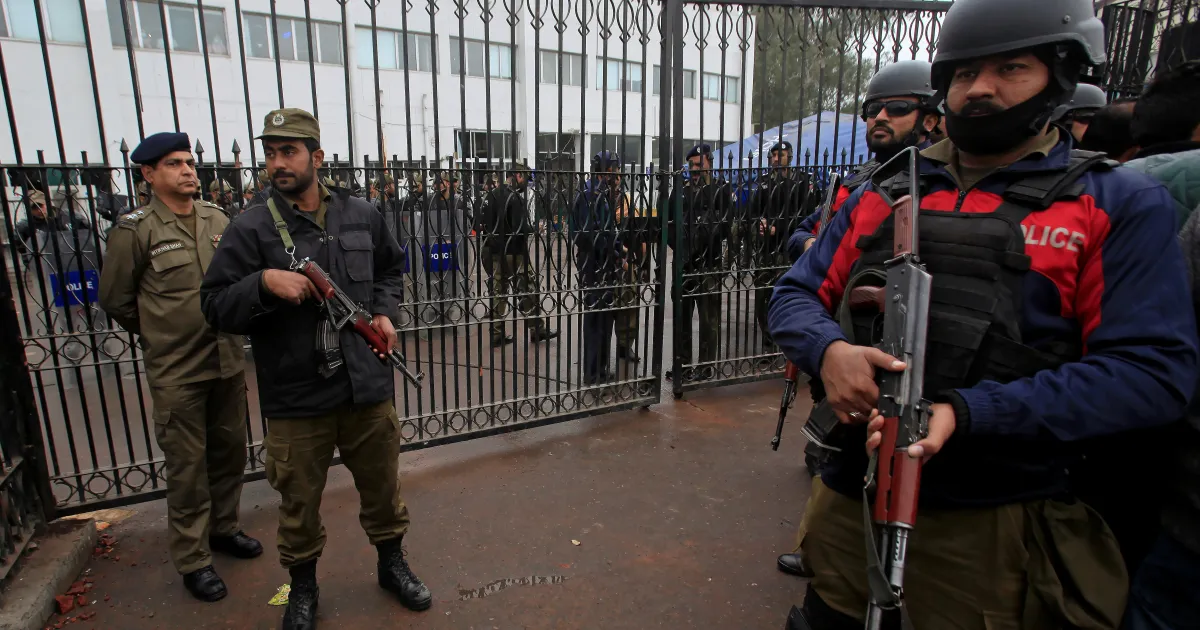
A sharp rise in police “encounter” killings in Pakistan Punjab province has drawn scrutiny after a new human rights report alleged that hundreds of deaths may be linked to a pattern of extrajudicial actions by a specialised police unit.
The issue gained attention following the account of Zubaida Bibi, a resident of Bahawalpur in southern Punjab, who said armed officers from the province’s Crime Control Department (CCD) raided her home last November. According to her testimony to a fact-finding team, officers confiscated valuables including mobile phones, cash, jewellery, and her daughter’s wedding dowry, and detained several members of her family.
Within a day, five of her relatives — including her three sons and two sons-in-law — were reported killed in separate police “encounters” across different districts. Zubaida said the family followed authorities to Lahore in an attempt to secure their release, only to learn of the deaths the next morning. She later alleged that threats were made after she pursued legal action.
Her husband, Abdul Jabbar, maintained that the deceased had no criminal history and were employed and supporting families, rejecting any claims that they were involved in criminal activities.
Findings of the Human Rights Report
The case is highlighted in a fact-finding report published on February 17 by the Human Rights Commission of Pakistan (HRCP), which examined the operations of the CCD. The report documented at least 670 police encounters resulting in 924 suspected deaths between April and December 2025, a period following the formation of the unit.
The CCD was established in April 2025 with the official mandate of combating organised and serious crime. However, the HRCP report describes the unit as operating with considerable autonomy and alleges that its actions reflect a systemic pattern of extrajudicial killings that may conflict with legal and constitutional safeguards.
Rights advocates argue that the rapid increase in encounter-related fatalities has intensified debate over law enforcement practices, due process, and the state’s responsibility to protect the right to life.
Farah Zia, director of the HRCP, noted that encounter killings have historical roots in Punjab’s policing culture, dating back decades. She said the practice later expanded to other provinces, with similar incidents documented regularly in national human rights reports, particularly in Sindh.
She also criticised what she described as reliance on short-term and legally questionable methods to curb crime instead of investing in stronger investigative systems, forensic capacity, community policing, and effective prosecution.
Creation of CCD and Rising Fatalities
The CCD was introduced under the provincial government’s “Safe Punjab” initiative led by Chief Minister Maryam Nawaz Sharif, with the aim of tackling organised crime, inter-district gangs, and repeat offenders that traditional policing structures struggled to manage.
Soon after its establishment, encounter killings reportedly increased significantly across the province. Data cited in the HRCP report suggests that more than 900 suspects were killed within eight months, while during the same period two police officers were killed and dozens injured.
For comparison, a 2024 human rights review recorded 341 suspects killed in police encounters across Punjab and Sindh combined over an entire year. The CCD’s reported figures in a single province within months have therefore raised concerns among observers.
Lahore recorded the highest number of encounters, followed by Faisalabad and Sheikhupura. Many of those killed were reportedly accused of serious crimes such as armed robbery, dacoity, narcotics offences, and murder.
Questions Over Encounter Narratives
The HRCP analysis found recurring similarities in official police reports following encounter incidents. According to the commission, reports often describe suspects travelling on motorcycles at night, reacting aggressively, and opening fire first, leading to a police response framed as self-defence.
The commission also pointed to repeated and nearly identical language across multiple first information reports (FIRs), suggesting standardised documentation rather than incident-specific accounts. In several cases, reports allegedly included detailed confessions attributed to wounded suspects moments before death, which rights groups described as implausible and indicative of copy-paste reporting practices.
Police press releases circulated to media outlets reportedly follow a similar narrative structure, highlighting alleged criminal records of the deceased while providing limited procedural detail.
Human rights lawyer Asad Jamal expressed doubts about accountability, arguing that political pressure to demonstrate crime reduction may be influencing policing strategies. He suggested that lowering crime statistics is sometimes used to justify aggressive measures, including alleged extrajudicial actions, instead of strengthening investigative processes and judicial systems.
Government and Police Response
In official court submissions cited in the report, the CCD has defended its operations, claiming that intelligence-led policing has helped dismantle organised gangs and significantly reduced property crimes and dacoity-related murders compared to previous years.
Authorities have also rejected allegations of unlawful killings, stating that there is insufficient evidence to support claims of systematic extrajudicial practices.
However, the HRCP maintains that even if crime rates have declined, the methods used to address crime remain a central legal and ethical issue. The commission argues that law enforcement should prioritise arrest, investigation, and prosecution through the judicial process rather than lethal force.
Families of those killed have reportedly said they were instructed to bury their relatives quickly, sometimes before independent postmortem examinations could be conducted. The HRCP also stated that requests for official data on encounter procedures and meetings with senior police officials were not answered.
Broader Structural Concerns
A former senior police official, speaking anonymously, attributed the rise in encounter killings to systemic challenges, including an overburdened justice system, weak prosecutions, and political pressure to demonstrate control over crime. According to the official, delays in courts and public frustration can create an environment where shortcuts gain acceptance.
Human rights experts warn that normalising extrajudicial violence risks undermining due process and the rule of law. Legal observers argue that guilt must be determined through fair trials rather than summary actions, regardless of allegations against suspects.
Over the past decade, HRCP data shows thousands of encounter cases nationwide, with Punjab accounting for a significant portion. While the number of encounters fluctuated in previous years, recent figures indicate a dramatic rise in fatalities, intensifying calls for transparency, accountability, and reform in policing practices across the province.