


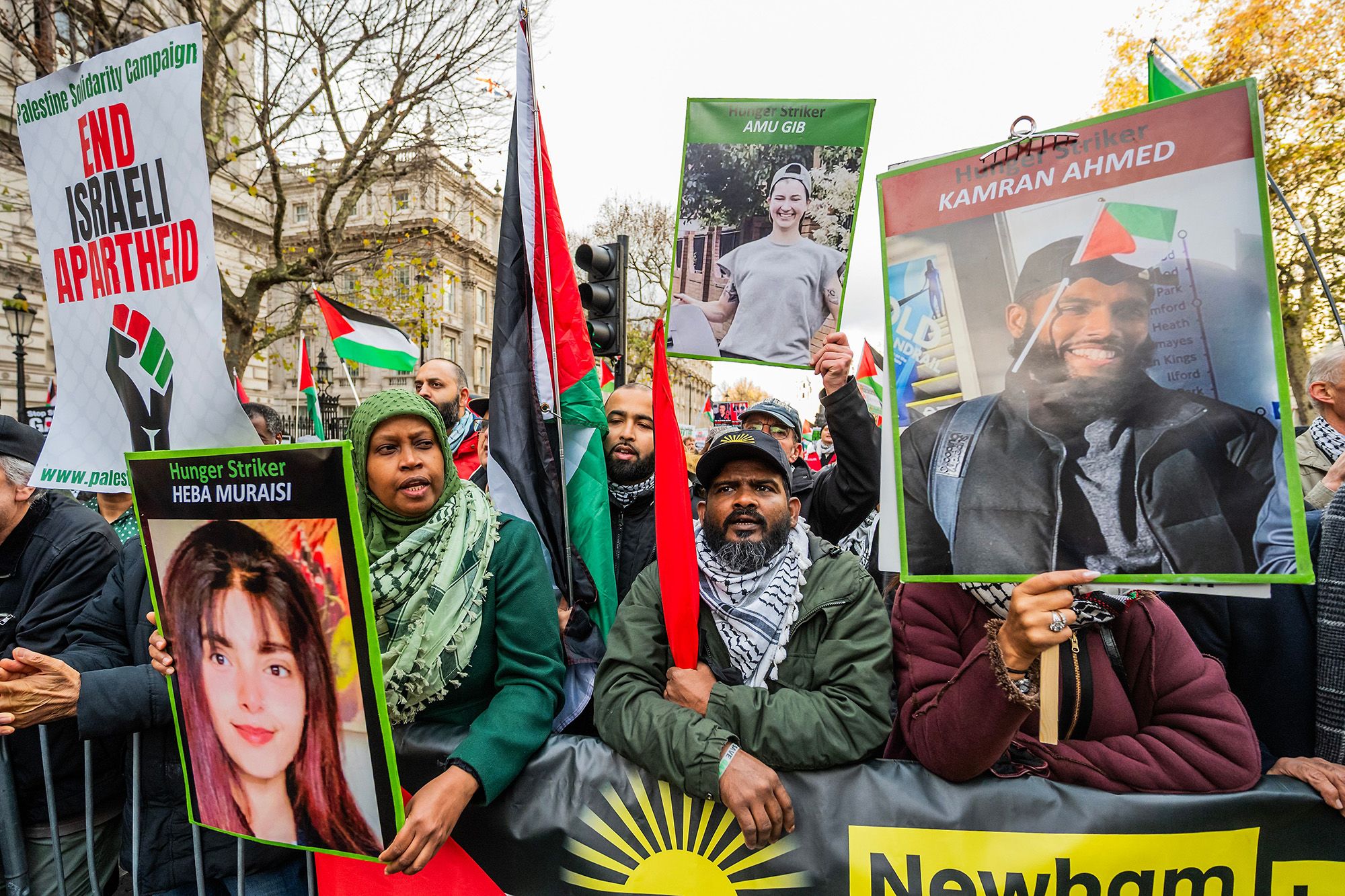
A pro-Palestine activist being held on remand has said he plans to stop drinking fluids as well as food, describing the move as a last-ditch attempt to push the government to respond to his protest demands.
Umer Khalid, 22, told Al Jazeera that he intends to stop taking liquids from Saturday. Khalid, who is linked to the group Palestine Action, has already gone nearly two weeks without food while in prison.
‘Drastic Action’ to Force Engagement
Khalid said he is currently receiving fluids containing electrolytes, sugars and salts, but plans to refuse all intake. He said the escalation reflects the seriousness of his situation and his belief that more moderate actions have failed to bring change.
Speaking via an intermediary from prison, he said his protest was aimed at highlighting what he described as the severity of his imprisonment and the urgency of his demands.
Demands Linked to Gaza and Prison Conditions
Khalid is calling for immediate bail, an end to what he alleges is censorship within the prison system, and an inquiry into Britain’s role in Israeli military operations in Gaza.
He has also demanded the release of surveillance footage from Royal Air Force flights over Gaza on April 1, 2024, the day British aid workers were killed in an Israeli strike.
Charges Over RAF Brize Norton Incident
Khalid is one of five activists accused of breaking into RAF Brize Norton in June, where two Voyager refuelling aircraft were spray-painted. The incident caused millions of pounds in damage, according to the British government, which later proscribed Palestine Action as a terrorist organisation.
Khalid denies charges of conspiracy to commit criminal damage and conspiracy to enter a prohibited site in a way deemed harmful to UK security.
Hunger Strike Background
He is part of a group of eight remand prisoners linked to Palestine Action who began a rolling hunger strike in November. Three participants ended their strikes last week, claiming concessions related to prison conditions.
Khalid remains the only one continuing the protest. Supporters have pointed to reported improvements in prison rights and the UK’s decision not to award a defence contract to Israel’s largest weapons manufacturer as partial victories.
Government Response and Wider Context
The UK government has said decisions on bail rest with the judiciary and that prison welfare procedures are being followed. It has not commented directly on Khalid’s demands.
Last year, the opposition Labour Party blocked a proposed inquiry into Britain’s involvement in the Gaza conflict, while the Ministry of Defence has acknowledged holding surveillance footage but cited national security concerns in refusing to release details.
Britain has said its flights over Gaza were intended to help locate missing captives, though critics have questioned whether intelligence was shared with Israel.
Health Concerns and Family Worries
Khalid’s family say they are especially worried because he has limb-girdle muscular dystrophy, a condition that causes muscle weakness. His mother, Shabana Khalid, told Al Jazeera she fears his health could deteriorate rapidly.
Travelling to Wormwood Scrubs, where Khalid is being held, has been difficult for the family, who say visiting slots have been hard to secure.
Support and Advocacy
Campaigners have accused the government of failing to engage with Khalid’s protest. Asim Qureshi, from the advocacy group Cage, said the lack of dialogue reflected a disregard for Khalid’s wellbeing.
Khalid’s brother Usman Khalid said the family supports his demands but hopes he will reconsider refusing water.
Trial Date Set for 2027
Khalid’s trial is scheduled for January 2027, meaning he could spend around 18 months in custody before proceedings begin—well beyond the usual six-month limit for pre-trial detention.
Despite his condition and the ongoing protest, Khalid told Al Jazeera he spends his time praying and reading, and remains mentally focused on his cause.