


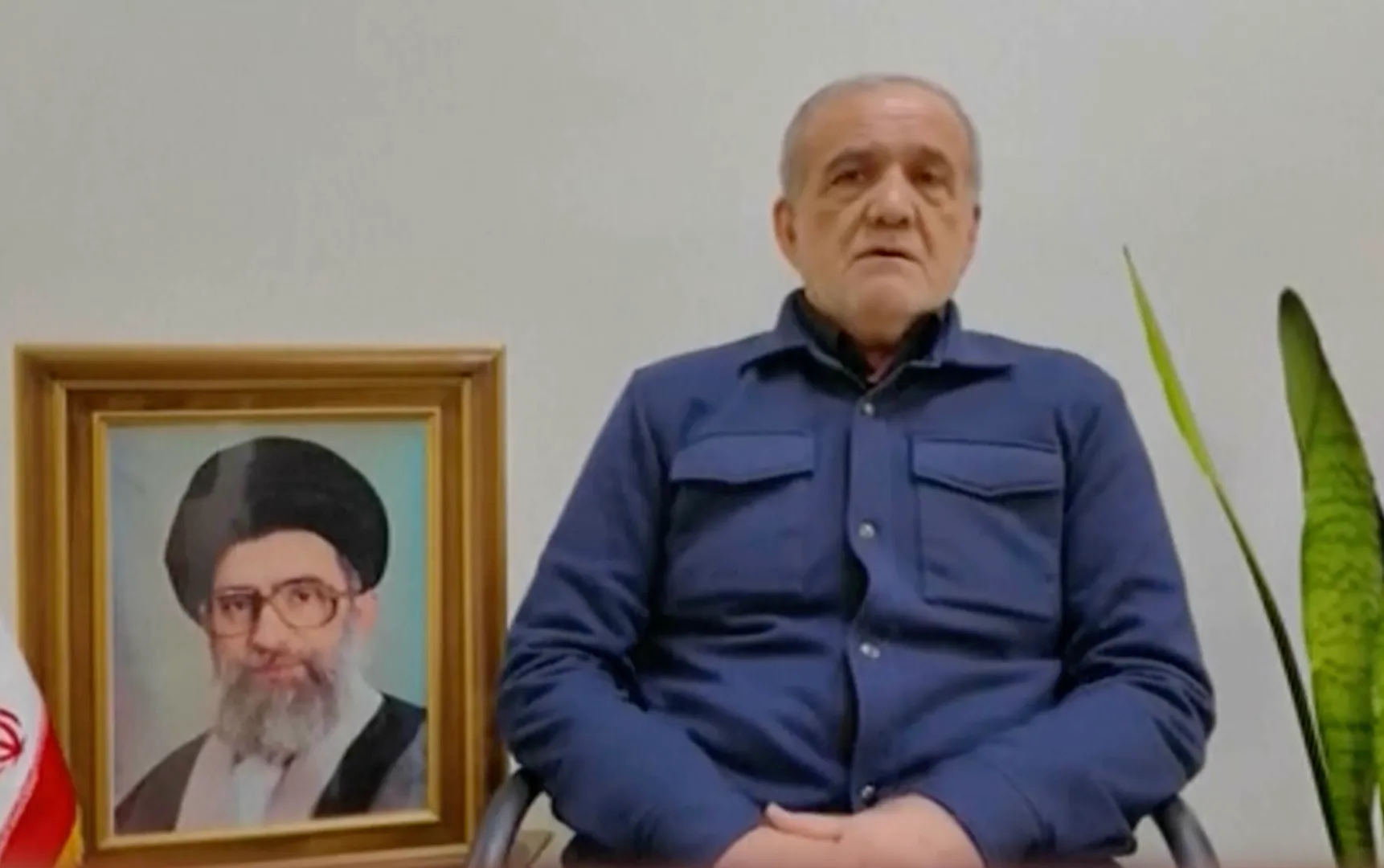
Iran President Masoud Pezeshkian has said neighbouring countries will no longer be targeted unless attacks against Iran are launched from their territory, offering what appears to be a limited attempt to reduce tensions as the war involving the United States and Israel moves into its second week.
According to Iranian media, the country’s interim leadership council approved the decision on Friday. In remarks released on Saturday, Pezeshkian also apologised to neighbouring states that had been hit in recent days during the widening conflict.
The statement comes at a time when the region remains on edge, with Tehran continuing to face intense military pressure and the possibility of further escalation still looming.
Iran describes message as a step toward easing tensions
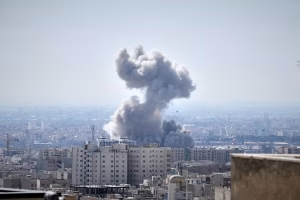
Reporting from Tehran, journalists said Pezeshkian’s comments suggested a small but notable shift in tone during an extremely volatile period. The war has now entered its eighth day, and reports indicate that air raids have continued across a large number of Iranian cities.
In his prerecorded five-minute address, Pezeshkian referred to strikes on residential areas, schools and hospitals, describing them as violations of international law. He also called on Iranians to remain united in defence of the country’s sovereignty.
The Iranian president used the speech to reject calls from Washington for unconditional surrender. He said such demands would never be accepted and insisted that Iran remained committed to international law and humanitarian principles.
His remarks followed a hardline message from US President Donald Trump, who had demanded Iran’s unconditional surrender on Friday.
IRGC issues warning despite president’s softer tone
Even as Pezeshkian signalled restraint toward neighbouring countries, Iran’s Islamic Revolutionary Guard Corps, or IRGC, delivered a much tougher message.
In a statement carried by state media, the armed forces said they respected the sovereignty and national interests of neighbouring nations and claimed they had not committed aggression against them up to this point.
At the same time, the statement warned that if hostile actions continued, all military bases and interests linked to the United States and Israel across the region could become direct targets. It said Iranian forces would respond with powerful strikes on land, at sea and in the air.
That warning underlined the gap between the president’s more diplomatic tone and the military posture being projected by the IRGC.
Analysts say Iran’s strategic decisions rest with the military
Observers say Pezeshkian’s words may have limited impact because the country’s most important security and foreign policy decisions are not controlled by elected politicians.
Analysts note that while civilian leaders manage routine state affairs, strategic matters are largely directed by the office of the supreme leader and the IRGC. That balance of power becomes even more pronounced during wartime.
With Iran framing the current conflict as a fight for survival, many believe the IRGC now holds the decisive influence over whether attacks continue or expand. According to this view, the president may be able to shape public messaging, but not military action.
IRGC commander Ahmad Vahidi is widely seen as one of the more hardline figures within the organisation, adding to expectations that security policy will remain firmly in military hands.
Gulf states remain exposed as war spreads across the region
Several countries in the region have already been drawn into the conflict because of the presence of US military assets on or near their territory. Gulf Cooperation Council members including Saudi Arabia, Qatar, the United Arab Emirates, Kuwait, Bahrain and Oman have all come under threat. Iraq, Jordan, Azerbaijan and Turkiye have also found themselves increasingly exposed.
The consequences are already being felt across the Gulf, where the conflict has caused deaths, property damage, widespread flight disruption and airspace closures. The fighting has also begun to affect oil and gas production, raising concern far beyond the Middle East.
Energy markets face growing pressure
Qatar’s Energy Minister Saad al-Kaabi warned that exports from the Gulf could be disrupted within weeks if the war continues to intensify. Such a scenario would likely shake global energy markets and put additional pressure on the world economy.
He said a prolonged conflict would affect economic growth worldwide, push energy prices higher and trigger supply shortages across multiple industries. He also warned of a chain reaction in which factories could struggle to keep operating because of interruptions in supply.
These fears reflect the broader global stakes of the conflict, which is no longer being viewed solely as a regional military confrontation.
Casualties continue to rise
The human toll of the war continues to grow. Iranian officials and media reports say more than 1,200 Iranians have been killed in US-Israeli strikes during the first week of fighting.
On the American side, the only reported deaths so far came after Iran struck a US command centre in Kuwait, killing six personnel.
As the second week of the war begins, Pezeshkian’s pledge not to hit neighbouring countries unless attacks come from their territory may offer a slight opening for de-escalation. However, with the IRGC holding major influence and the wider region already suffering the fallout, the risk of further escalation remains high.