


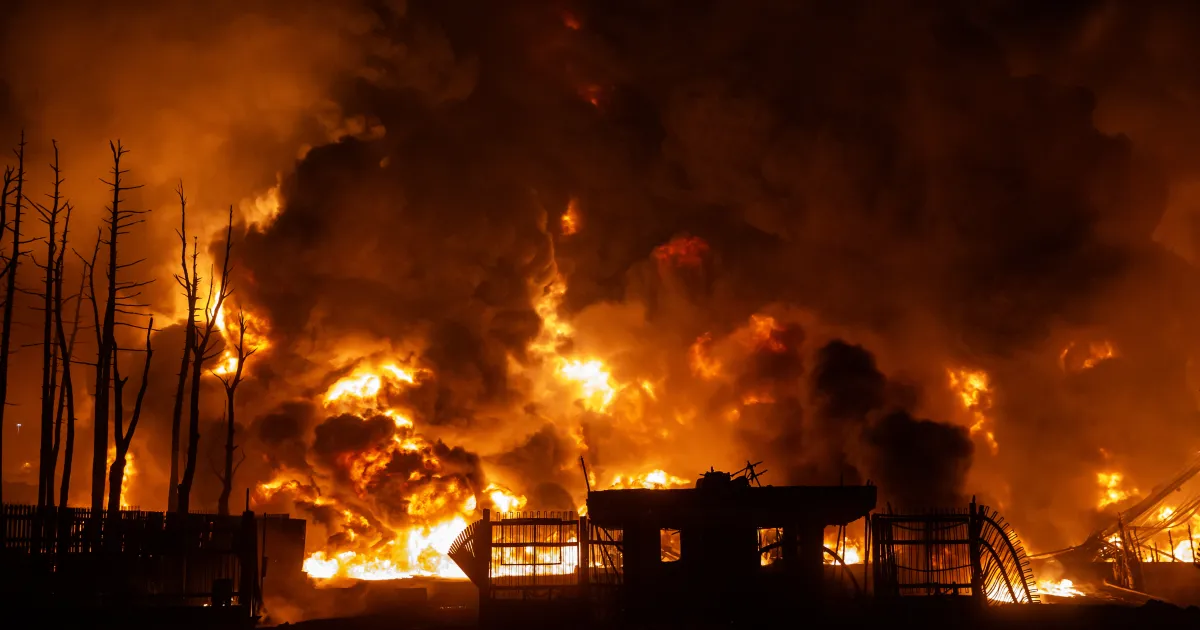
Oil prices climbed above $100 a barrel as the war involving the United States, Israel and Iran raised fears of a prolonged shock to global energy supplies. Brent crude briefly surged well above that level, marking its first move past $100 since the market turmoil that followed Russia’s 2022 invasion of Ukraine, before easing back somewhat in early Monday trading.
The sharp rise has been driven by concerns that the conflict could further disrupt flows through the Strait of Hormuz, one of the world’s most important energy chokepoints. Reuters reported that roughly one-fifth of global oil shipments move through the waterway, making any sustained disruption there a major threat to world markets.
Washington plays down the price spike
US President Donald Trump dismissed the jump in oil prices, arguing that any near-term increase would be worth it if Iran’s nuclear threat were eliminated. US Energy Secretary Chris Wright also said higher fuel costs at the pump would be temporary, even as traders reacted to the risk of a wider and longer conflict.
Since the start of the joint US-Israeli strikes on February 28, oil prices have risen sharply as Iran’s retaliation and regional disruption have added to supply fears. Reuters has reported that shipping through the Strait of Hormuz has been severely disrupted, while attacks and shutdowns have affected energy operations across the Gulf.
Gulf disruption adds to supply fears
Pressure on supply has grown as major producers in the region face transport and storage problems. Reuters reported that conflict-related disruption has already affected producers and exporters across the Gulf, while recent strikes on oil infrastructure in and around Tehran added another layer of concern to an already fragile market.

Iran’s Revolutionary Guard has also warned that energy facilities across the region could be targeted if the war continues, deepening fears that the conflict may move beyond military sites and directly hit oil production and export systems. That possibility has helped push traders toward more aggressive pricing of geopolitical risk.
Stocks slide as investors brace for inflation pressure
The oil shock quickly spilled into financial markets. Reuters reported that Japan’s Nikkei fell more than 7% in early trading, while South Korean shares also dropped sharply and Hong Kong stocks moved lower. Wall Street futures fell as investors worried that a fresh energy shock could lift inflation and weigh on growth.
The sell-off reflects concern that persistently high oil prices would hit households, raise business costs and complicate central bank policy. Reuters said investors were already reassessing inflation risks and the possibility that the conflict could become a broader drag on the world economy if energy prices stay elevated for weeks rather than days.
Economists warn of wider fallout
The broader economic risk is that expensive energy feeds into consumer prices and slows activity at the same time. IMF research has found that oil price shocks can lift inflation and weaken output, reinforcing worries that a sustained conflict-driven surge would become a global headwind rather than a short-lived market panic.
Warnings from the Gulf have added to that anxiety. In an interview reported by Reuters and other outlets, Qatar’s energy minister warned that if the conflict keeps escalating, exports from the region could be interrupted more broadly, creating shortages and pushing prices much higher.
No clear end in sight
For now, markets are reacting to one central fear: that the war will last longer than expected and continue to hit the energy system at its most vulnerable points. While US officials have argued the conflict can be contained, current pricing in oil and equities suggests investors are no longer confident that the disruption will be brief.
If the conflict drags on, the impact is likely to spread well beyond the Middle East, with higher fuel costs, renewed inflation pressure and weaker global growth becoming the next major front in the crisis.