


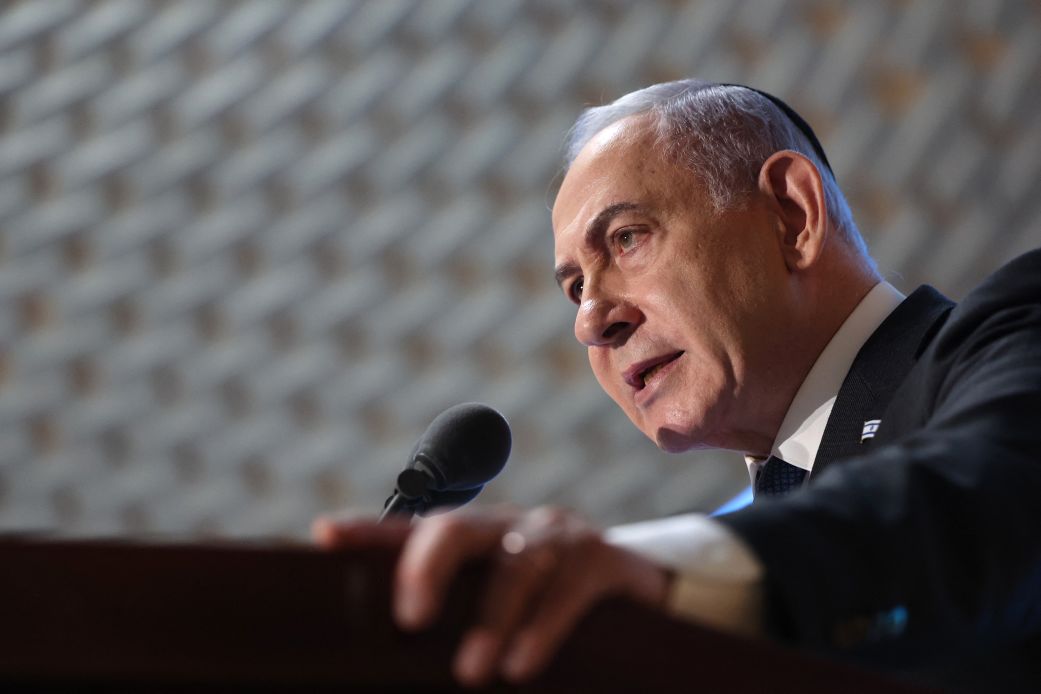
Israeli Prime Minister Benjamin Netanyahu is set to meet President-elect Donald Trump at Mar-a-Lago this week, a visit that analysts say carries both diplomatic and political weight.
The talks will center on possible frameworks for peace in Ukraine and regional stability in the Middle East. But for Netanyahu, the timing adds another dimension — strengthening public visibility as Israel approaches its next national election window.
Israel is scheduled to hold parliamentary elections in October 2026, though internal disputes could move that date forward. Netanyahu’s coalition government faces two major pressure points: debates over military conscription involving ultra-Orthodox communities, and the upcoming state budget deadline in March 2026. Either issue could collapse the coalition and trigger earlier polls.
Leading With Diplomacy, Leaning on Visibility
Netanyahu has served as Israel’s leader across multiple terms, guiding the country through some of its most intense political and security moments. Mass protests in 2023 over judicial reforms, followed by the October 7 attacks, and the war that unfolded afterward, reshaped Israel’s domestic and global position.
Despite setbacks, Netanyahu remains the head of the longest-running coalition in recent Israeli politics. His government has outlasted rival administrations that dissolved within months, giving him a longer political runway than any Israeli cabinet since 2021.
Political consultants familiar with Netanyahu’s strategy say the prime minister wants public attention to shift toward diplomacy, economic recovery, and national security positioning — areas where U.S. leadership could amplify narratives.
Trump’s previous gestures toward Israel, including recognizing Israeli control over the Golan Heights, launching the Abraham Accords, and backing regional normalization talks, made him a recurring figure in Likud’s political branding during past elections.
Approval Ratings and Public Perception
Surveys conducted in 2025 showed high approval for U.S. leadership among Israeli respondents, compared to lower domestic ratings for Israel’s current political institutions. Analysts say the gap in perception makes Trump’s visibility an appealing asset for Netanyahu’s media strategy — not necessarily for frequent appearances, but for moments that dominate headlines.
Peace Plans Meet Political Limits
The U.S. has encouraged faster movement toward ceasefire phases in Gaza, while Netanyahu’s coalition partners have resisted additional territorial or military withdrawals. Sources in Israeli political circles say Netanyahu may seek one more military operation in Gaza before advancing any further ceasefire terms, hoping to preserve internal unity within his cabinet.
Former Israeli officials note that Netanyahu typically negotiates through linkage strategies — offering progress on one front in exchange for security assurances or diplomatic support on another.
Regional diplomats involved in monitoring the talks say some countries expected to move quickly toward normalization agreements remain hesitant. Ceasefire conditions, disarmament expectations, and political instability continue to complicate broader peace planning.
The Power of Attention, Even Without a Deal
Experts say that even if major diplomatic breakthroughs do not materialize immediately, the meeting itself offers value — dominating news cycles, shaping international commentary, and shifting public conversation toward geopolitics instead of internal political rivalries.
Netanyahu delayed several regional decisions until after the U.S. election, expecting coordination to resume once Trump’s administration takes office.
Election History Shows Uncertainty Remains
Trump previously helped Netanyahu survive politically turbulent years, but did not secure a decisive win in past Israeli elections. Between 2019 and 2021, Israel held five national elections in four years as Netanyahu failed to maintain a stable majority coalition — a period of prolonged political fragmentation.
Analysts say Trump remains one of the strongest public-visibility tools in Netanyahu’s political network, but visibility alone may not determine electoral outcomes. Coalition stability, public trust, and long-term security concerns — including Iran’s nuclear development and Hezbollah’s regional influence — remain central issues shaping Israel’s political future.
Even if diplomatic timelines remain unclear, the Florida meeting has placed global attention on Israel’s leadership once again — a moment that could shape the coming political season, but not guarantee its final result.