


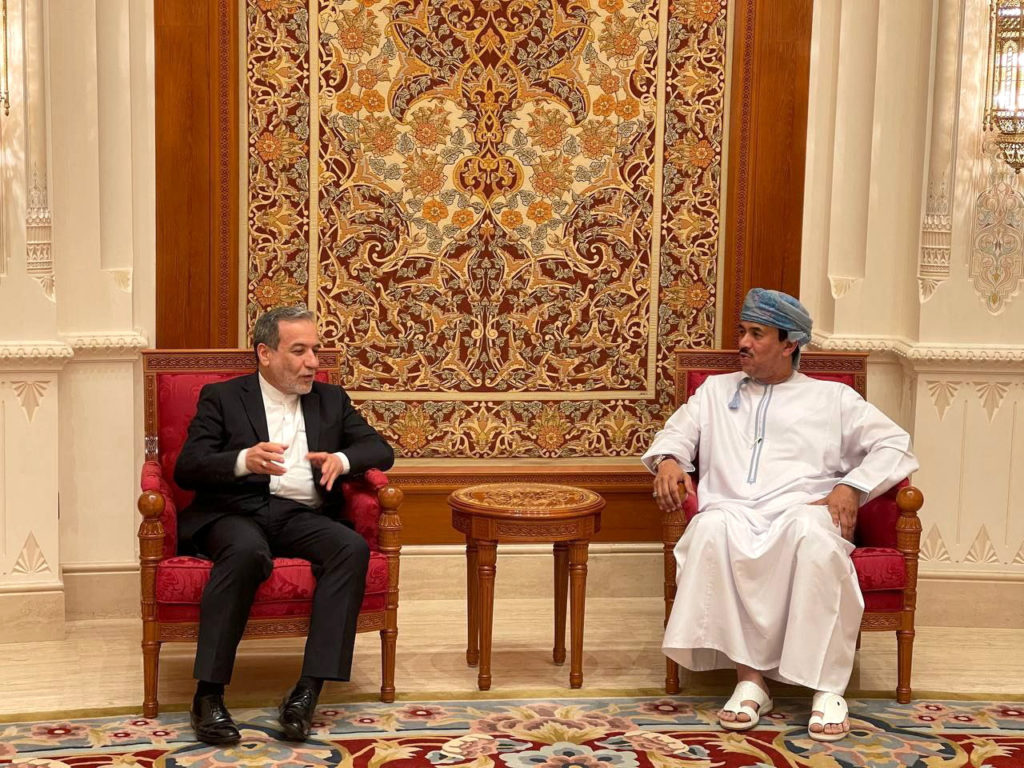
Regional mediators from Qatar, Türkiye and Egypt have submitted a proposed framework to Iran and the United States ahead of talks expected later this week, outlining key principles aimed at easing tensions and reviving stalled diplomacy, sources familiar with the negotiations told Al Jazeera.
The proposal includes commitments by Tehran to sharply restrict uranium enrichment, along with measures addressing ballistic missiles and Iran’s support for allied armed groups across the region, according to two sources, including a senior diplomat who requested anonymity due to the sensitivity of the talks.
An Iranian source separately confirmed that the meeting, expected to involve US special envoy Steve Witkoff and Iranian Foreign Minister Abbas Araghchi, will take place in Muscat, rather than in Türkiye as earlier suggested.
Narrow Diplomatic Window
The renewed diplomatic push comes amid heightened regional tensions, with the United States reinforcing its military presence in the Arabian Sea after President Donald Trump ordered additional forces deployed following Iran’s violent crackdown on nationwide protests last month.
Officials and analysts say the coming days may represent a rare opportunity to avert further escalation.
Key Elements of the Proposal
Under the mediators’ draft framework, Iran would agree to suspend all uranium enrichment for a period of three years. After that, enrichment would be capped at below 1.5 percent — far beneath levels required for weapons-grade material.
Iran would also transfer its existing stockpile of highly enriched uranium, including roughly 440 kilograms enriched to 60 percent, to a third country, according to the sources.
The proposal extends beyond nuclear issues. Mediators are also urging Iran to halt the transfer of weapons and military technology to regional non-state allies and to commit not to initiate the use of ballistic missiles.
While the missile provision stops short of Washington’s demand for strict limits on missile range and quantity, it represents a broader scope than previous negotiations.
The framework also includes a proposed non-aggression pact between Tehran and Washington, one source said.
Neither the US nor Iran has publicly responded to the proposal.
Familiar Fault Lines
Washington has consistently maintained that any renewed agreement must address Iran’s nuclear programme, missile capabilities and regional influence.
Iran, however, has signalled resistance to expanding the agenda. On Wednesday, the semi-official Tasnim News Agency reported that Tehran remains committed to discussing only nuclear issues and sanctions relief.
In the past, Iran has shown willingness to compromise on nuclear limits, most notably under the 2015 Joint Comprehensive Plan of Action, which capped enrichment in exchange for sanctions relief. That deal collapsed after Trump withdrew the US from the agreement in 2018.
Tehran has since refused to negotiate restrictions on its missile programme or its support for allied armed groups.
Pressure and Defiance
The mediators’ proposal was delivered shortly before Witkoff met Israeli Prime Minister Benjamin Netanyahu and senior intelligence officials during a visit to Israel on Tuesday.
The US enters the talks with considerable leverage. An aircraft carrier, fighter jets and naval destroyers are now positioned within striking distance of Iran, underscoring Washington’s military options.
Iran, meanwhile, is grappling with internal unrest after months of protests that triggered the most severe state violence in decades.
Despite these pressures, Iran’s Supreme Leader Ali Khamenei has adopted a defiant tone, and observers question whether Tehran’s leadership is prepared to compromise given deep mistrust of Washington.
A Fragile Diplomatic Track
Previous attempts to revive diplomacy have faltered. In June, US and Iranian officials held talks in Muscat, but negotiations collapsed after Israel launched air strikes on Iran.
That escalation triggered a 12-day conflict, culminating in US attacks on Iranian nuclear facilities and a symbolic Iranian missile strike on Al Udeid Air Base.
Since then, Tehran has claimed it has replenished its missile arsenal and warned it would respond forcefully to any new attack. US officials are particularly concerned about Iran’s ballistic missiles after some breached Israel’s air defences during the brief war.
Tensions remain elevated. On Tuesday, US forces shot down an Iranian drone near the USS Abraham Lincoln, and US officials said Iranian Revolutionary Guard units later harassed a US-flagged commercial vessel in the Strait of Hormuz.
Whether the mediators’ framework can bridge entrenched divisions — or prevent another regional escalation — may soon be tested at the negotiating table.