


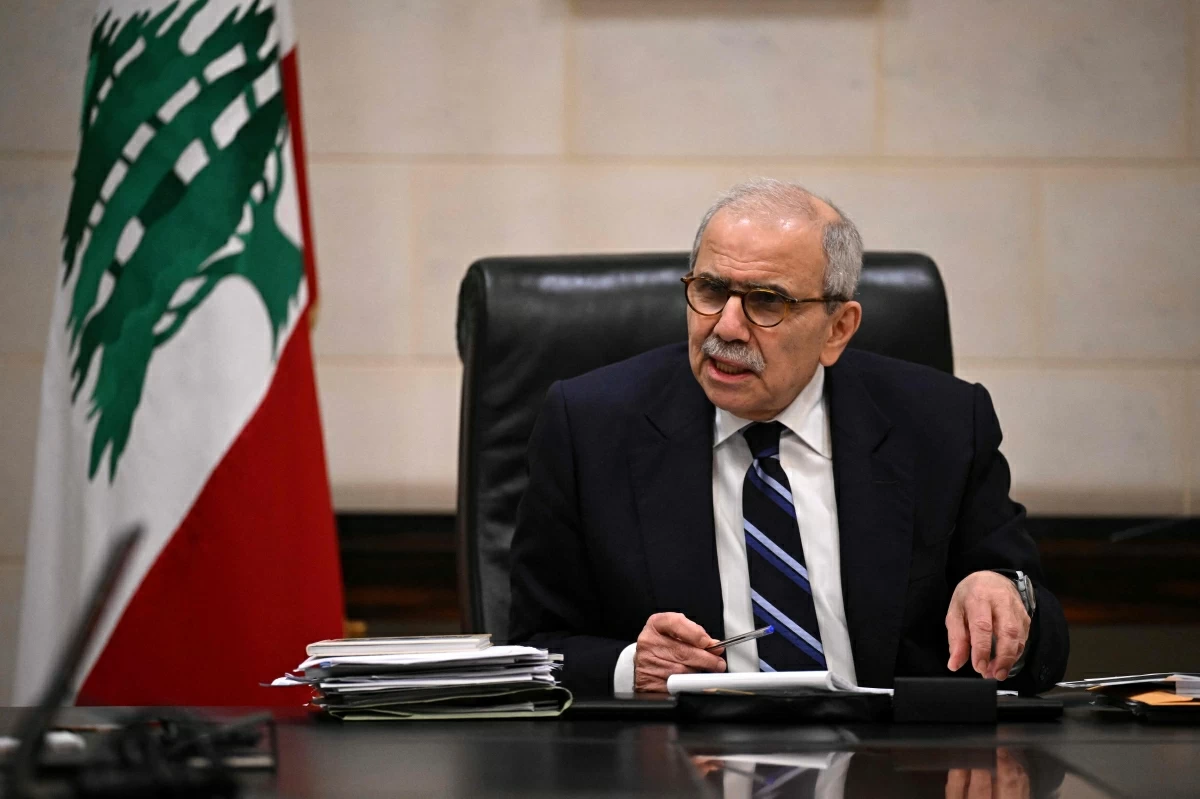
Lebanon Prime Minister Nawaf Salam announced that Hezbollah’s military and security operations are now banned, just hours after Israel launched air strikes on southern Beirut in response to rocket and drone attacks by the Iran-backed group.
In an official statement, Salam said Hezbollah’s role must be limited to politics and that armed or security actions outside the authority of the state would no longer be accepted.
He said the government rejects any military activity launched from Lebanese territory outside the framework of legitimate national institutions.
Salam also described all Hezbollah military activities as illegal and called on Lebanon’s security forces to stop any attacks originating from within the country.
At the same time, he said Lebanon remains committed to a halt in hostilities and a return to negotiations.
Hezbollah Says Attack Was Retaliation for Khamenei’s Killing
Earlier on Monday, Hezbollah said its attack on Israel was carried out in response to the killing of Iranian Supreme Leader Ayatollah Ali Khamenei.
The group said the operation was intended to defend Lebanon and its people, and was also a response to repeated Israeli attacks.
Israel quickly retaliated with strikes on Beirut, killing more than 30 people and wounding 149, according to Lebanon’s state-run National News Agency.
Pressure Builds on a Weakened Hezbollah
Hezbollah, which operates independently of the Lebanese state, has been under growing strain since the 2024 war with Israel, during which many of its top military and political figures were killed.
With pressure increasing from both the United States and Israel, Lebanese authorities agreed to move forward with a plan to disarm the group.
Hezbollah rejected that effort, describing it as a U.S.-Israeli scheme. It also refused to hand over weapons north of the Litani River, arguing that the ceasefire signed in November 2024 only applied to disarmament south of the river.
Disarmament Plan Still In Progress
Last month, the Lebanese government said the army would need at least four months to finish the second phase of its plan to dismantle Hezbollah’s weapons stockpiles in southern Lebanon.
This second phase covers the territory between the Litani River and the Awali River, roughly 40 kilometres south of Beirut.
In January, officials said the first phase had already been completed. That phase focused on the area between the Litani River and Lebanon’s southern border with Israel.
The broader plan is being carried out in five stages.
Risk of a Deeper Crisis in Lebanon
The renewed fighting between Israel and Hezbollah threatens to worsen Lebanon’s already serious economic and political troubles.
Earlier on Monday, Salam called Hezbollah’s attack an “irresponsible and suspicious act,” saying it endangered Lebanon’s security and gave Israel justification to continue its military action.
Meanwhile, the humanitarian situation is becoming more severe.
Reporting from Beirut, Al Jazeera’s Zeina Khodr said hundreds of thousands of people were fleeing from southern Lebanon and from the southern suburbs of the capital.
She said the scale of displacement suggests a humanitarian crisis may be unfolding.
Civilians Caught in the Middle
According to Khodr, Israel’s wider strategy appears aimed at punishing Hezbollah’s support base and residents living in areas where the group has influence.
She said the goal may be to turn local communities against Hezbollah and hold the group responsible for escalating what had previously been a lower-level conflict.
As tensions rise, Lebanon now faces the risk of a broader internal and regional crisis, with pressure mounting on the government to contain the fallout while preventing further violence.