


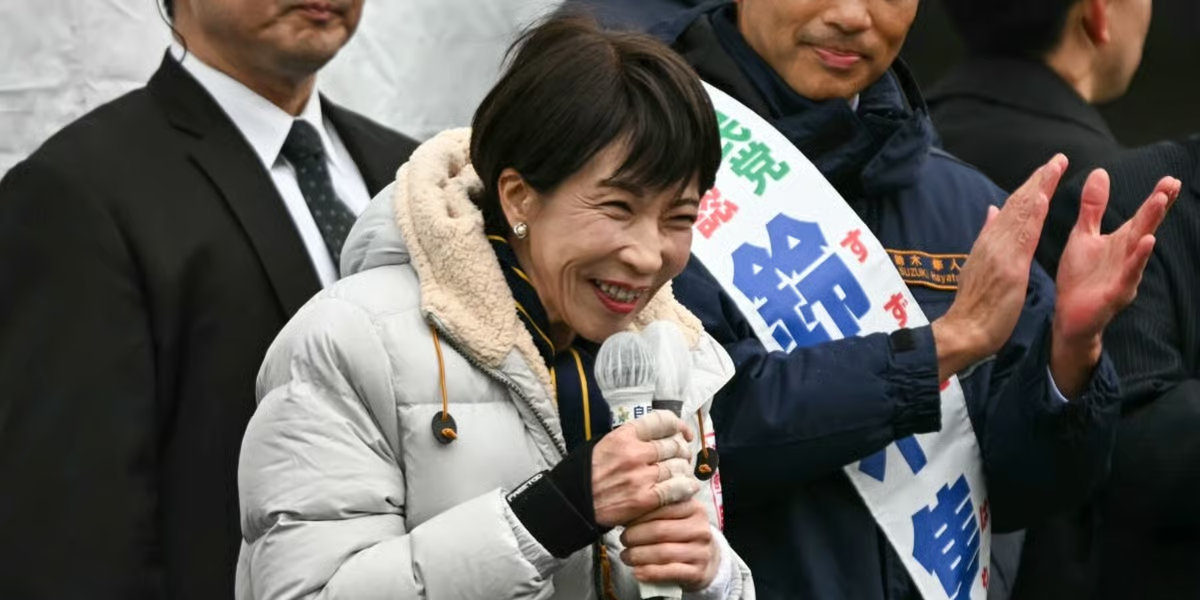
Voters across Japan are casting ballots in a snap parliamentary election widely expected to deliver a clear victory for Prime Minister Sanae Takaichi and her conservative ruling bloc.
Sunday’s vote comes as Takaichi seeks a renewed mandate to advance a broad policy agenda that includes higher defence spending, stricter immigration controls, and economic measures aimed at easing pressure on households.
Opinion polls suggest the coalition led by Takaichi’s Liberal Democratic Party (LDP), together with the Japan Innovation Party (Ishin), could secure more than 300 of the 465 seats in the lower house. Such a result would represent a significant increase from the 233 seats currently held by the alliance.
By contrast, opposition parties — despite efforts to form new alliances and the emergence of smaller political movements — remain fragmented and are not seen as posing a serious challenge.
Takaichi Stakes Leadership on Election Outcome
At 64, Takaichi became Japan’s first female prime minister after taking office in October, following her selection as leader of the LDP. Known for her hardline conservative views and energetic campaigning style, she has appealed strongly to younger voters.
She has pledged to step down if her party fails to secure a parliamentary majority, raising the stakes of the election for her leadership.
Cost of Living Dominates Campaign
Economic pressures have emerged as the central issue for voters. Rising prices, combined with weak wage growth, have left many households struggling, while Japan continues to face long-term challenges related to sluggish economic expansion.
According to the International Monetary Fund, Japan’s economy grew by just 1.1 percent last year and is projected to expand by only 0.7 percent in 2026.
In response, Takaichi has promised to suspend the eight percent sales tax on food for two years. The proposal follows last year’s approval of Japan’s largest stimulus package since the COVID-19 pandemic, a 21.3 trillion yen ($136bn) programme focused on cost-of-living relief, including energy subsidies, cash payments, and food vouchers.
Security, Defence, and Immigration in Focus
Beyond economic measures, Takaichi has committed to revising Japan’s defence and security policies by December. Her plans include strengthening offensive military capabilities, easing restrictions on weapons exports, and further distancing the country from its post-war pacifist stance.
She has also called for tighter immigration rules, proposing stricter requirements for foreign property ownership and limits on the number of foreign residents.
Reporting from Tokyo, Al Jazeera correspondent Patrick Fok said Takaichi is seeking to capitalise on her strong public support to deliver a landslide result.
Snowfall and Turnout Concerns
The election is taking place amid unusually heavy snowfall in parts of northern and eastern Japan, with up to 70 centimetres forecast in some areas. While the severe weather may affect turnout, analysts say it is unlikely to alter the overall outcome.
The vote marks only the third time in the post-war era that a national election has been held in February, with polls traditionally scheduled during milder seasons.
Foreign Policy Implications
A decisive win would also strengthen Takaichi’s hand on the international stage. Political analyst Stephen Nagy said a large majority would allow her to reinforce the Japan–United States alliance while pursuing a more assertive but balanced approach toward China.
He noted that Takaichi’s recent endorsement by US President Donald Trump could influence public perceptions, offering reassurance to some voters while raising concerns for others amid uncertainty over trade and regional security.
Looking Ahead
With polls closing at 8pm local time, broadcasters are expected to release early projections based on exit polling shortly afterward. Should forecasts hold, the election would confirm a dramatic turnaround for the LDP and provide Takaichi with the political capital needed to push forward her conservative reform agenda.