


Every morning, university professor Hassan El-Nabih fastens his briefcase and laptop to his bicycle and sets out in search of electricity and an internet connection, hoping to teach his students online. Before Israel’s war on Gaza, such a scene would have been unusual. Today, it reflects a new reality shaped by destroyed infrastructure and the near collapse of public transport.
“My car was badly damaged in December 2023 while it was parked in the Shujayea area of Gaza City,” El-Nabih said. An Israeli air strike nearby shattered the vehicle’s windows and ruined its engine. With fuel scarce and repairs impossible, he was left with no alternative but to adapt.
Infrastructure in Ruins
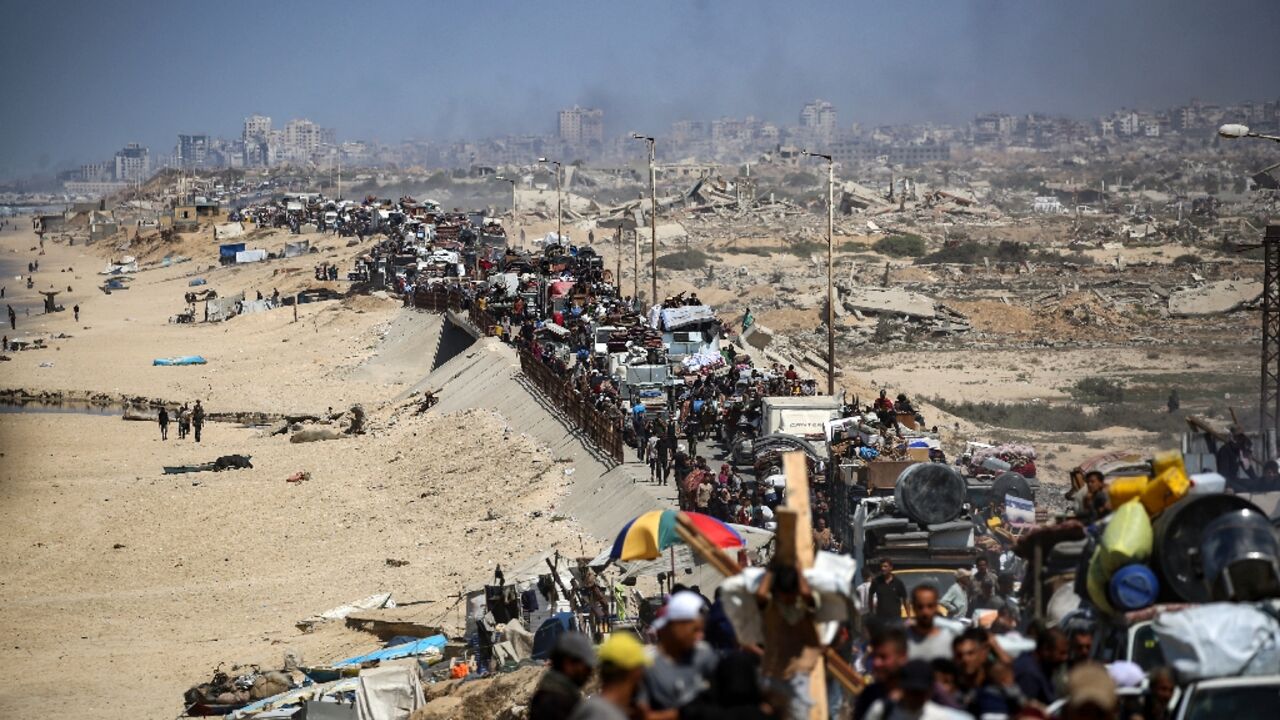
The war has devastated Gaza’s transport system, with total losses estimated at around $2.5bn. A joint assessment by the World Bank, the European Union, and the United Nations found that roughly 81 percent of Gaza’s roads have been damaged or destroyed.
Before the conflict, cars, buses, taxis, and motorcycles filled Gaza’s streets. Even residents without private vehicles could usually find transport within minutes. After more than two years of bombardment, that system has largely vanished.
Rubble blocks major routes, while other streets are deemed too dangerous to use. In many areas, motorised transport has become impractical or entirely impossible.
‘Even Walking Is Difficult’
For Abu Mohammed Jundieh, 55, the destruction of his car meant losing both his livelihood and mobility. Once a driver, he now struggles to move around at all.
“Prices are extremely high, fuel is hard to get, and even when transport exists, most people can’t afford it,” he said. Damaged banknotes and cash shortages have made payment another obstacle, with some drivers refusing worn currency.
Destroyed roads often force residents to take long detours, he added. “Even walking is difficult now.”
Movement itself carries risk. Palestinians face the constant threat of attack whether they travel or stay put. Even those allowed to leave Gaza through limited openings at the Rafah crossing often have to walk, including people with serious medical conditions.
Bicycles Turn Scarce and Costly
As cars and fuel disappeared, bicycles became essential — and scarce. In Gaza City, Abu Luay Haniyeh runs a small repair shop on Jalaa Street, surrounded by used parts and customers waiting their turn.
“There are no new bicycles for sale,” he said. “Before the war, selling bikes was my main business. Now I only repair them.”
Demand has surged, but supply has collapsed. A bicycle that once sold for under $200 can now cost more than $1,000, putting it out of reach for many families.
With motorcycles mostly unusable and fuel unavailable, some residents rely on hand-pulled carts. For many others, bicycles are the only reliable way to move.
Work, Survival, and Displacement
Bicycles have also become vital to Gaza’s remaining service economy. Delivery companies have adapted to the crisis, including Hamama Delivery, based on al-Shifa Street in Gaza City.
Before the war, the company operated around the clock using cars and motorcycles. Today, fuel shortages and destruction have forced it to switch entirely to bicycles.
“Most of our motorcycles were destroyed, and about 50 employees were killed,” said manager Abu Nasser al-Yazji. Despite that, unemployment pushed more people to seek work, expanding the company’s workforce.
Drivers now attach plastic crates to their bicycles to carry food, clothing, and basic supplies. Poor lighting and damaged streets have shortened operating hours to about 10 hours a day.
A Generation F4orced to Adapt
Among the delivery riders is Ahmad, 23, who was studying law before the war. Now, his bicycle is both his transport and his income.
“At first it was exhausting,” he said. “I never imagined I would depend on a bicycle like this.”
During displacement, he added, bicycles made it possible to carry belongings and stay with family while searching for safety. What began as a survival tool eventually became his only way to earn a living.
“Without a bicycle,” Ahmad said, “you’re almost completely stuck.”