


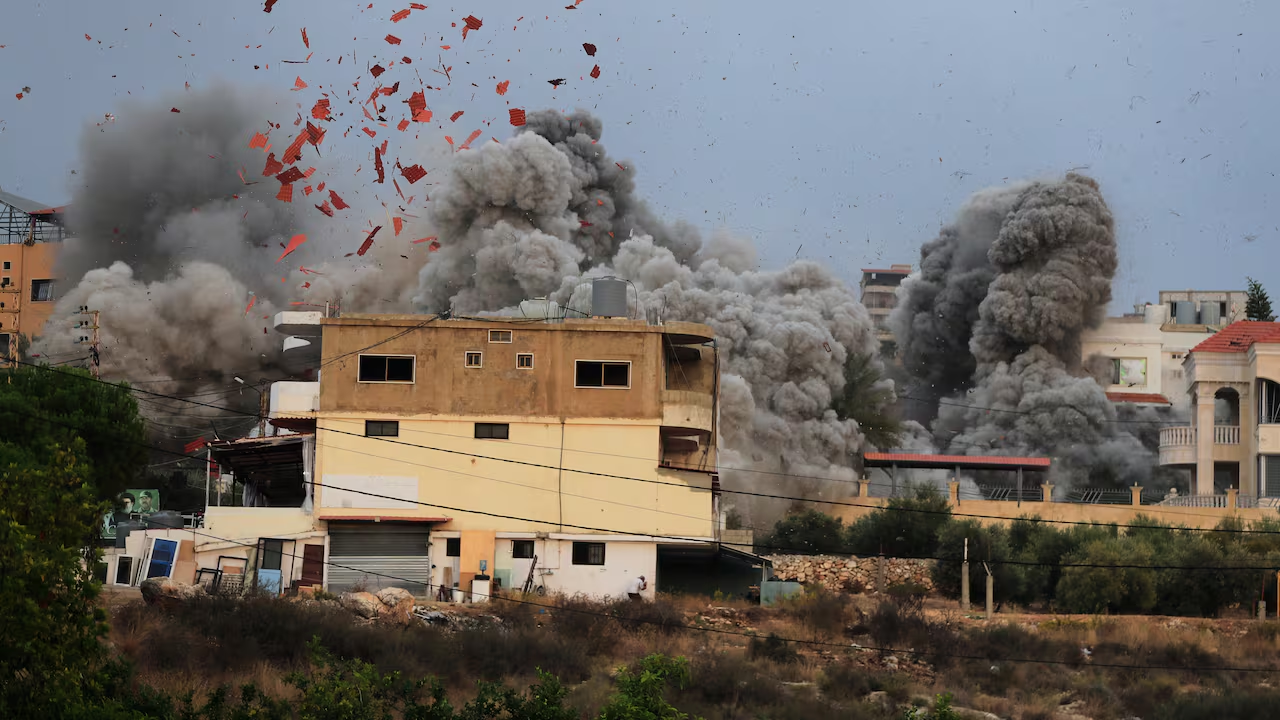
Israel warplanes launched more than a dozen strikes across southern Lebanon, targeting what the military says are Hezbollah training sites. The near-daily attacks have further weakened a ceasefire that has been in place for a year.
Strikes Across Remote Areas
Lebanon’s state news agency reported that the strikes hit hills and valleys in Jezzine and Zahrani, including areas near al-Aaichiyeh, between al-Zrariyeh and Ansar, as well as around Jabal al-Rafie. The Israeli military said it targeted a compound used by Hezbollah’s Radwan Force for weapons training and planning attacks against Israeli troops and civilians.
Al Jazeera’s Zeina Khodr described the ceasefire as essentially “one-sided,” noting that Israel continues its near-daily assaults. She added that recent strikes were deliberately aimed at unpopulated areas, following a repeated pattern seen in previous attacks.
Israel also claimed to have struck rocket-launching sites and other infrastructure it says violate security arrangements.
The United Nations reported in November that at least 127 civilians, including children, have been killed in Lebanon since the ceasefire took effect in late 2024. UN officials warned that these attacks could amount to “war crimes.”

Growing Pressure on Hezbollah
Khodr explained that the ongoing bombardment is part of a broader campaign to pressure Hezbollah into disarming. Israel seeks the removal of the group’s long-range weapons, precision-guided missiles, and drones, believed to be stored in the Bekaa Valley and further inland.
Hezbollah has refused to give up its arsenal, viewing it as essential so long as Israel continues to attack and occupy parts of Lebanon. Khodr noted that Israel maintains clear air superiority, leaving Lebanon and Hezbollah at a military disadvantage.
Tensions intensified two weeks ago when Israel bombed Beirut’s southern suburbs, killing Hezbollah’s senior commander Haytham Ali Tabatabai. The group has not yet retaliated but says it will respond at an appropriate time.
Meanwhile, Lebanon and Israel recently sent civilian envoys to a ceasefire monitoring committee for the first time in decades—an attempt to increase diplomatic engagement. However, Hezbollah leader Naim Qassem criticized Lebanon’s decision, calling it a “free concession.”
Lebanese officials have voiced growing frustration over near-daily strikes. President Joseph Aoun said Lebanon has opted for negotiations in hopes of stopping the attacks, while Prime Minister Nawaf Salam urged for a stronger verification mechanism to monitor violations.
Khodr added that despite Lebanon joining talks, the US ambassador to Lebanon made clear that this does not guarantee Israeli attacks will cease.