


US President Donald Trump has said Washington is engaged in what he described as “productive” talks with Iran. Publicly, however, Iranian officials have dismissed those claims as false, arguing they are meant to calm oil markets rather than signal real progress.
According to two senior regional diplomatic sources cited by Al Jazeera, Egypt, Turkiye and Pakistan have recently helped establish an indirect channel between American and Iranian officials. Even so, analysts remain doubtful that these contacts will quickly lead to a ceasefire, as both sides still appear far apart on core demands.
What seems clearer is that Iran’s position has become tougher since the war began on February 28, when the United States and Israel launched attacks on Iran and killed then-Supreme Leader Ayatollah Ali Khamenei. While Washington and Israel say the campaign has significantly weakened Iran’s military strength, Tehran has continued to show it can still retaliate in ways that matter strategically.
A Strategy Built on Pressure and Deterrence
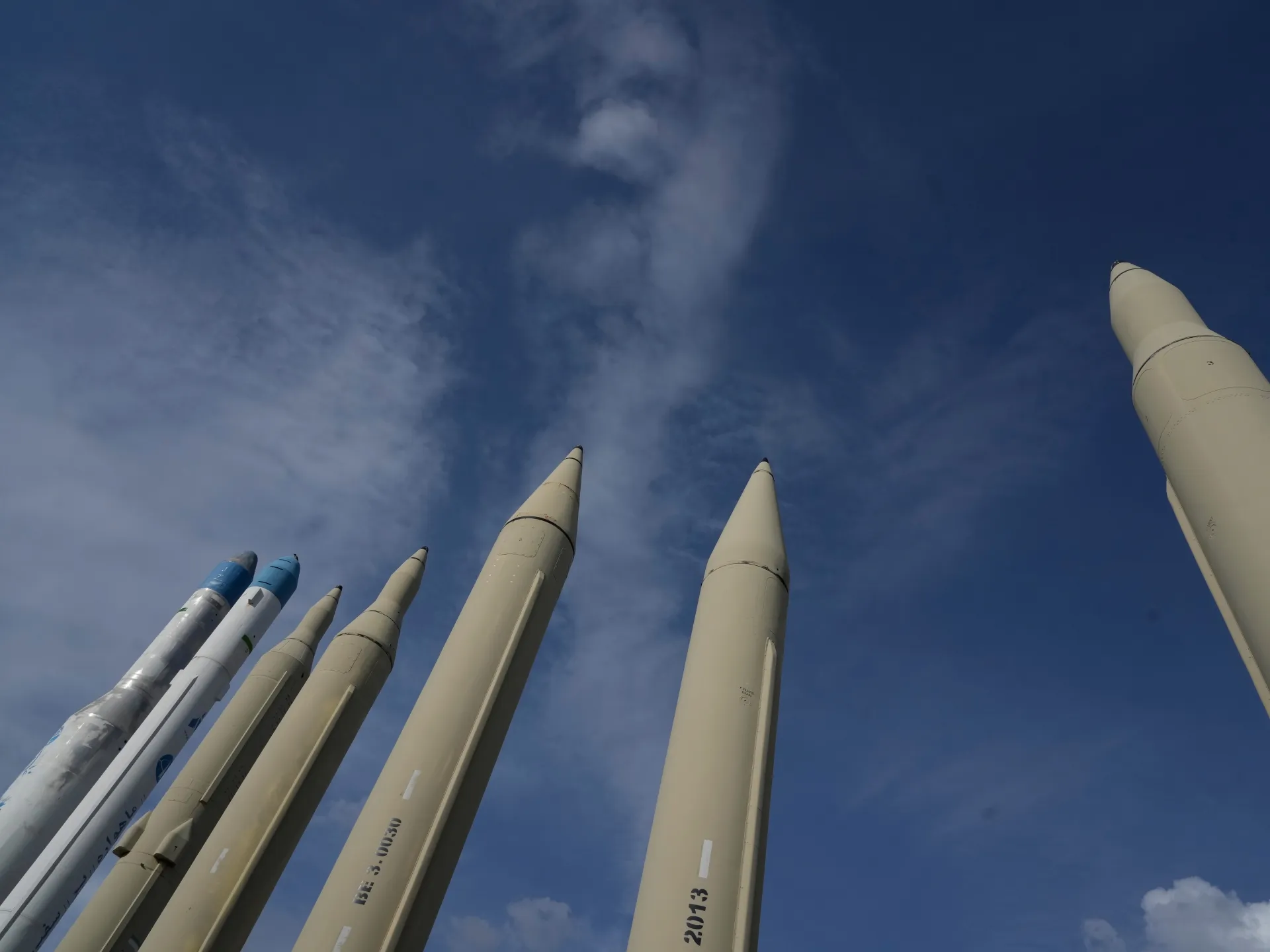
The Pentagon says around 90 percent of Iran’s missile capability has been destroyed. Yet Iranian forces have continued to demonstrate that they can launch strikes with precision when they choose.
At the same time, the Strait of Hormuz remains a central pressure point. Hundreds of vessels have been left paralysed in the waterway, which carries roughly a fifth of global oil exports. Iran has pursued what observers describe as an “eye for an eye” approach, seeking to rebuild deterrence by answering attacks with direct counterstrikes.
Last week, Iranian forces struck Qatar’s main gas site after an Israeli attack on Iran’s South Pars field, cutting a significant share of export capacity. After a strike on Iran’s Natanz nuclear facility, two Iranian ballistic missiles reportedly broke through Israeli air defences and hit Arad and Dimona, injuring more than 180 people.
Analysts say Tehran is now pursuing more than just a halt to the fighting. Its goal appears to be shaping a post-war arrangement that restores deterrence and secures lasting economic and security guarantees.
Iran’s New Demands
Iranian military and political figures have recently signalled several priorities for any future settlement. These include reparations, firm guarantees against renewed attacks and a new regulatory arrangement for movement through the Strait of Hormuz.
Negar Mortazavi, a senior fellow at the Center for International Policy in Washington, said Tehran would likely try to end the war on terms that bring sanctions relief, compensation for war damage and stronger economic leverage. She noted that the pressure point around Hormuz has even opened discussion inside Iran about charging passage fees through the strait.
Analysts say Iran is unlikely to surrender that leverage without major concessions, especially because the war has already delivered some economic benefits that diplomacy did not. The Trump administration temporarily waived sanctions on the purchase of 140 million barrels of Iranian oil at sea in an effort to cool prices.
What Washington Still Wants
Trump has repeatedly said one of the main reasons for the war is to stop Iran from obtaining a nuclear bomb, despite earlier claims that Iran’s nuclear programme had already been destroyed during the previous 12-day conflict. On Monday, he said he still wanted Iran to give up more than 400kg of uranium enriched to near weapons-grade levels. Iranian officials say that stockpile is now buried under rubble at one of the bombed nuclear sites.
In earlier negotiations, Washington also pushed Iran to dismantle its ballistic missile programme and end support for allied armed groups in the region. According to one of the sources cited in the report, the US has now proposed allowing Iran to keep 1,000 medium-range missiles, a notable shift from previous demands.
Still, any path to diplomacy faces a deep crisis of trust. Trump ordered strikes on Iran in both June 2025 and February 2026 while indirect talks were under way, and he has repeatedly spoken about regime change as a goal. For Tehran, that history makes any negotiation highly uncertain.
Questions Over Iran’s Negotiating Team
Another major uncertainty is who would actually lead negotiations on Iran’s side. Recent US and Israeli strikes killed several senior Iranian figures, including Ali Larijani, who had served as an important contact for international mediators.
On Tuesday, Iran appointed Mohammad Bagher Zolghadr as secretary of the Supreme National Security Council. Zolghadr is a former Islamic Revolutionary Guard Corps commander and also serves as secretary of the Expediency Council. Political analyst Babak Vahdad said the appointment suggests any future talks will be even more closely shaped by IRGC priorities and threat perceptions.
In his view, the move looks less like preparation for compromise and more like preparation for a prolonged confrontation.
Diplomacy or Delay?
Some observers believe Trump’s recent decision to delay further attacks was driven less by diplomacy than by concern over oil prices, which have risen sharply since the war began. At the same time, the United States has continued building up forces in the region, including thousands of Marines and additional amphibious assault ships.
Trump has not clearly said whether he would deploy ground troops, but he has floated the possibility of seizing Iran’s Kharg Island, through which most of the country’s oil exports pass.
Abdulkhaleq Abdulla, a political science professor from the United Arab Emirates, said the military buildup on the ground tells a different story from the diplomatic language. He argued that Gulf states and other international partners would not accept a scenario in which Iran retains long-term control over the Strait of Hormuz, because that would give Tehran too much leverage over regional energy exports.
He suggested that if Iran refuses to give up that leverage, diplomatic options may narrow further, leaving force as the only route others may pursue.