


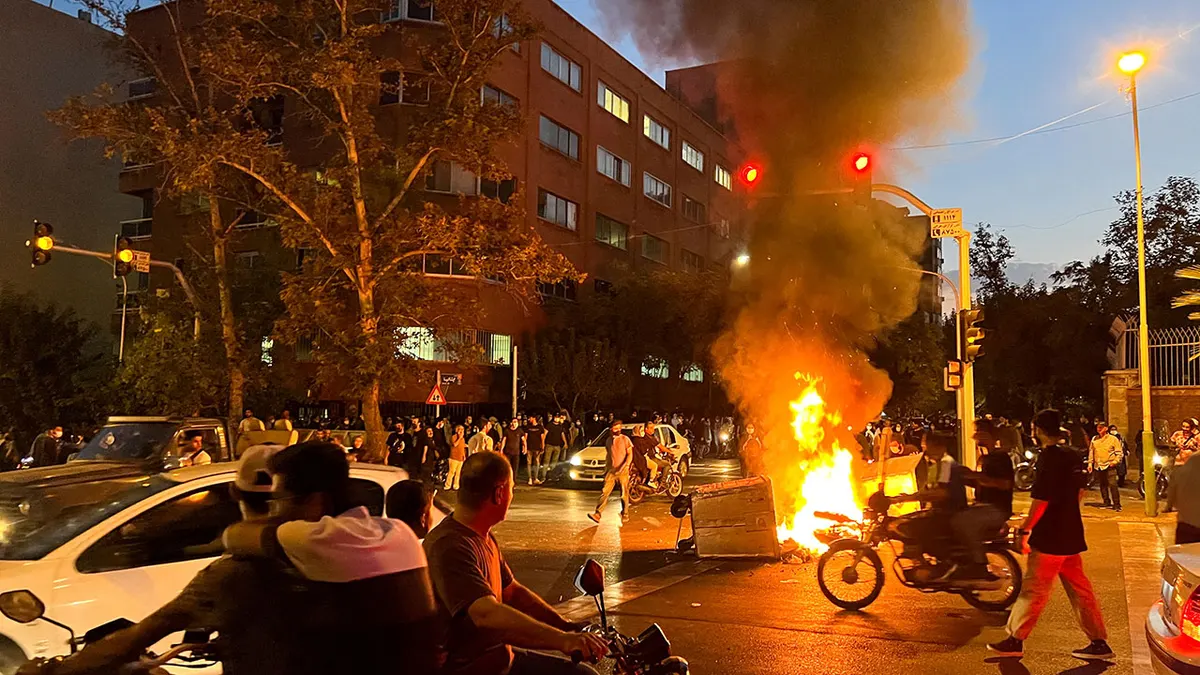
Iran has warned it will retaliate if attacked by the United States, as activists and media sources report a sharply rising death toll amid an intensifying crackdown on nationwide protests.
Sources inside Tehran told the BBC that security forces have used live ammunition during operations to suppress demonstrations, with streets in parts of the capital described as resembling a conflict zone. Human rights groups say hundreds of people have been killed since unrest began.
The US-based Human Rights Activist News Agency reported it had verified the deaths of 495 protesters and 48 members of the security forces, with more than 10,600 people detained over roughly two weeks of unrest.
US Signals Possible Action but Leaves Options Open
The United States has warned it could intervene over the killing of protesters. On Sunday, US President Donald Trump said Iranian leaders had reached out to him and indicated a willingness to negotiate, while also cautioning that Washington “may have to act” before any talks take place.
Trump said the administration was considering “very strong options,” without detailing them. US officials told American media that the president had been briefed on possible military strikes, as well as non-military measures such as cyber operations, expanded sanctions, and information campaigns.
Iranian Officials Threaten Regional Response
Iran’s parliament speaker warned that any US attack would trigger retaliation against American and Israeli interests in the region, including military assets and shipping.
The protests, which initially erupted over soaring inflation and the collapse of the national currency, have increasingly taken on political demands, with demonstrators calling for an end to clerical rule under Supreme Leader Ali Khamenei.
Iran’s attorney general said protesters would be treated as “enemies of God,” an offense that carries the death penalty under Iranian law. Khamenei has dismissed demonstrators as vandals acting to serve foreign interests.
Hospitals Overwhelmed, Internet Severely Restricted
Medical workers told the BBC that hospitals in several cities have been overwhelmed by casualties. Verified footage reviewed by BBC teams showed large numbers of bodies at morgue facilities near Tehran, though independent reporting inside Iran remains severely limited.
Authorities have imposed a nationwide internet shutdown since Thursday, restricting access even to domestic networks. Internet researchers say the blackout is more extensive than during the 2022 “Women, Life, Freedom” protests.
Clashes Reported Across Major Cities
Verified videos reviewed by BBC Verify show confrontations between protesters and security forces in cities including Tehran, Mashhad, Ilam, and Rasht. The footage shows crowds facing security lines, fires in the streets, and the sound of gunfire during nighttime clashes.
Iranian President Masoud Pezeshkian has blamed the United States and Israel for orchestrating the unrest, alleging — without providing evidence — that foreign-backed groups were involved in attacks on public buildings and markets.
However, authenticated videos confirm that security forces have fired on gatherings of protesters in multiple regions.
Exiled Royal Figure Voices Support
Reza Pahlavi, the US-based son of Iran’s last shah, issued a message of support to protesters, praising their courage and urging them to continue demonstrating while prioritizing their safety. His claims that security forces are abandoning their posts could not be independently verified.
Protests in solidarity with demonstrators in Iran have also been reported abroad, including incidents at Iran’s embassy in London, prompting Tehran to summon the UK ambassador.
Most Serious Unrest in Years
The current unrest is the most extensive since the 2022 uprising triggered by the death of Mahsa Amini while in custody. Human rights groups say more than 550 people were killed and around 20,000 detained during that earlier wave of protests.
As tensions rise between Tehran and Washington, the situation inside Iran remains volatile, with mounting casualties, restricted communications, and the risk of wider regional escalation.