


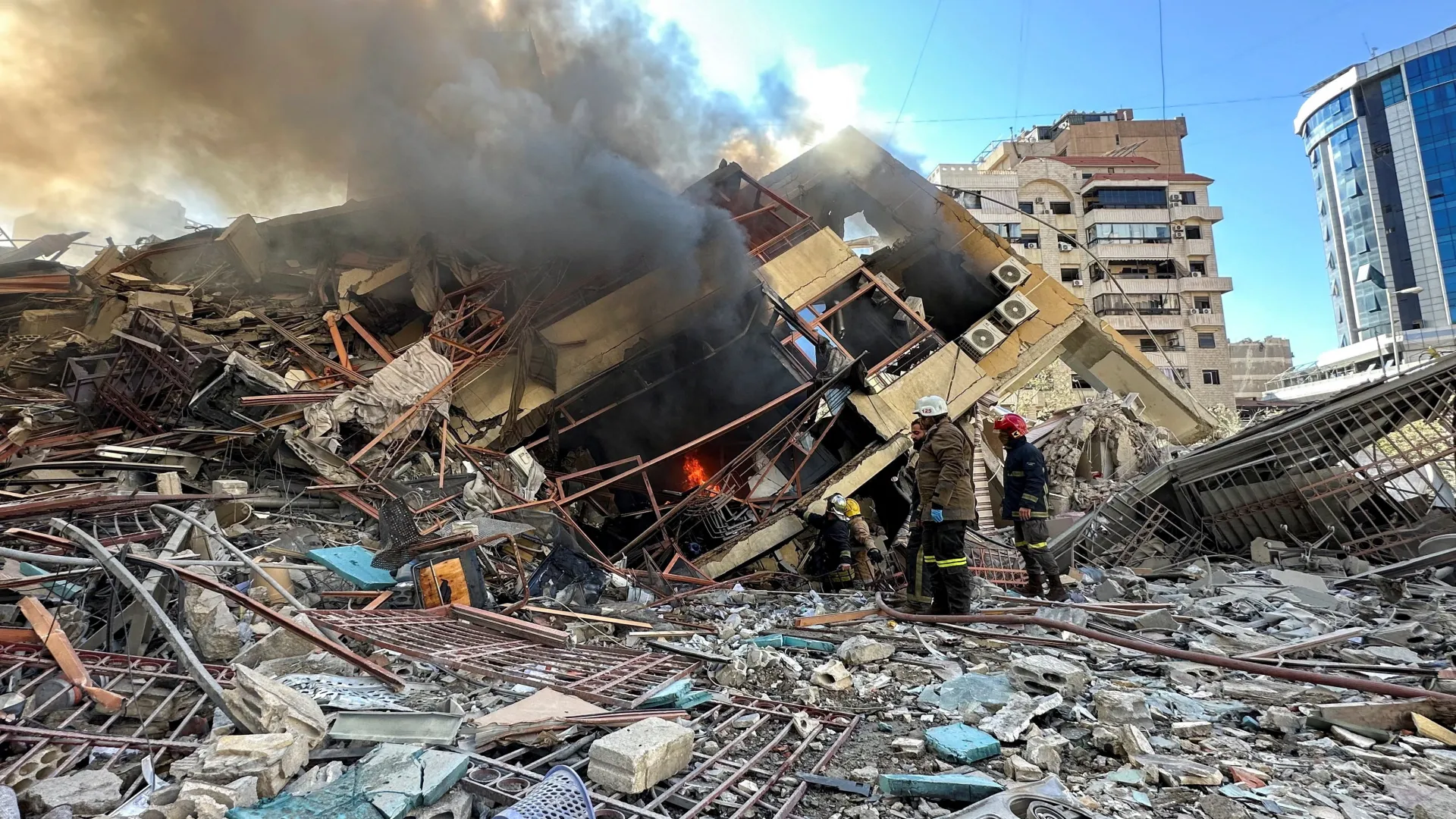
The United States-Israeli war on Iran has entered its 12th day, with Tehran saying nearly 10,000 civilian sites have been struck since the conflict began on February 28 and that more than 1,300 civilians have been killed. Iranian officials have accused Washington and Israel of deliberately targeting homes, healthcare facilities and other civilian infrastructure.
Overnight, new attacks were reported in Tehran, including around Mehrabad airport and in residential parts of the capital. Iranian emergency teams said rescue workers were searching through damaged buildings after another heavy wave of strikes. Reports from inside Iran described loud explosions across several districts as bombardment continued into the night.
Iranian officials also said the latest round of attacks came as US Defence Secretary Pete Hegseth warned that Tuesday could become the most intense day of the campaign so far. Tehran has vowed to respond to strikes on civilian areas, with military spokesmen saying the country would not leave such attacks unanswered.
Tehran keeps up missile and drone retaliation
Iran has continued its retaliatory campaign against Israel and US-linked targets in the region. Iranian media and regional reporting said the Revolutionary Guards launched what they described as a 37th wave of attacks, including missile barrages aimed at locations in Israel and at US positions in Gulf states and Iraq.
Israeli media said warning sirens sounded across Tel Aviv and central Israel as missiles were intercepted. At the same time, Gulf countries reported fresh drone and missile threats, showing how the conflict is continuing to spread well beyond Iranian territory.
Health fears grow after oil facility strikes
The war has also created new environmental and public health concerns. After earlier strikes on oil depots and fuel facilities near Tehran, the World Health Organization warned about the risk of toxic rainfall known as “black rain”. The agency backed Iranian advice for residents to stay indoors because smoke from fuel fires could mix with weather systems and carry dangerous pollutants.
Those warnings added to growing fears in the capital, where residents and officials have described thick smoke, contaminated air and worsening conditions around affected industrial areas.
Gulf states remain on alert
Across the Gulf, several countries reported new attempted Iranian strikes or interceptions. Saudi Arabia said its air defences had intercepted drones and ballistic missiles, including threats aimed at its eastern region and Prince Sultan Air Base. Qatar also reported intercepting a missile attack and later said the immediate danger had passed.
The United Arab Emirates said it intercepted dozens of drones, though some fell inside its territory. A separate strike triggered a fire at Abu Dhabi’s Ruwais industrial complex, home to one of the world’s biggest oil refining sites. Reports also said the refinery halted operations as a precaution after the attack.
There were also reports that Iran targeted a US base in Kuwait, though Kuwaiti authorities had not publicly confirmed that claim at the time of publication. Meanwhile, Britain’s maritime security agency said a cargo ship in the Strait of Hormuz caught fire after being hit by an unidentified projectile, forcing its crew to evacuate.
Energy markets remain under pressure
The attacks across the Gulf and around the Strait of Hormuz have kept pressure on global energy markets. Concerns over shipping disruptions and damage to oil infrastructure helped drive prices sharply higher earlier in the conflict, while governments and companies remain on alert for further disruption to the world’s energy supply chain.
Qatar has been among the countries urging de-escalation, warning that attacks on neighbouring states bring no benefit and make mediation harder. Regional leaders have continued calling for a return to negotiations to stop the crisis from widening further.
Pressure builds in Washington
In the United States, the war is coming under heavier political scrutiny. After closed-door briefings that reportedly failed to answer key questions about the conflict’s goals or likely duration, Senate Democrats have called for public hearings on the administration’s strategy.
The Pentagon has confirmed that about 140 US service members have been wounded and seven killed since the start of Operation Epic Fury. At the same time, the White House is facing questions over civilian casualties, including an investigation into a deadly strike on an Iranian girls’ school. Reuters and other outlets have also reported widening concern over the humanitarian toll of the war.
US officials have said more than 5,000 targets in Iran have been hit so far, while thousands of American citizens have been evacuated from the Middle East on commercial and chartered flights as the risk of further escalation grows.
Lebanon and Iraq feel the impact
The wider conflict is also spilling deeper into Lebanon and Iraq. In Lebanon, Israeli attacks have continued, including strikes in Beirut and other areas, while Lebanese officials say hundreds have been killed since last week and mass displacement is growing. The Pope on Wednesday also spoke of civilian suffering in both Iran and Lebanon.
Iran has condemned an Israeli strike in Beirut that killed four Iranian diplomats, calling it a terrorist act and demanding action at the UN Security Council. In Iraq, Prime Minister Mohammed Shia al-Sudani has warned against the country being used as a launchpad for attacks after new strikes hit several locations, including areas linked to the Popular Mobilisation Forces.
A conflict still moving without a clear end
As day 12 unfolds, the war shows no clear sign of slowing. Iran is under sustained attack, Gulf states remain exposed, energy markets are volatile and Washington is facing growing demands to explain what success would actually look like.
What is clear for now is that the conflict is no longer limited to strikes inside Iran. It has become a broader regional crisis, with military, political and economic consequences continuing to expand by the day.