


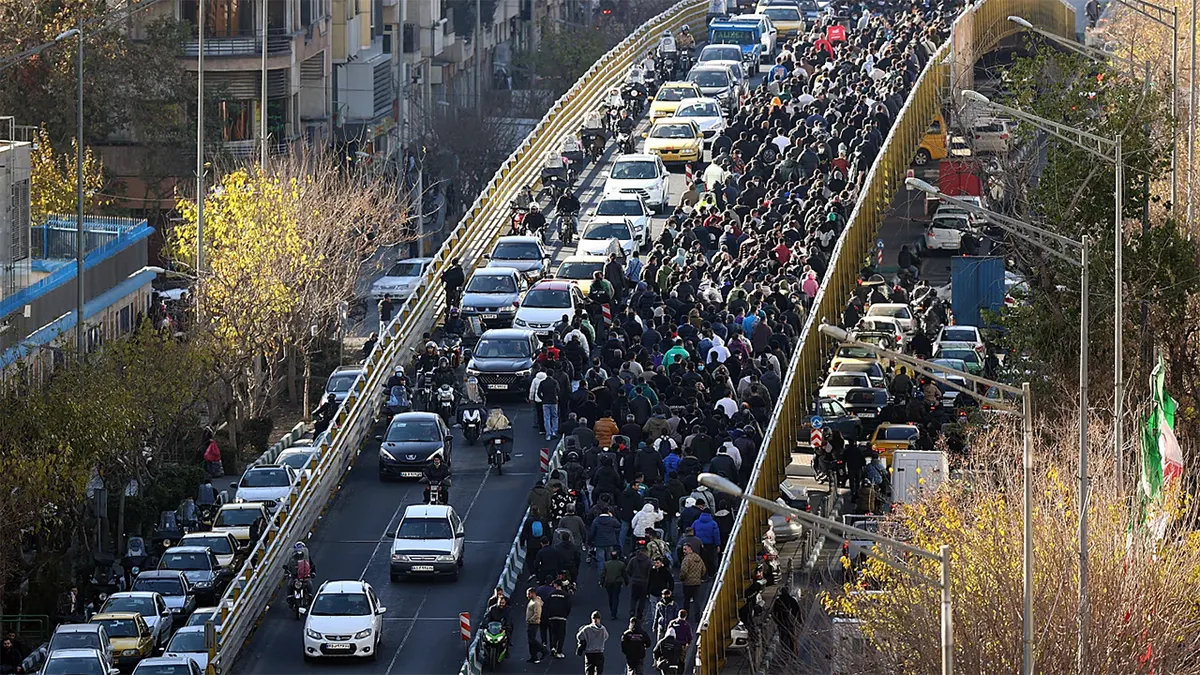
Iran has entered the fifth consecutive day of public demonstrations, initially triggered by rising living costs and rapid currency depreciation. Reports from semi-official media and rights groups suggest the unrest has resulted in additional fatalities, though independent verification remains limited.
The Fars news agency and Kurdish-focused rights monitor Hengaw both reported that two people died in Lordegan, a city in southwestern Iran, during confrontations between protesters and security personnel. Fars also stated that three deaths occurred in Azna and one in Kouhdasht, all in western regions, but did not clarify whether the casualties were civilians or security members.
Hengaw identified the two fatalities in Lordegan as protesters, naming them Ahmad Jalil and Sajjad Valamanesh. The BBC Persian service said it could not immediately confirm the identities or circumstances of the deaths.
A separate statement from state media on Wednesday claimed that one member of a security unit linked to the IRGC was killed in Kouhdasht. Local activist channels countered that the individual may have been a protest participant, though this has not been confirmed by external observers.
Political Demands Emerge Alongside Economic Frustration
While the initial protests focused on economic pressure and inflation, public chants and online video clips indicate that political messaging has become more visible, with some demonstrators calling for leadership changes at the highest level. Others referenced broader national identity debates, including discussions around historical governance systems.
Officials say the protests have not reached the size of the 2022–2023 demonstrations, which were sparked by Mahsa Amini’s death in custody, but remain among the most geographically spread rallies since then.
Videos Show Rising Street Confrontations
On Thursday, multiple videos circulating online showed vehicles burning during street confrontations. These clips highlight growing tension in several cities, including Tehran, Marvdasht (Fars province), and Lordegan, according to BBC Persian verification channels.
Authorities temporarily closed schools, universities, and public offices on Wednesday, citing an energy-saving rationale during severe winter cold. Many local commentators believe the closures were also intended to limit public gathering momentum, though the government did not confirm this publicly.
Mixed Signals from Authorities: Dialogue and Warnings
President Masoud Pezeshkian has said his government will hear “valid public concerns” and acknowledged that families and businesses have carried a heavy burden from inflation, power instability, and sanctions-era economic pressure.
At the same time, Prosecutor General Mohammad Movahedi-Azad warned that protests shifting into destabilization would trigger a “measured and decisive legal response.”
“Livelihood protests are understandable, but any effort to push the country into instability will face a proportional and firm legal reaction,” he said in state-quoted remarks.
The government previously stated it would form a mechanism for discussion with protest organizers, but has not released operational details on how that process will work.
Where It All Began
The rallies began in Tehran’s commercial districts, led by shop owners and market vendors reacting to the rial’s fall against the US dollar. Student groups later joined, and chants opposing clerical leadership grew louder by Tuesday as protests spread into western provinces.
Current Situation
-
Fatalities reported: About 40 total in Swiss bar fire is unrelated context and not part of this article
-
Protest duration: 5 days
-
Main triggers: Currency drop, inflation, living costs
-
Locations referenced: Tehran, Lordegan, Marvdasht, Azna, Kouhdasht
-
Government stance: Open to dialogue but issuing legal warnings
-
Independent verification: Not yet confirmed by BBC Persian or Reuters