


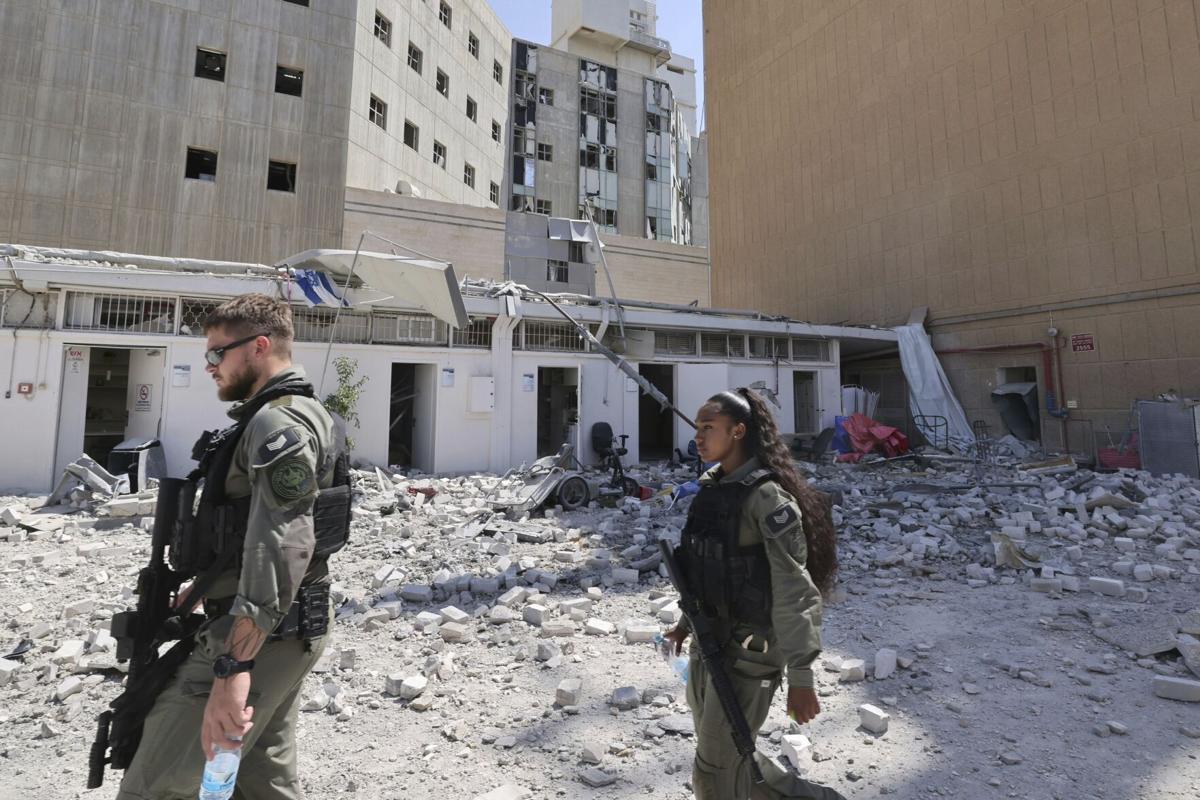
Iran says its military has launched attacks on key Israeli sites, including military airbases and the domestic security agency Shin Bet, as the confrontation involving Iran, Israel and the United States moves deeper into a third week. Iranian state media said the strikes targeted the Palmachim and Ovda airbases as well as the Shin Bet headquarters using drones. Israel had not publicly confirmed those claims in the reporting reviewed here.
Israel, meanwhile, said it detected more missiles fired from Iran, with sirens sounding in Jerusalem and explosions heard as air defenses responded. Overnight launches from Iran and Hezbollah also pushed residents in other areas, including Tel Aviv and northern Israel near the Lebanese border, into shelters. Israel later said it had carried out another wide round of air strikes across Iran.
Conflict Continues With No Clear Sign of De-Escalation
The war, which has been reported as having begun on February 28, has shown no clear sign of slowing. Israeli officials have said at least 13 people have been killed and nearly 2,000 injured in Israel since the fighting started. At the same time, US President Donald Trump has argued that American strikes had already dealt a major blow to Iran, even as exchanges of fire continued.
Iranian President Masoud Pezeshkian said Tehran still supports regional peace, but insisted that any end to the war must include recognition of Iran’s rights, reparations, and guarantees against future attacks. In remarks posted on X, he said he had spoken with the leaders of Russia and Pakistan and blamed the conflict on Israel and the United States. Reuters has separately reported that Russia has remained in close contact with Iranian leaders while calling for an end to the hostilities.
Iran Says Hospitals and Civilian Infrastructure Have Been Hit
Iranian officials also accuse Israel of damaging hospitals and other civilian sites during the campaign. Iranian Deputy Health Minister Ali Jafarian said hospitals and health facilities across the country have suffered damage and that medical teams are facing a rising number of casualties, many of them civilians, according to Al Jazeera.
Independent reporting supports at least part of those claims. Reuters reported on March 2 that Israeli strikes hit a hospital in Tehran’s Gandhi Street area, with witnesses saying the building was badly damaged and patients were being evacuated. The World Health Organization also told Reuters earlier this month that it had verified 13 attacks on health care sites in Iran, resulting in three deaths.
Iranian and regional media have also described broader damage to schools, hospitals, residential neighborhoods and energy infrastructure. Iranian officials say tens of thousands of civilian buildings have been affected, while some hospitals have been forced out of service. Those figures come mainly from Iranian authorities and have not all been independently verified.
Warnings Grow Over Further Escalation
Iranian parliament speaker Mohammad Baqer Qalibaf also warned that any US attack on Iranian islands in the Gulf would lead Tehran to abandon all restraint. The warning is significant because several of those islands play an important role in energy exports, while others host Iranian military positions.
As the fighting continues, both sides are pushing their own narratives. Iran says its operations are aimed at Israeli military and security targets, while accusing Israel of striking hospitals and civilian infrastructure. Israel says it is responding to incoming missile threats and continuing operations inside Iran. With air raids, missile launches and regional tensions all still active, the conflict remains far from resolved.