


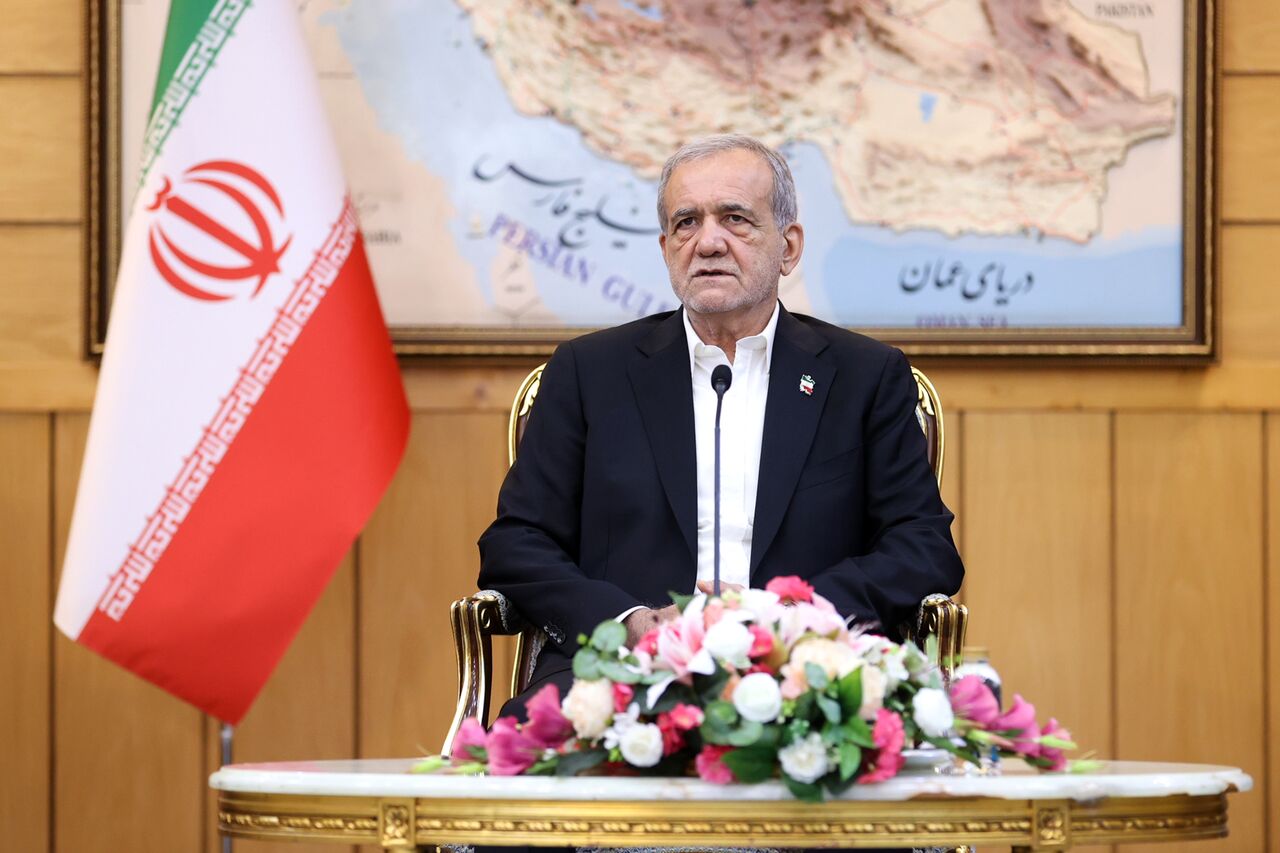
Iranian President Masoud Pezeshkian delivered a strong message of solidarity on Wednesday, urging citizens to stand united as the country grapples with mounting economic strain and expanding street protests. His remarks came amid violent clashes in Lorestan province, where at least one member of Iran paramilitary forces was killed, marking the most serious protest-related casualty reported so far.
At the same time, authorities in Fars province confirmed an attack on a local governor’s office, while security forces in Fars and Fars-linked regions including Fasa and Fars responded to crowds attempting to enter government facilities by firing warning shots and live ammunition.
Protests Sparked by Currency Collapse
The demonstrations began on Sunday when market traders and shop owners at Tehran’s Grand Bazaar took to the streets after the Iranian rial reached historic lows against the US dollar, worsening an already heavy inflation burden. The protests have continued for four straight days, drawing participation from university students and spreading to cities including Isfahan, Yazd, Yazd-related areas, Zanjan, Kuhdasht, Fasa, and Fasa-linked regions.
In Kuhdasht, local state media confirmed the death of 21-year-old Basij officer Amir Hossam Khodayari Fard, reportedly killed during a confrontation described by officials as “violent unrest”. Government broadcasters claimed the clashes that injured 13 other Basij members were fueled by groups exploiting economic frustration for political motives.
Iran maintains that the protests stem from financial hardship, not opposition to the country’s theocratic system.
President Blames “External Pressure”
Addressing a business summit in Tehran, President Pezeshkian linked the unrest to foreign interference and international economic sanctions.
“We are facing pressure from outside forces and, regrettably, tensions from within as well,” he said, before describing the situation as a “total economic battle.”
He emphasized that nations cannot be defeated through airstrikes or military weapons alone.

“A country cannot be overpowered by missiles or fighter jets. Economic pressure is their main strategy now,” he added. “But if we stay aligned and focused on progress, no force can weaken Iran.”
Iran rejects accusations of pursuing nuclear weapons and denies any intention to develop them, despite the return of UN sanctions initiated by European countries in 2025.
Government Promises Dialogue, Prosecutor Warns Action
Following mixed government signals, officials announced plans to form a communication channel with protest leaders, though details remain unclear.
Fatemeh Mohajerani, a government spokesperson, said authorities would listen to public concerns with patience, acknowledging the severity of the crisis.
“Our duty is to hear the people and guide society toward shared solutions,” she said, affirming the right to peaceful protest.
However, Iran’s Top Prosecutor Mohammad Movahedi-Azad warned that protests crossing into public destruction or national destabilization would be met with firm legal consequences.
“Economic protests are understandable,” he said, “but any attempt to use them for insecurity, property damage, or foreign-backed agendas will trigger a lawful and decisive response.”
Public Trust in Government Remains Uncertain
Political analysts say public confidence is fragile. Trita Parsi of the Quincy Institute noted that government officials themselves have previously admitted limitations in solving economic issues.
“The president recently said he has no power to resolve these problems. That alone weakened public belief,” Parsi explained.
Experts also noted that protests starting from economic frustration can quickly shift toward broader political demands.
Crisis Beyond the Economy
Iran is facing more than currency collapse. The nation is also dealing with:
-
Widespread power shortages
-
A deep energy deficit
-
Critically low dam and reservoir levels
-
A prolonged national water emergency
While tensions with Israel and the United States remain in the background, protesters have continued to stress that their main demand is economic relief, particularly the rising cost of daily goods and services.