


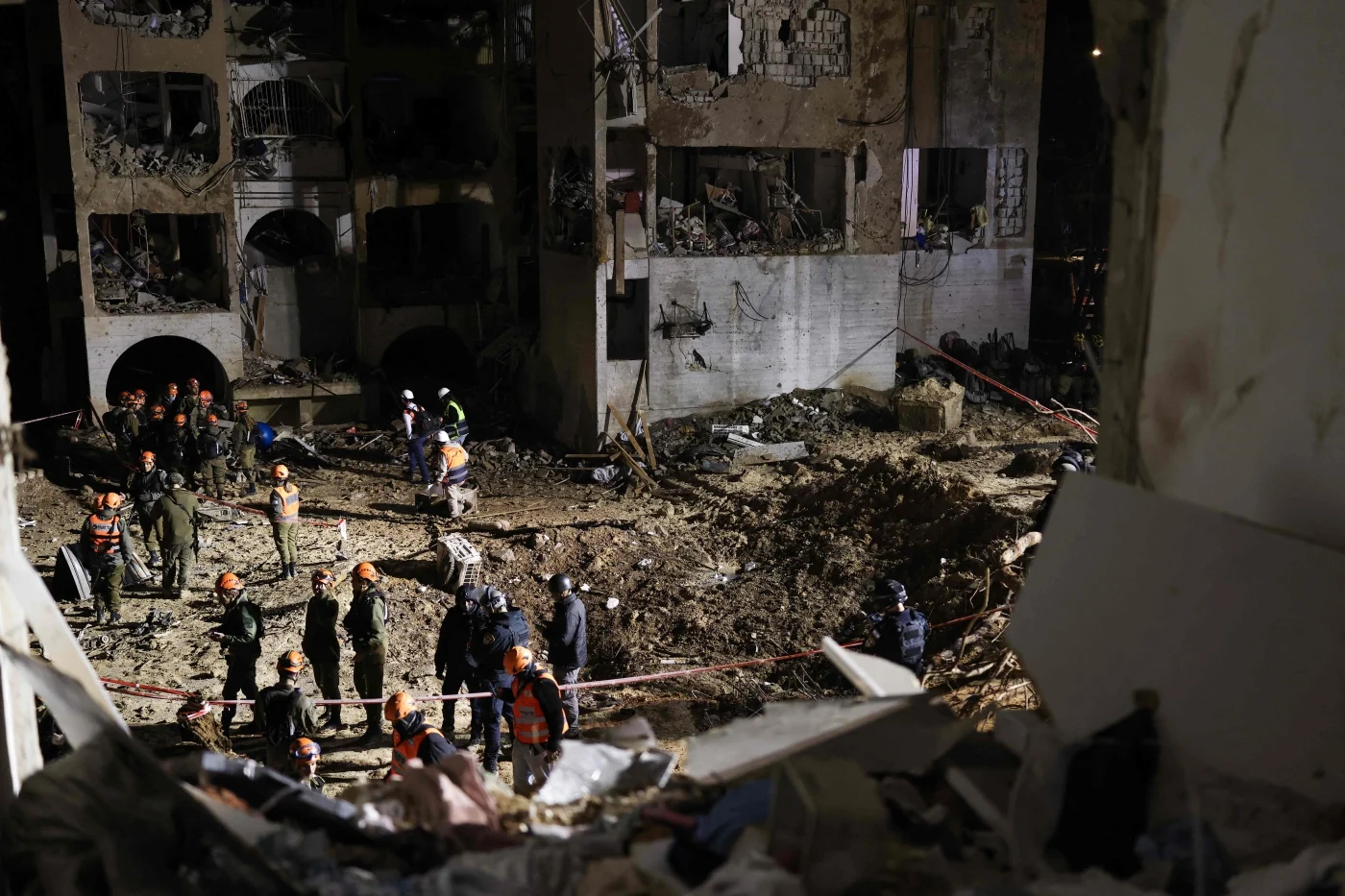
More than 100 people were wounded after Iran missile attacks struck the southern Israeli cities of Dimona and Arad, in one of the sharpest escalations since the US-Israel war on Iran began. Dimona is home to Israel’s main nuclear research center, making the strike especially sensitive in a conflict already shaped by attacks on strategic sites.
Israeli emergency services said at least 88 people were injured in Arad, including 10 in serious condition, while another 39 were hurt in Dimona. Among the wounded in Dimona was a 10-year-old boy reported to be in critical condition after suffering multiple shrapnel injuries. Reports from the area described heavy damage in residential neighborhoods, with some buildings destroyed and fires breaking out after impact.
Iran Casts Strikes as Response to Natanz Attack
Iranian state media described the barrage as retaliation for what Tehran said was an earlier attack on the Natanz nuclear enrichment facility. Reuters reported that Iranian media said Natanz had been targeted on Saturday morning, while also stating that no radioactive leak had been detected there.
That exchange marks a deeper stage in the back-and-forth attacks between the two sides, with both now openly tying military actions to nuclear-related sites. Analysts say this kind of targeting raises the stakes well beyond conventional battlefield calculations because of the symbolic and strategic value of those locations.
Israeli Defenses Failed to Stop Some Missiles
Israeli officials said air defense systems were activated during the attack, but some of the incoming missiles were not intercepted. Reuters reported that Israeli military officials said interceptors were launched but failed to stop at least some of the threats, leading to direct hits in both Dimona and Arad.
The reported failures added to concern inside Israel, especially because the missiles struck populated areas near a highly sensitive nuclear facility. Prime Minister Benjamin Netanyahu called it a difficult evening and said Israel would continue its campaign against Iran.
No Damage Reported at Dimona Nuclear Center
Despite the proximity of the strikes, the International Atomic Energy Agency said it had received no indication of damage to the Shimon Peres Negev Nuclear Research Center in Dimona. The agency also said no abnormal radiation levels had been detected in the area. Director General Rafael Grossi called for maximum military restraint, especially around nuclear facilities.
That assessment offered some immediate reassurance, but it did little to reduce broader fears about how dangerous the conflict could become if attacks continue near nuclear infrastructure. Even without direct damage, repeated military activity around such sites risks triggering international alarm.
Earlier Strike on Tehran Facility Added to Tensions
Before the Iranian missile attack, Israel said it had struck a research and development site at Tehran’s Malek Ashtar University, claiming the facility had been used to develop components linked to nuclear weapons and ballistic missiles. That announcement came amid wider Israeli claims that it would not allow Iran to obtain nuclear weapons.
At the same time, an Associated Press report said an unnamed Israeli official denied responsibility for the Natanz strike, even as Iran publicly blamed the US and Israel. That uncertainty has added another layer of tension, with each side pushing its own version of events as the conflict intensifies.
Conflict Moves Further Into Dangerous Territory
The latest exchange shows how the war is moving into a more dangerous phase, where military action is increasingly tied to strategic and symbolic targets. Dimona has long stood at the center of Israel’s undeclared nuclear program, while Natanz remains one of Iran’s most important nuclear sites. Strikes near either location carry major political and security consequences.
For now, the missile attacks on Dimona and Arad have added to the sense that neither side is stepping back. With more than 100 wounded, visible failures in air defense, and renewed warnings from nuclear monitors, the conflict appears to be growing riskier by the day.