


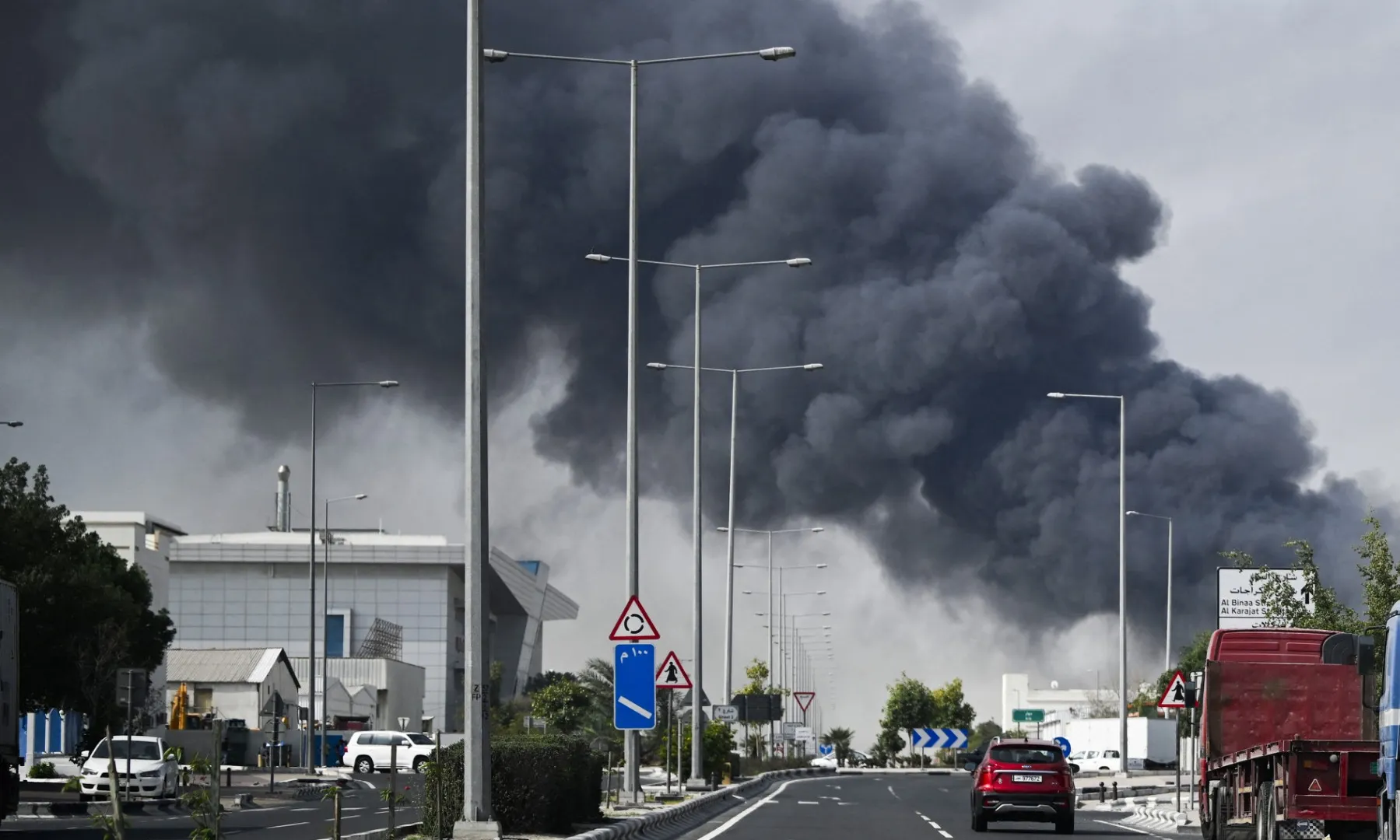
Iran launched missiles and drones toward several Gulf Arab countries in a new wave of attacks, as the fallout from the United States-Israel war on Iran continued to spread across the Middle East. The conflict, now nearly three weeks old, has brought mounting casualties, destruction, political instability, and an energy crisis that is reaching far beyond the region.
Early on Tuesday, Qatar’s Ministry of Defence said its armed forces intercepted a missile attack aimed at the country. In Kuwait, the National Guard said it shot down an unmanned aircraft at dawn, just hours after the Kuwaiti military reported that it was responding to hostile missile and drone threats.
The United Arab Emirates, Saudi Arabia and Bahrain also reported intercepting incoming missiles and drones in recent hours. Saudi Arabia’s Ministry of Defense said a drone was intercepted and destroyed in the Eastern Region, while the UAE said its air defences were actively responding to threats from Iran.
Explosions Reported as Air Defences Respond
In the UAE, the Ministry of Defence said on Tuesday that the country’s air defences were responding to incoming missile and drone threats. The statement followed another reported Iranian attack earlier the same day. Later, a loud explosion was heard in Dubai as authorities said defensive systems were dealing with a missile threat.
Reporting from Dubai, Al Jazeera’s Zein Basravi said the UAE had been among the hardest-hit Gulf states during Iran’s retaliation campaign. He said thousands of projectiles had been launched toward Gulf Cooperation Council countries, with more than half reportedly aimed at locations in the UAE. He added that overnight explosions and the sight of defensive fire in the sky had become increasingly familiar in cities across the Gulf.
Several deaths have also been reported across Gulf countries since the conflict began, while the economic effects are becoming more severe.
Gulf Economies Under Growing Strain
The war is placing some of its heaviest economic pressure on Gulf economies. Since the conflict began on February 28, Iran has continued striking Gulf states, saying it is targeting military bases used by the United States. Gulf governments have rejected that justification and say the attacks are unjustified.
The repeated strikes have disrupted energy production, travel, and tourism, creating the risk of some of the worst economic damage seen in the region since the 1990-1991 Gulf War. Analysts say the effects are already substantial after nearly three weeks of sustained conflict.
According to energy data cited in recent reporting, Middle Eastern oil producers’ daily output fell from about 21 million barrels to 14 million barrels after just over a week of conflict, largely due to the closure of the Strait of Hormuz and wider supply disruption. The shutdown has also helped push oil prices sharply higher and increased pressure on governments and markets worldwide.
Regional Fallout Continues to Widen
The latest attacks show that the war is no longer confined to one battlefield. Missile interceptions, air defence alerts, economic disruption and rising insecurity across Gulf states underline how deeply the conflict is affecting the broader region. As Iran’s strikes continue and regional governments remain on high alert, fears are growing that the crisis could widen even further in the days ahead.