


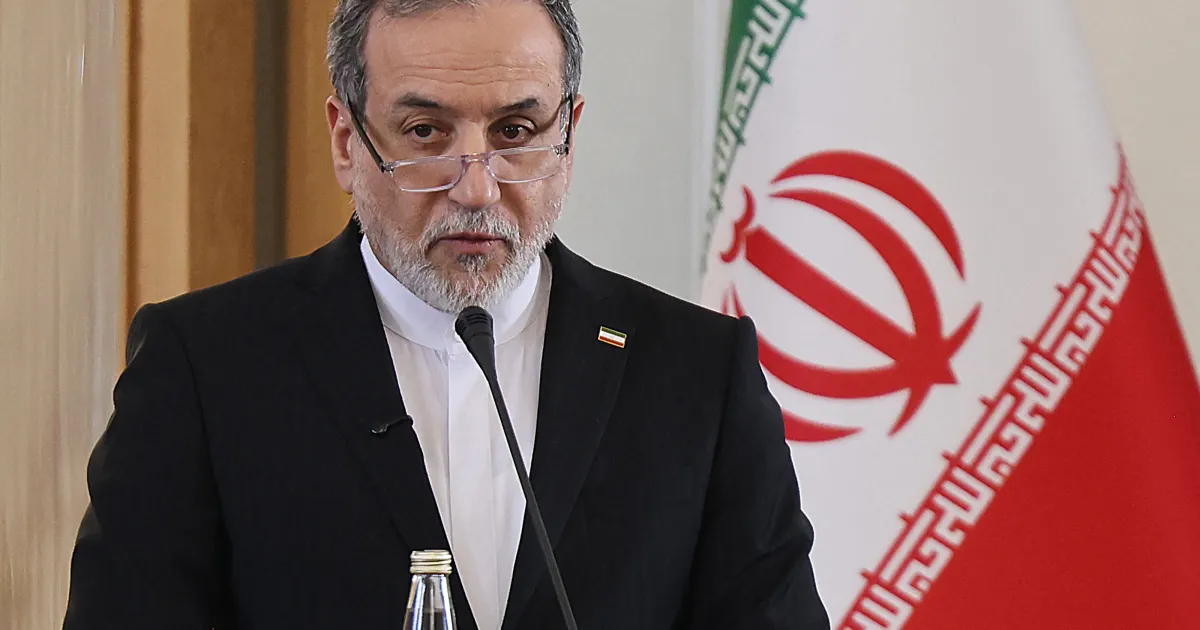
Iran foreign minister has warned that the country’s armed forces stand ready to respond “immediately and powerfully” to any attack by the United States, following renewed military threats from US President Donald Trump.
In a post on social media late Wednesday, Abbas Araghchi said Iran’s military was fully prepared to defend the country against any aggression.
“Our brave Armed Forces are prepared — with their fingers on the trigger — to immediately and powerfully respond to any aggression against our land, air, or sea,” Araghchi wrote.
Lessons From Past Conflict
Araghchi said Iran had drawn important lessons from last year’s conflict with Israel, which culminated in US strikes on Iranian nuclear facilities.
He said experience gained from the 12-day confrontation had strengthened Iran’s ability to respond more quickly and decisively to future attacks.
“The valuable lessons learned have enabled us to respond even more strongly, rapidly and deeply,” he said.
Trump Revives Military Threats
The warning came hours after Trump again raised the possibility of military action against Iran, amid growing pressure on Tehran over its recent crackdown on antigovernment protests.
In a post on his Truth Social platform, Trump said a “massive armada” was moving toward Iran and was ready to carry out its mission “with speed and violence” if required.
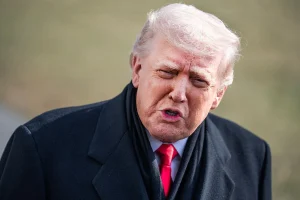
Trump urged Iran to return to negotiations, calling for a deal that would prevent Tehran from developing nuclear weapons, and warned that time was running out.
Despite those remarks, Trump has repeatedly claimed that US strikes last year had already “obliterated” Iran’s nuclear programme. He also cautioned that any future attack would be far more severe if Iran failed to agree to a deal.
Military Pressure and Regional Signals
Trump has repeatedly suggested military action as a response to unrest inside Iran, keeping tensions elevated across the region.
While the situation briefly appeared to ease after protests subsided, tensions flared again this week after the US repositioned the USS Abraham Lincoln aircraft carrier closer to the region.
Adnan Hayajneh, a professor of international relations at Qatar University, described the deployment as a clear signal of US power intended to pressure Tehran into negotiations.
“The message is simple,” Hayajneh said. “If Iran does not comply, the US is willing to use force. This is a classic pressure tactic.”
Iran Rejects Talks Under Threats
Iranian officials have said negotiations cannot take place while military threats continue.
Araghchi said earlier this week that there had been no recent contact with US envoy Steve Witkoff and no request from Iran to restart talks.
“Our position is clear,” he said. “Negotiations cannot coexist with threats. Talks are only possible when intimidation and excessive demands end.”
However, Araghchi added that Iran remains open to a fair and mutually beneficial agreement that respects its right to peaceful nuclear technology and guarantees the absence of nuclear weapons.
Diplomatic Efforts Continue Behind the Scenes
Iranian President Masoud Pezeshkian also criticised US threats, warning they would only destabilise the region rather than improve security.
According to Al Jazeera, diplomatic channels remain active behind closed doors as mediators attempt to prevent further escalation.
Turkish Foreign Minister Hakan Fidan suggested that Iran may still be willing to revisit negotiations under the right conditions.
Rising Regional Tensions
Military activity has increased on both sides, with Iran and the US conducting exercises near the Strait of Hormuz. Iran’s Islamic Revolutionary Guard Corps has warned neighbouring countries against allowing their territory to be used for any US attack.
Saudi Arabia and the United Arab Emirates have said they will not permit their airspace to be used in any military action against Iran.
Egypt has also stepped in diplomatically, with Foreign Minister Badr Abdelatty holding separate talks with Iranian and US officials in an effort to prevent further escalation.
Despite these efforts, analysts remain sceptical that regional diplomacy will significantly influence Washington’s decisions.
“At the end of the day, Trump listens to himself,” Hayajneh said.