


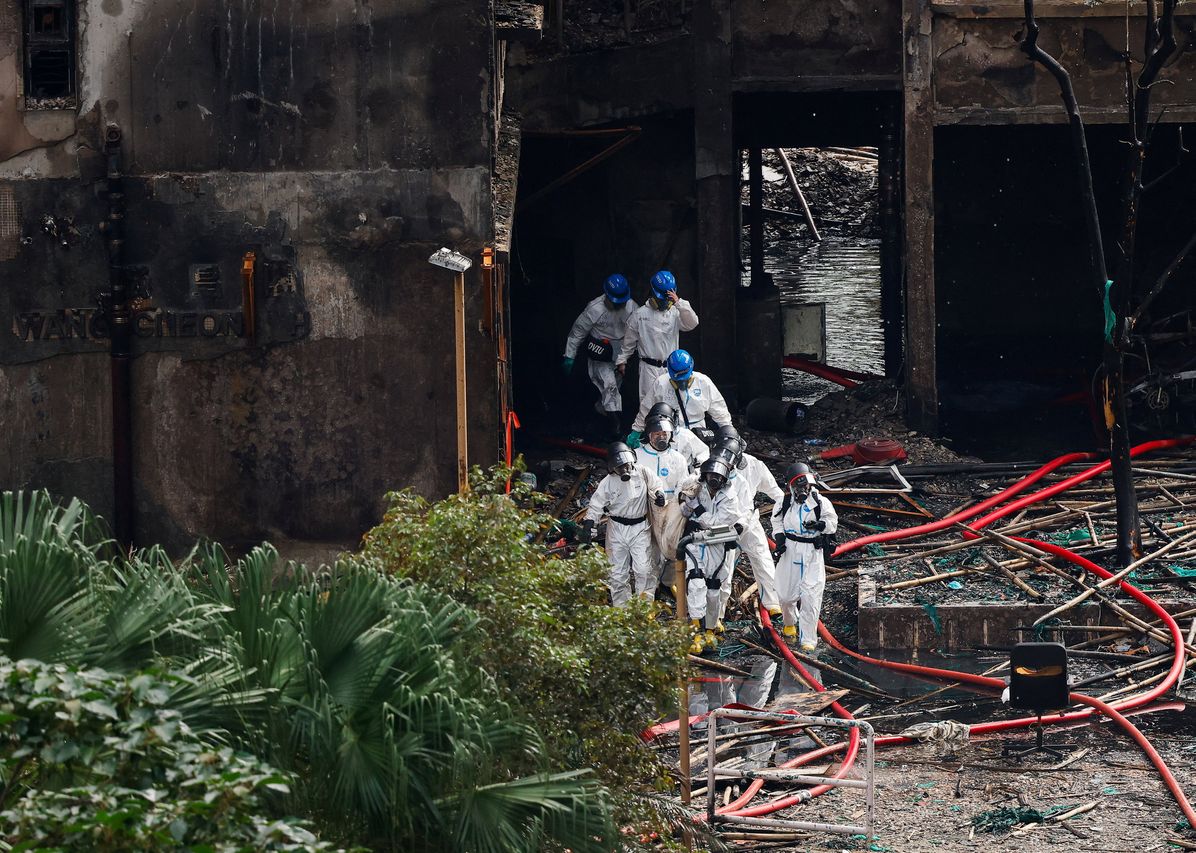
Hong Kong Chief Executive John Lee has announced the creation of an independent, judge-led committee to investigate the city’s deadliest fire in decades. The blaze, which tore through seven tower blocks at the Wang Fuk Court housing complex, has claimed at least 151 lives and left nearly 80 injured.
Lee vowed that the investigation would uncover the full truth behind the disaster, saying the government is committed to accountability and meaningful reform.
“In order to prevent similar tragedies, I will establish an independent committee to examine the cause of the fire, why it spread so quickly, and all related issues,” Lee said on Tuesday. “We must uncover the truth, ensure justice is served, and bring peace to both the deceased and the survivors.”
When pressed on whether he should step down following the tragedy, Lee insisted that the priority was fixing systemic failures. “Yes, we have identified shortcomings at different stages. That is why we must act seriously—to plug all loopholes and hold those responsible accountable,” he said.
Cause of the Fire and Allegations of Substandard Materials
The fire began last Wednesday afternoon around scaffolding set up for renovation work on the high-rise complex. Investigators believe strong winds, along with substandard plastic mesh and insulation foam used during construction, contributed to the rapid spread of the flames.
Lee accused contractors of intentionally mixing authorised protective netting with substandard materials to deceive inspectors. Officials also revealed that fire alarms inside the complex were not functioning properly at the time of the disaster.
Residents had previously raised concerns about the renovation work. According to the Labour Department, people living in Wang Fuk Court were told last year that the fire risks were “relatively low,” despite their complaints about the flammability of the mesh used on scaffolding.
Tests conducted after the fire confirmed that several samples of the green mesh failed to meet fire-retardant standards. Chief Secretary Eric Chan said contractors had deliberately installed inferior materials in hard-to-reach areas to avoid detection.
Ongoing Searches, Arrests, and Criminal Investigations
Investigators have finished inspecting all but two of the seven damaged towers. Bodies have been found in stairwells and on rooftops, as residents attempted to flee the flames. Around 30 people remain missing.
Hong Kong police have arrested 13 people on suspicion of manslaughter as part of the growing criminal probe. The city’s anti-corruption agency has also detained 12 individuals in related investigations.
The arrests follow a wave of grief and public anger. Some residents and activists have demanded greater accountability and a deeper review of construction oversight.
Local media reported the detention of 24-year-old student Miles Kwan on suspicion of “seditious intent” after he distributed flyers calling for government accountability. Two others—including a former district councillor—were also detained.
When asked about these arrests, Lee said he would “not tolerate any crimes, especially those exploiting the tragedy.”
Human rights groups have criticised the authorities’ actions. Amnesty International said the government should focus on a transparent investigation rather than “silencing those who ask legitimate questions.” Human Rights Watch echoed this, urging authorities not to treat people demanding answers as criminals.
Political Backdrop and Beijing’s Warning
China’s national security office issued a statement warning against attempts to use the disaster to “plunge Hong Kong back into the chaos” of the 2019 protests. It vowed that anyone trying to disrupt the city under the guise of the tragedy would face severe consequences.
As the investigation continues, Hong Kong faces mounting pressure to address safety failures, corruption concerns, and public distrust—all while grieving one of the worst disasters in its modern history.