


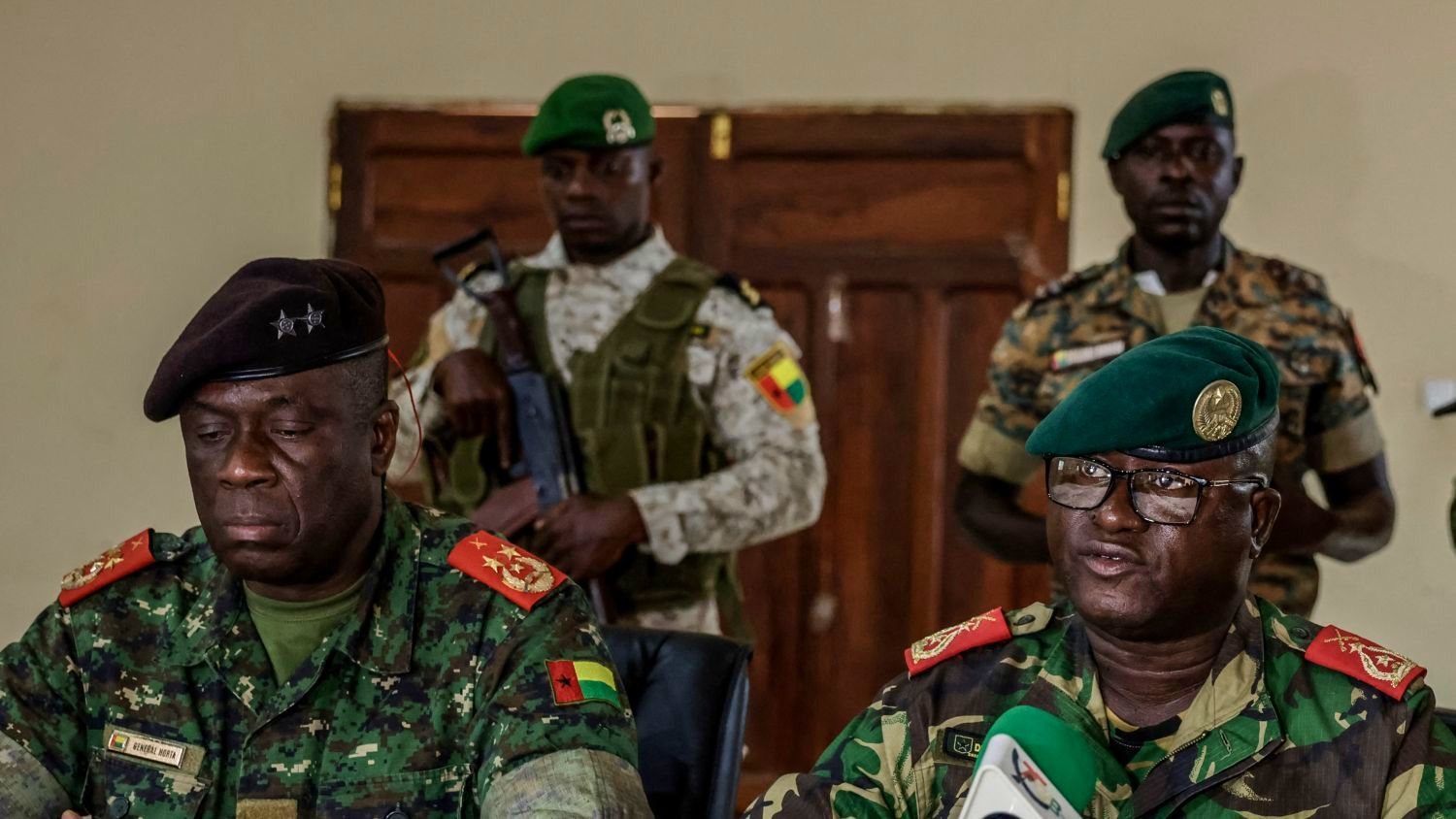
A group of army officers in coup-prone Guinea-Bissau announced on Wednesday that they had taken control of the government, just one day before the expected release of results from a highly contested presidential election.
Speaking on state television, spokesperson Diniz N’Tchama said the officers had removed President Umaro Sissoco Embalo, halted the electoral process, closed all borders, and imposed a nationwide curfew.
Shortly afterward, Embalo confirmed to France 24: “I have been deposed.”
The officers declared the creation of “The High Military Command for the Restoration of Order,” which will govern the country until further notice. They did not clarify whether Embalo was detained, though two security sources told Reuters he was being held at the army chief of staff’s office.
Meanwhile, Fernando Dias, Embalo’s main opponent in the election, said in a video message that he was safe after armed men attempted to detain him. Dias also said that former Prime Minister Domingos Simoes Pereira — who Embalo defeated in 2019 — had been taken into custody. He called the events “a false coup attempt,” asserting that it was staged because he had won the election.
The African Union and ECOWAS issued a joint statement expressing “deep concern” and demanding the immediate release of officials overseeing the electoral process, who were reportedly arrested.
A Country in Crisis
Guinea-Bissau, a small West African nation long associated with political instability and drug trafficking routes into Europe, faces yet another wave of turmoil. It remains unclear whether the coup leaders have unified support across the military or full control of the country of roughly two million.
According to the army’s statement, the takeover was triggered by alleged destabilization plots by “national politicians” and domestic and foreign drug traffickers, as well as attempts to manipulate the election results.
Gunfire Before the Announcement
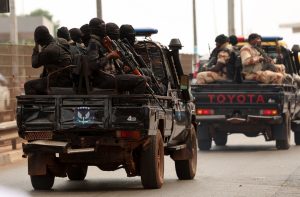
Prior to the televised declaration, witnesses reported gunfire near the electoral commission, presidential palace, and the interior ministry. Panic spread through the capital as residents fled the streets. No casualties have been confirmed yet.
The U.S. mission in Guinea-Bissau warned of military checkpoints, tear gas deployment, and the possibility of continued gunfire throughout the day.
The electoral commission had been expected to announce preliminary results from Sunday’s vote on Thursday. Both Embalo and Dias had claimed victory in the first round. Embalo had been attempting to become the first president in decades to secure a consecutive second term.
Embalo’s spokesperson accused Dias’ supporters of attacking the election commission to prevent the release of results, though no evidence was provided. Pereira, who supports Dias, denied any involvement.
Portugal, Guinea-Bissau’s former colonial ruler, urged authorities to ensure the counting and announcement of votes continue, calling on all parties to avoid violence.
A Long History of Coups
Guinea-Bissau has experienced at least nine coups or attempted coups since gaining independence in 1974. Embalo claims to have survived three such attempts during his presidency. Critics, however, accuse him of fabricating crises to justify political crackdowns.
In December 2023, several hours of gunfire erupted in the capital in what the government said was an attempted coup, leading Embalo to dissolve parliament. The country has been without a functioning legislature since then.
Tensions surrounding the recent election were already high, with opposition groups arguing that Embalo had overstayed his term. Under his leadership, international observers say the cocaine trade has flourished, with authorities seizing more than two tons of cocaine from a plane arriving from Venezuela last year.
The situation remains fluid as the military moves to consolidate its control.