


In central Gaza City, inside a small tent set up at a United Nations–run school complex, Alaa Alzanin, 41, tries to shield his family from heavy rain and the harsh winter air. He shares the cramped shelter with his wife, their five children, his 71-year-old mother, and his younger sister. Their home in Beit Hanoon, northern Gaza, was destroyed during Israel’s military offensive, forcing them to flee again and again. According to Alzanin, this is the eighth time his family has been uprooted, moving from one temporary shelter to another to stay safe from the cold.
The displacement has not only erased their home but also their stability. The thin tent walls offer little insulation, and when night falls, the family crowds close together to preserve warmth. Alzanin used to work in infrastructure and agriculture, taking on manual labor jobs that required long hours under the sun. His workdays once started at 7 a.m. and ended near 4 p.m., earning roughly 40–50 shekels ($13–$15) per day. Today, that routine is gone.
Aid That Never Came: Voices of a Growing Economic Crisis
Another displaced father, Majed Hamouda, 53, now lives at a shelter camp inside the Remal neighborhood school grounds. Hamouda has physical limitations due to a past illness and shares that his wife carries a chronic medical condition. They have five children, including a son, Yaqoub, who was once recognized by the Ministry of Education for his achievements in science. Hamouda recalls Yaqoub leading his grade and winning the “Little Scientist” award after completing several age-appropriate experiments.
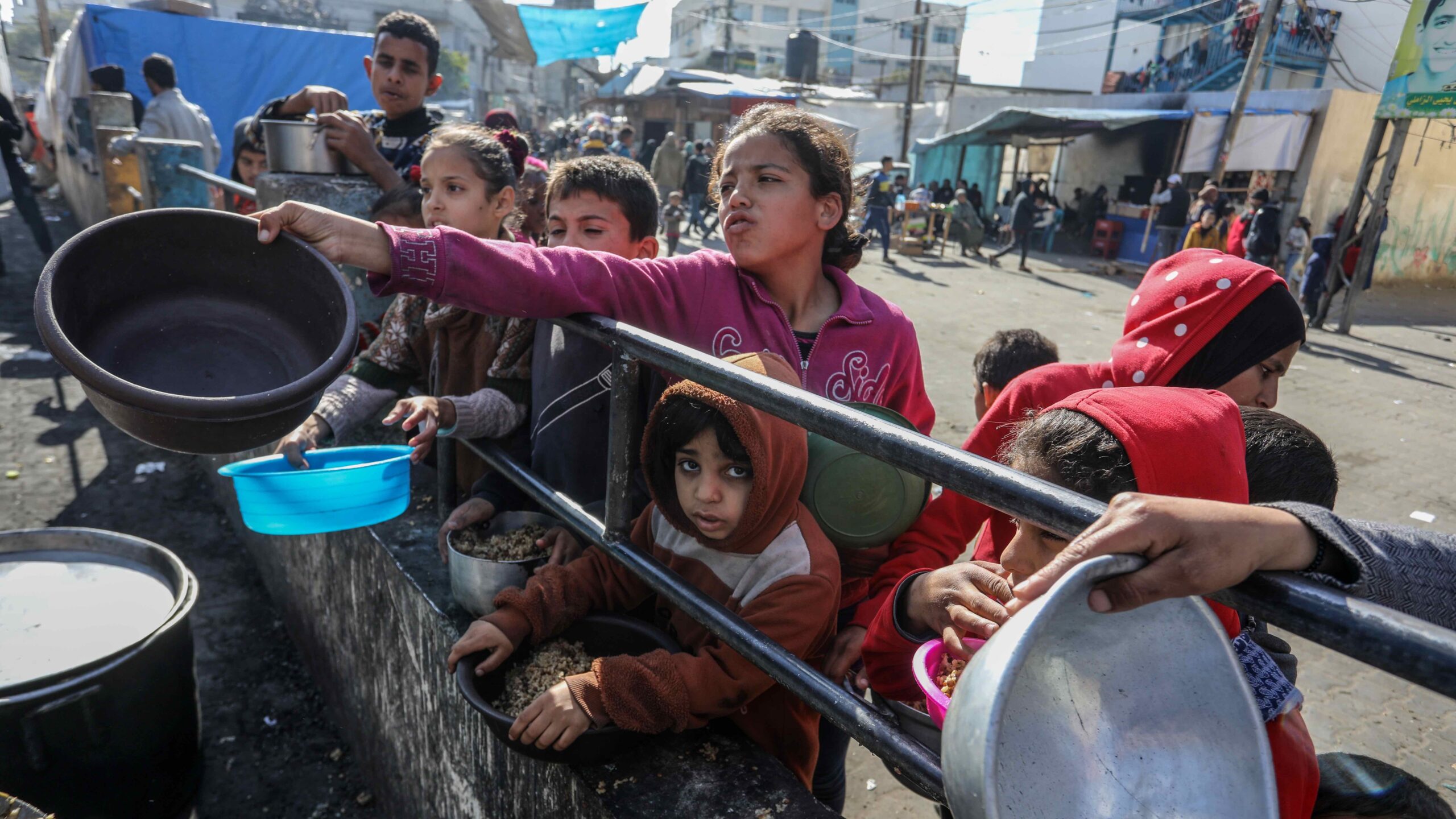
Now, instead of attending school, Yaqoub collects plastic and scrap from the streets to sell. The father watches his son chase delivery trucks carrying hot meals to the camp, gathering leftover nylon to fuel makeshift cooking fires. Hamouda describes the conditions as unbearable, saying the family often goes days with minimal food, surviving mainly on sporadic charity from neighbors and aid organizations. Payments from development ministries that once supported their household have been paused since the war intensified.
Hamouda and other displaced residents report that fresh produce, once abundant from local farms, has become scarce. Some families describe basic vegetables like tomatoes and cucumbers as luxuries they can no longer afford. Even before the 2023 escalation, poverty levels were already high, worsened by Israel’s 2007 land, sea, and air blockade. Private-sector activity—small shops, tourism services, and medium-scale businesses—once provided more than half of Gaza’s employment. That engine has now nearly stalled.
Gaza’s Economy Collapses: Unemployment at Critical Levels
Economic data from Palestinian and UN agencies paint a stark picture. Unemployment rates reportedly climbed to nearly 80 percent in the Gaza Strip, while 550,000 people across Palestine are currently without work. Gaza’s gross domestic product (GDP) dropped more than 83 percent in 2024 compared with the year before, falling to approximately $362 million. GDP per capita has declined to $161, placing it among the lowest globally.
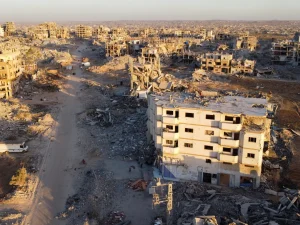
Manual laborers, shop owners, and farm workers are among the hardest hit. Gaza had previously achieved self-sufficiency in some agricultural goods, contributing an estimated 17 percent to Palestine’s total GDP. However, conflict destruction and delivery restrictions have blocked raw materials and food supplies from reaching their daily volume targets. Only two border crossings remain partially operational, and aid delivery has been restricted to far below the 2,000-ton daily target.
The winter season has intensified demand for stable housing, food, and fuel. Families relying on food delivery trucks report that while hot meals temporarily relieve hunger, nutritional needs remain unmet. The UN’s World Food Programme has stated that current supply levels do not meet daily dietary requirements.
Long Road to Recovery: SMEs and Market Reform as Urgent Needs
Gaza’s government has expressed intent to rebuild economic activity, but long-term recovery depends on border access and the availability of materials. Officials have emphasized support for small and medium enterprises (SMEs) as a short-term solution for job absorption. SMEs are seen as the fastest sector capable of reactivating the workforce while larger industrial and infrastructure systems are repaired.
The Gaza Government Media Office estimates economic losses reaching $70 billion and calls for market regulation to prevent monopolies created by import scarcity, which has distorted pricing and fueled inflation. They aim to transition from relief-based aid toward temporary youth employment programs, productive community projects, and improved economic databases for policymaking.
The United States peace plan introduced by President Donald Trump has not been fully implemented by Israel, and details surrounding the plan’s second phase remain uncertain. Despite this ambiguity, Gaza faces mounting pressure to restore its main productive sectors: industry, agriculture, and services, considered essential to long-term job creation and reduced reliance on aid.
For families like the Alzanins, survival remains fragile. Mariam, Alzanin’s wife, now in her first trimester of pregnancy, shares that she needs better nutrition and calcium, as deficiencies have affected her dental health. Though grateful for the limited meals they receive, she underscores the gap between what is seen in markets and what can actually be placed on the family table.