


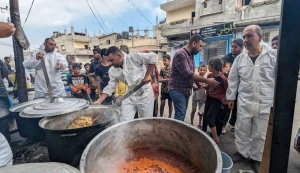
Garlic sizzles in large metal pots placed over open wood fires, lined up one after another.
Cooks pour in canned tomatoes and peppers, adding handfuls of spices as they stir the mixture with oversized spoons.
What they are preparing is far more than a simple lunch — it is a lifeline. American Near East Refugee Aid (Anera) opened this community kitchen in al-Zawayda, central Gaza, shortly after the ceasefire began six weeks ago. The organisation also operates another kitchen in al-Mawasi in the south, which the BBC visited in early May.
Two months into the Israeli blockade at that time, food and basic supplies were extremely limited.
Now, with more aid permitted to enter, the situation has somewhat improved.
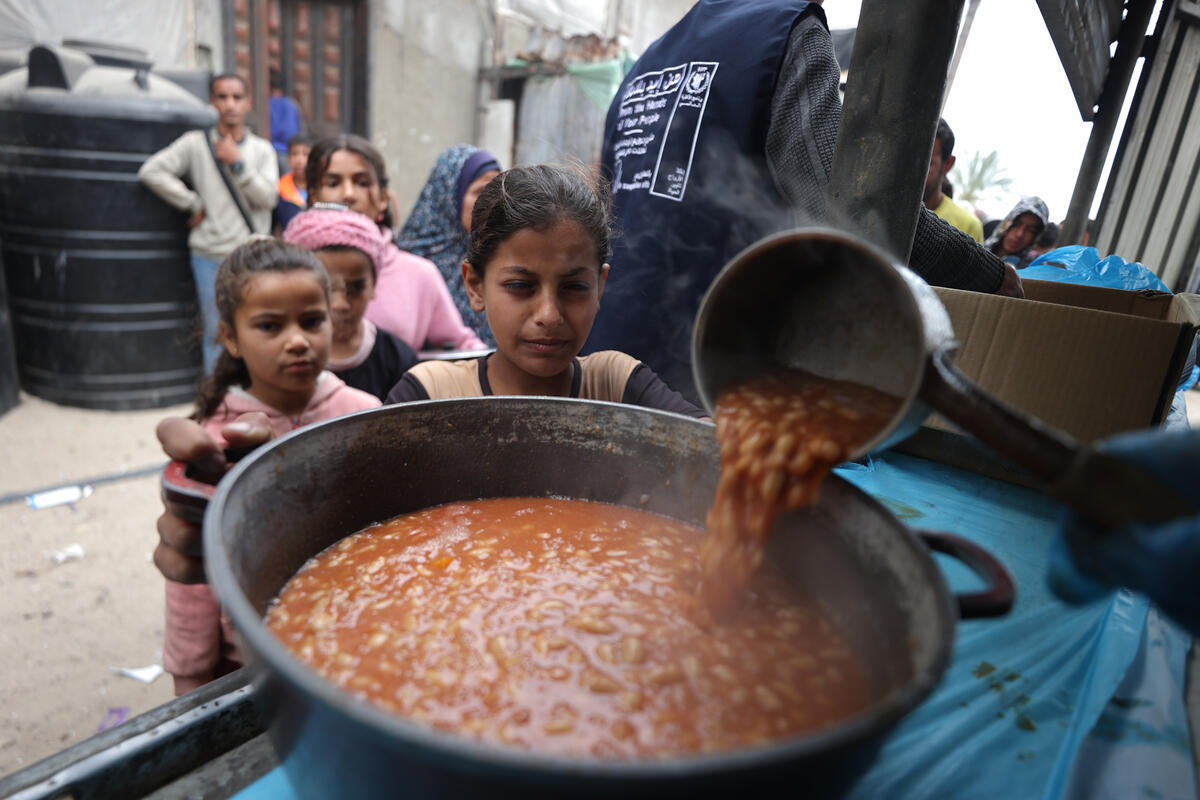
Each day, Anera provides a hot meal to more than 20,000 people.
“We used to cook with around 15 pots, and now we’re up to 120 pots a day, supporting more than 30 camps of internally displaced people,” says team leader Sami Matar. “We now serve over 4,000 families compared to only 900 six months ago.”
Food Access: Still a Major Challenge
Food insecurity has been constant since the war began in October 2023, as Israel tightly restricted supplies entering Gaza.
This has worsened an already severe humanitarian crisis. Famine was declared in Gaza City in August and is expected to spread to other parts of the strip.
Even with more food arriving through Anera’s partnership with World Central Kitchen, essential items needed for a healthier diet remain out of reach.
“We’re mostly limited to serving three types of meals weekly: rice, pasta, and lentils,” Matar explains. “We try to include vegetables like sweet peppers, onions, and potatoes to improve flavour and nutrition.”
He adds, “We need more variety — fresh vegetables and essential proteins like meat and chicken. These items are still not allowed into Gaza for humanitarian distribution.”
Fresh meat and poultry are currently only available through commercial sellers, and prices are too high for aid groups to purchase locally.
Limited Resources and Equipment
Since the ceasefire, Anera has managed to provide meat only once — and it came from tins. Their kitchens also lack proper utensils, packaging materials, and gas canisters, which would allow for cleaner cooking.
Delivering Meals Across Camps
Six months ago, horses and carts were used to transport food pots from the kitchen to the camps.
Now, with small amounts of fuel entering Gaza again, a small truck is being used to deliver the meals to the waiting crowds.
Today’s meal is spaghetti mixed with canned vegetables and tomato sauce, seasoned with generous amounts of spices. Sami gives a satisfied nod after tasting it.
Children waste no time — one red-haired boy shouts happily, “Sweetcorn and everything!” Others sit immediately on the ground, eating the pasta with their hands.
Growing Needs Across Gaza
In the past week, the UN reports that community kitchens run by various organisations collectively distributed up to 1.4 million meals daily — up from less than one million a month earlier.
Gaza’s population exceeds two million, meaning the need remains overwhelming.
Most people receiving aid come from northern Gaza, having lost their homes, loved ones, and livelihoods.
“We survive on the community kitchen,” says Aida Salha from Gaza City. “They bring us food, water, and bread. Sometimes bread comes only once every three or four days.”
Her borrowed tent recently collapsed during heavy rain, leaving her family exposed.
Prices, Poverty, and a Deepening Crisis
The UN’s World Food Programme reports that a quarter of Gaza households eat only one meal a day.
Prices for basic goods — vegetables, flour, sunflower oil — have fallen slightly but remain far higher than before the war.
Many families say they struggle to buy food simply because they have no money left.
“We’re entering the third year of this war with nothing left — no money, no gold, no possessions,” says Abdul Karim Abdul Hadi, a father of seven from Jabalia. “My son was martyred. Our four-storey home was destroyed. We’re living in a catastrophic situation.”
Daily Hardship and Uncertain Futures
With cold and wet weather setting in, life in the camps grows even tougher. Aid workers like Sami Matar witness despair every day.
“The conversations we have with families are heartbreaking,” he says. “There is deep uncertainty and exhaustion. They don’t know when they can return home or how to keep their children warm and fed.”
As the UN Security Council approves the new political framework for Gaza, residents wait anxiously to see what comes next.
Despite the fragile ceasefire, hope remains.
“The hope is simple,” Matar says. “People just want a safe place to live and the ability to cook a warm meal for their children with dignity.”