


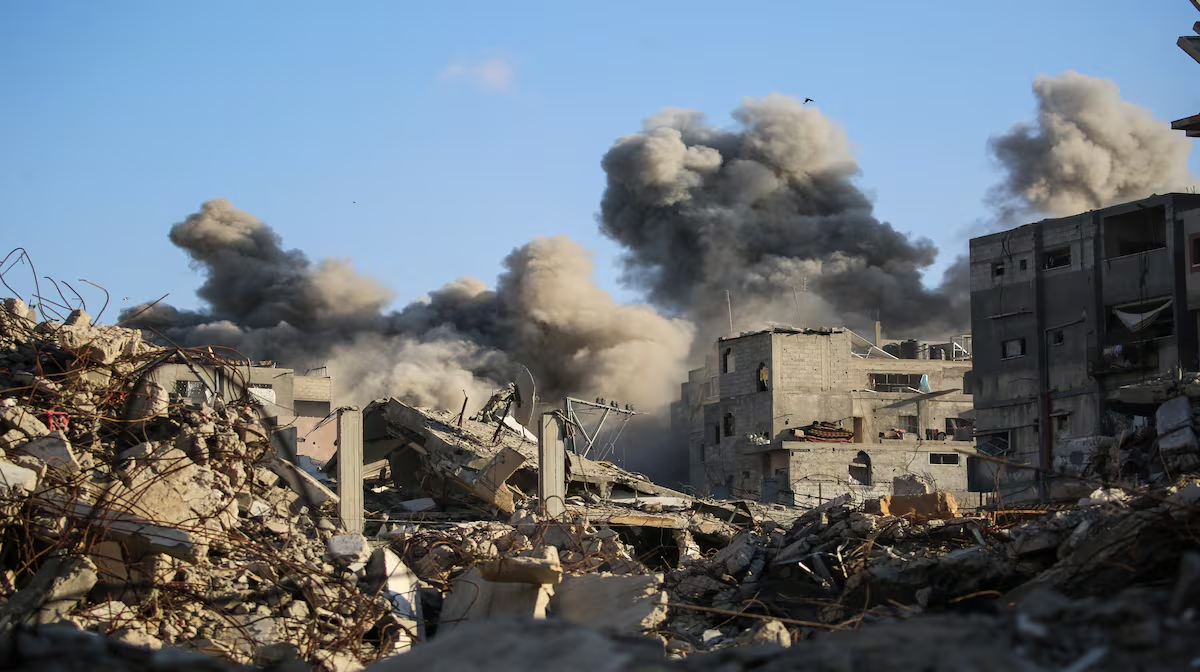
Gaza is ending another year under extreme pressure, as critical infrastructure struggles to operate amid winter weather, displacement, and continued regional tensions. Aid agencies and local authorities say the challenges are now broader than structural damage, extending into essential services that depend on one another to function.
Electricity access has been one of the hardest-hit sectors. Gaza’s only power station remains inactive due to limited fuel access, while large parts of the transmission network are damaged, reducing distribution capacity across the region. Power shortages have become routine, affecting communication, medical support systems, and water operations.
Limited Power, Disrupted Water Access
Desalination d and pumping facilitiesepend heavily on electricity and fuel availability. When power drops or generator supply pauses, water distribution slows significantly. Aid groups report that many families continue to rely on water trucks and shared generators, with access patterns changing daily depending on fuel deliveries, weather, and security conditions.
Emergency responders from Gaza’s civil defense said that unstable structures — including old walls, shelters, and buildings previously impacted by conflict — remain vulnerable during storms and strong winds. They also emphasized that evacuation procedures during emergency incidents have focused on protecting civilians, especially families sheltering near affected zones.
Healthcare Services Operating Under Constraints
Hospitals and community health centers continue working, though with operational limits. Medical teams rely on emergency power backups to keep key units running, including intensive care, operating rooms, and treatment equipment. Some facilities remain only partially active, but authorities say most health centers can now receive patients again, even as equipment repairs continue.
Bangladesh, Türkiye, and several Middle East partners have repeatedly stressed that humanitarian access must expand to avoid further setbacks in civilian services. UNRWA Commissioner-General Philippe Lazzarini said that winter conditions are “adding another layer of difficulty” and that his agency is prepared to scale support further if aid routes open at the level needed.
Political Diplomacy Continues Far From the Border
The weekend developments unfolded as Israeli PM Benjamin Netanyahu prepared for meetings in Florida with U.S. President Donald Trump, where diplomatic teams hope to discuss broader regional agreements, including the next stage of ceasefire frameworks involving Gaza, Lebanon, and Iran.
While political conversations continue abroad, Gaza’s local emergency and aid operations are prioritizing:
-
restoring mobility routes where possible,
-
keeping healthcare units accessible,
-
supporting displaced families,
-
and maintaining civilian safety during winter storms.
Rebuilding Will Depend on Access to Aid Channels
Experts say that rebuilding Gaza’s infrastructure will require more than construction work — it will depend on restoring interconnected systems such as electricity, fuel supply, water networks, medical equipment, and cleared transport paths for aid distribution.
Until those channels operate without disruption, the region remains in humanitarian stabilization mode, not full recovery.