


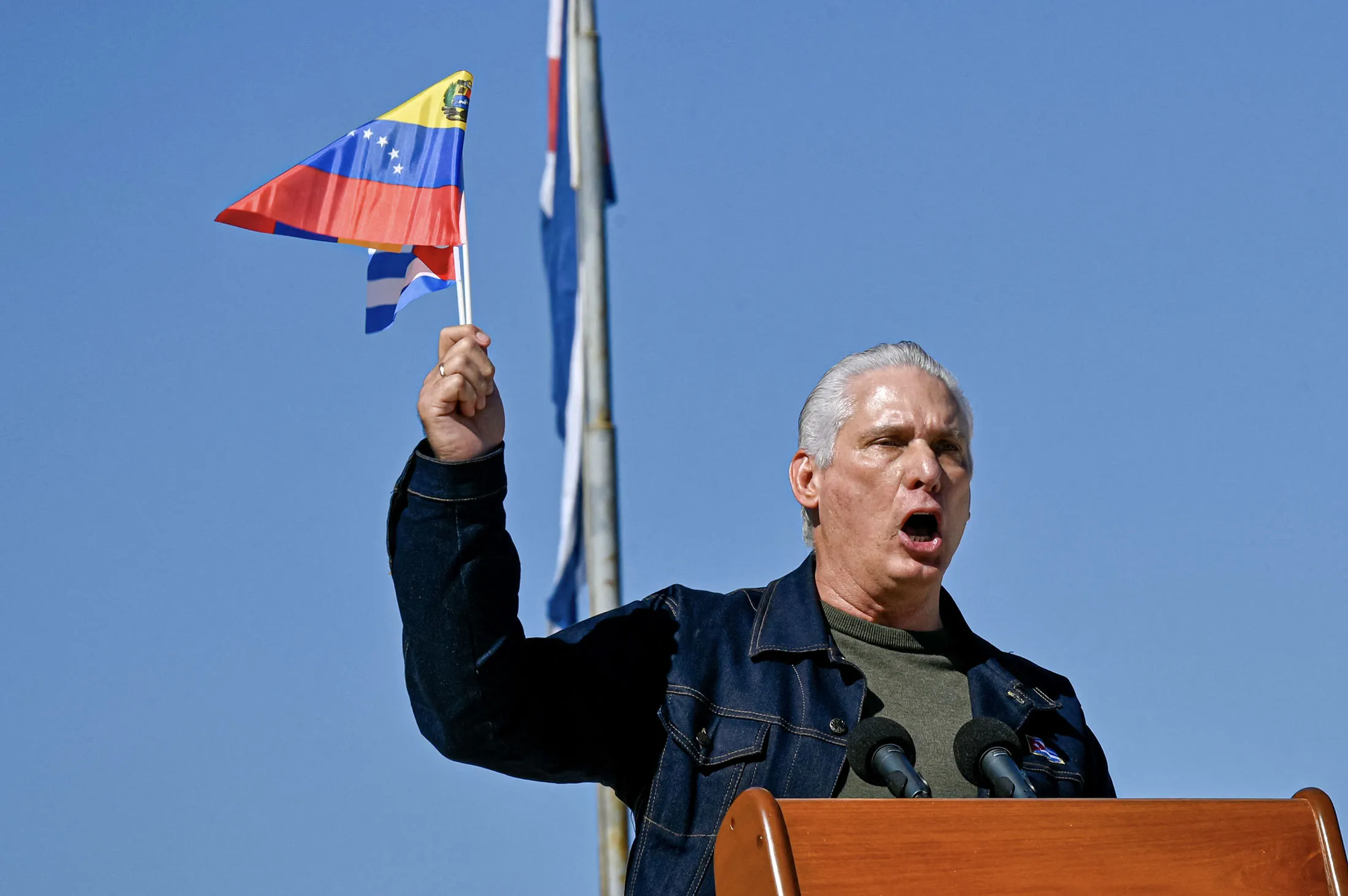
In the Americas, few nations are feeling the shockwaves from Caracas as intensely as Cuba. Since the weekend, the island nation has been forced to grapple with an uncertain future following the removal of Venezuelan President Nicolás Maduro, a key political ally and economic lifeline.
The relationship between Havana and Caracas dates back to 1999, when Hugo Chávez, then a rising socialist figure in Venezuela, met Fidel Castro, the veteran leader of Cuba’s revolution, at Havana’s airport. From that moment, the two nations built a partnership grounded in state-led socialism, exchanging Venezuelan crude oil for Cuban medical expertise.
Maduro, personally selected by Chávez and politically nurtured in Cuba, continued that alliance after Chávez and Castro passed away. His leadership represented ideological continuity for both the Venezuelan and Cuban political projects. But now, with Maduro no longer in power — forcibly taken by U.S. Delta Force units — Cuba is facing a stark turning point.
Military Presence and Public Mourning
The U.S. operation that removed Maduro also brought a rare and uncomfortable truth into public view: his personal security detail was composed almost entirely of Cuban bodyguards, and Cuban personnel hold multiple positions in Venezuela’s intelligence and military networks.
For years, Cuba had denied deploying security agents or soldiers in Venezuela. Yet, former political detainees have repeatedly claimed they were questioned by Spanish-speaking interrogators with Cuban accents, lending weight to long-held suspicions of Havana’s behind-the-scenes influence.
In response to the Venezuelan leader’s capture and the deaths of 32 Cuban nationals during the U.S. military operation, the Cuban government declared two days of national mourning, calling the raid a violation of international law.
Economic Pressure Mounts Fast
Cuba’s vulnerability is tied to energy. The island receives an estimated 35,000 barrels of oil per day from Venezuela, dwarfing contributions from its other energy partners, including Russia and Mexico. The recent U.S. seizure of sanctioned Venezuelan oil tankers has already aggravated Cuba’s ongoing fuel and electricity shortages — and analysts warn the situation could deteriorate rapidly.
Cuba is currently in the midst of its most severe economic crisis since the Cold War, with rolling blackouts reported across the entire country. Ordinary citizens have endured weeks without reliable electricity, leading to spoiled food, stagnant air, heat-driven health risks, and rising sanitation issues.
Recent outbreaks of mosquito-borne illnesses, including dengue fever and chikungunya, have strained the country’s healthcare system, once celebrated as a flagship achievement of Cuba’s socialist revolution.
Political Friction and Diplomatic Tests
Maduro’s fall has also highlighted internal tensions within Venezuela’s former cabinet, where analysts believe a faction has grown skeptical of Cuba’s political influence, claiming that Venezuela now receives little in exchange for its daily oil support.
The leadership transition in Caracas, now under interim president Delcy Rodríguez, is filling Cubans with anxiety — especially after Trump warned that failure to comply with U.S. expectations could lead to “even bigger consequences.”
Trump has referred to the shifting landscape in the region as the “Donroe Doctrine,” echoing the 19th-century Monroe Doctrine concept that Latin America is Washington’s sphere of influence.
While U.S. Secretary of State Marco Rubio moderated some of Trump’s comments, the administration still expects full compliance from Rodríguez. Rubio, a Cuban-American political figure and former Florida senator, sees the new Venezuelan conditions as central to weakening Cuba’s decades-old socialist government.
Rubio has openly signaled interest in ending 60+ years of communist rule in Cuba, describing Venezuela as Washington’s “backyard” during recent media appearances.
U.S.–Cuba Tensions Remain Sharp
Cuba’s president Miguel Díaz-Canel praised the 32 deceased nationals as “brave combatants who confronted terrorists,” honoring them for defending Venezuela from what he labeled “imperial forces.”
Despite condemnation from U.S. critics, who accuse Washington of Cold War-style interventionism, Trump remains undeterred. He has even hinted at the possibility of similar action against Colombia’s leadership if needed.
The U.S. embargo against Cuba — now in place for more than six decades — has failed to dislodge the Cuban political system so far. But the post-Maduro era could mark the most complex geopolitical challenge yet for Havana.
“Cuba is ready to fall,” Trump said aboard Air Force One — comments that have only intensified the diplomatic storm.