


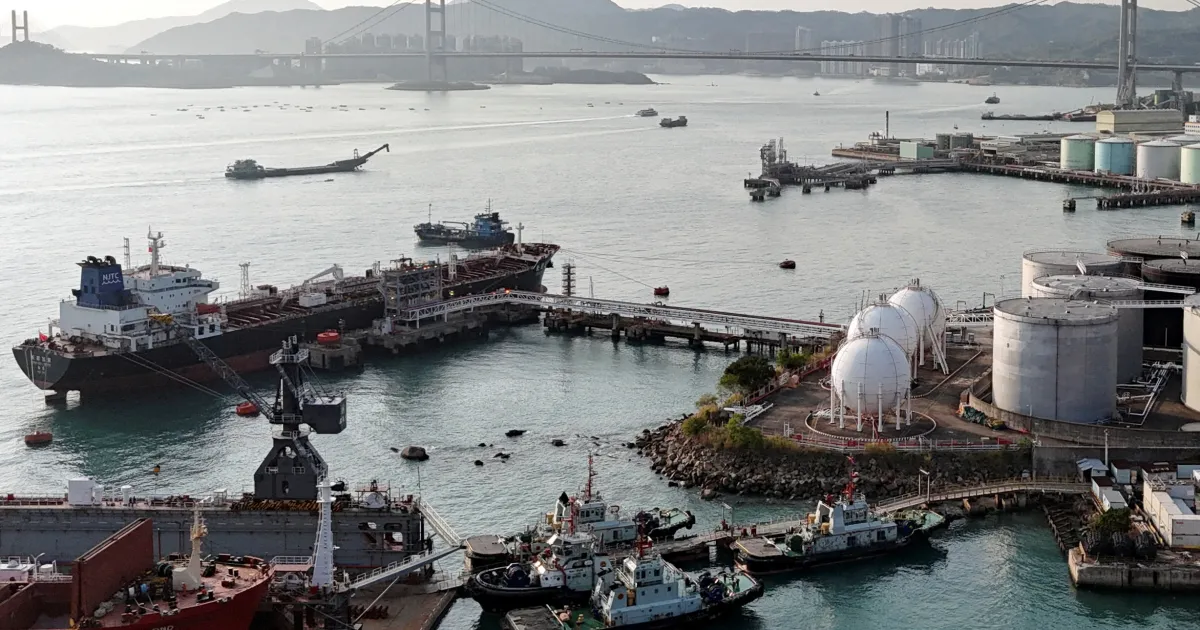
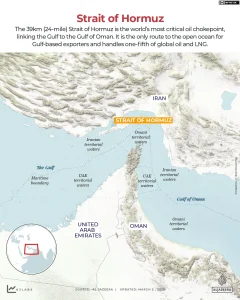
Iran’s disruption of the Strait of Hormuz has continued to shake global oil and gas markets as the United States-Israel war on the country enters its second month. Oil prices rose again after US President Donald Trump said this week that aggressive strikes on Iran would continue for at least another two to three weeks. Brent crude climbed to $106.16 a barrel on Thursday morning, after already moving above $116 earlier in the week. Many governments have begun drawing on strategic oil reserves to reduce the impact of the crisis. China, however, appears to be better positioned than many others to absorb the shock, even though it depends heavily on Iranian and Middle Eastern crude.
China is not untouched by the crisis, but years of preparation, combined with a network of small independent refineries known as “teapots”, have given it more room to manoeuvre than many countries facing the same disruption.
Why China Is Not Fully Exposed
China receives more than half of its imported oil from the Middle East, especially Iran. Kpler data cited in the report shows that in 2025 China bought more than 80 percent of Iran’s shipped oil. Its imports of Iranian crude reached 1.4 million barrels per day out of a total 10.4 million barrels per day in seaborne crude imports.
When the war began on February 28 and Iran quickly moved to block most traffic through the Strait of Hormuz, Beijing was not starting from scratch. China had already been building a more resilient energy strategy for years. President Xi Jinping had previously said the country needed to take control of its own energy security, and one of the tools that emerged from that effort was the use of smaller independent refineries able to process discounted crude from sanctioned suppliers.
These facilities have been especially useful in importing cheaper oil from countries such as Iran, Russia and, until earlier this year, Venezuela. This has helped China build a degree of protection against sudden international shocks.
What ‘Teapot’ Refineries Are
China’s “teapot” refineries are small, privately owned plants located mainly in Shandong province. They are known by that nickname because of their compact shape. Though smaller than the major state-owned energy companies, they still account for about one-quarter of China’s oil processing capacity.
These refiners have become an important part of China’s energy strategy because they are more willing to handle discounted oil from countries under sanctions. According to analysis cited in the report, this has allowed larger Chinese state firms to stay more insulated from reputational and financial risks, while private refiners absorb politically sensitive cargoes.
Some experts say China did not originally create the teapot system specifically to bypass sanctions, but that the country has allowed it to grow because it provides flexibility, redundancy and a useful buffer in times of crisis.
How They Are Helping During the War
The teapot refiners are helping China maintain stability by continuing to process imported Iranian and Russian oil while larger state-owned firms, such as Sinopec, push to rely more on official reserves instead of taking on the political and operational risk of importing Iranian crude directly during wartime.
A refinery executive in Shandong told Reuters that earlier stockpiling had reduced short-term pressure. Oilchem data cited in the article showed that in the week ending March 5, refinery utilisation among Shandong teapots rose to 54.58 percent, up nearly three percentage points from the previous week.
Even so, experts say this protection has limits. Most of the crude currently supporting these refineries was purchased before the war began. As the conflict drags on and low-cost oil becomes harder to access, the teapots are also coming under growing strain.
Why the Buffer May Not Last
Analysts quoted in the report say China’s supply system is not immune. March seaborne crude imports were lower than in February, and many of the cargoes that did arrive had been loaded before the war started. Since Middle Eastern crude makes up more than half of China’s seaborne imports, April arrivals are expected to drop sharply.
Although Iranian crude already at sea outside the Gulf could cover several months of Chinese demand from Iran, that alone will not be enough to replace broader losses from the region. Meanwhile, shipments of sanctioned Russian oil may also become less reliable, as some tankers have already changed course toward India.
There is also a commercial limit. Teapot refineries operate on narrow profit margins, so they cannot keep buying indefinitely if oil prices keep rising. Analysts said both state-owned refiners and private operators are becoming more cautious because of compliance risks, high prices and reduced profitability.
China’s Wider Energy Shield
Beyond teapot refineries, China has several other tools helping it absorb the shock. It has built large strategic oil reserves, increased imports of sanctioned oil, tolerated the use of shadow fleets and expanded pipeline deliveries from Russia.
A US House Select Committee report cited in the article said China had built a strategic petroleum reserve of roughly 1.2 billion barrels by early 2026, equal to around 109 days of seaborne import cover. Much of that oil was bought at below-market prices from sanctioned producers such as Russia, Iran and Venezuela.
China has also benefited from Iran’s selective easing of Hormuz restrictions for ships from countries it sees as friendly. In mid-March, Iran began allowing some vessels from countries including China, Malaysia, Egypt, South Korea, India and Pakistan to pass. By March 31, Chinese officials said three Chinese ships had successfully sailed through the strait.
More Resilient, Not Untouchable
Taken together, these measures have made China more resilient than many other countries hit by the Hormuz disruption. Analysts say Beijing’s strategy of stockpiling, maintaining flexible supply channels and allowing smaller refiners to handle risky crude has given it more room to cope with the crisis.
Still, this is not complete protection. Rising prices, falling Middle East arrivals and tightening margins mean China’s cushioning mechanisms can only go so far. What they do offer is time, flexibility and a stronger position than many energy-dependent economies now scrambling to respond.