


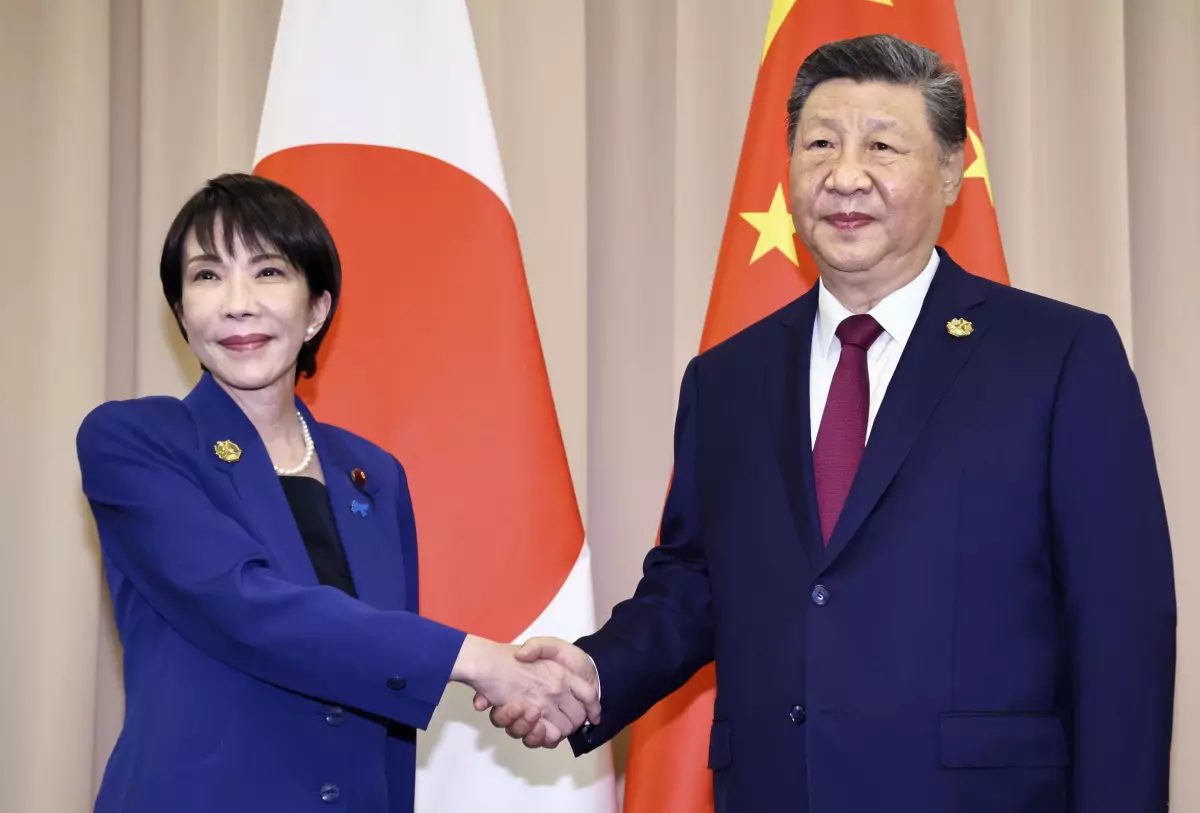
China took its dispute with Japan to the United Nations on Friday, after Japanese Prime Minister Sanae Taikachi’s recent remarks on Taiwan sparked a sharp diplomatic backlash. Tensions between the two Asian neighbours have now reached their lowest point since 2023.
In a letter to UN Secretary-General Antonio Guterres, China’s permanent representative Fu Cong warned that any Japanese attempt to intervene militarily in a cross-Strait conflict would be considered an act of aggression. Beijing claims Taiwan as its territory and has not ruled out using force to take control of the island.
The feud began earlier in November when Taikachi, who became prime minister in October, suggested Japan could respond militarily if China blockaded or attacked Taiwan. Beijing immediately condemned the comments and demanded a retraction — which Taikachi has not issued.
Since then, the dispute has escalated rapidly, spilling into trade, tourism, education, and security issues in a region already fraught with historical tensions.
What Exactly Did Japan’s PM Say?
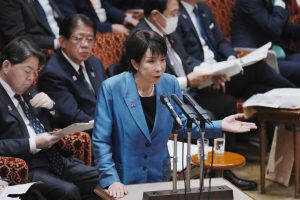
Speaking in parliament on November 7, Taikachi stated that a Chinese naval blockade or military action against Taiwan could trigger a Japanese military response. Her statement went further than previous leaders, who typically voiced concern over Taiwan without mentioning specific reactions.
“If it involves warships and military action, it could become a survival-threatening situation,” she said during her first parliamentary questioning.
China’s foreign and defense ministries immediately protested. The Chinese consul general in Osaka went further, posting a threatening message on X (later deleted), saying China would “cut off that dirty neck” if provoked. The post angered Japanese officials, who demanded explanations and called the message “extremely inappropriate.”
China later summoned the Japanese ambassador, warning Japan of a “crushing defeat” if it interfered with Taiwan. Japan responded by summoning China’s ambassador the next day.
Although Taikachi later said she would avoid hypothetical scenarios, she maintained her original stance and declined to retract the comments.
How Have Tensions Escalated Since?
The spat has grown into an economic confrontation. On November 14, China issued a no-travel advisory for Japan, a blow to Japan’s tourism sector, which welcomed 7.5 million Chinese visitors between January and September. Several Chinese airlines soon offered refunds or free flight changes on Japan routes.
China’s Education Ministry warned Chinese students in Japan about safety concerns. Both countries have recently reported attacks on each other’s nationals, though links to the diplomatic row remain unclear.
Territorial issues have also resurfaced. China announced coastguard patrols near the disputed Senkaku/Diaoyu Islands, prompting Japan to condemn what it called a brief incursion into its territorial waters.
China then suspended the screening of Japanese films, banned some Japanese seafood, and postponed a cultural ministers’ meeting with Japan and South Korea.
Symbolic Gestures and Diplomacy
On November 18, diplomats from both countries met in Beijing, but tensions remained. Chinese official Liu Jinsong wore a suit associated with anti-Japanese student protests from 1919 — a gesture Japanese media described as “a symbol of defiance.” Photos also showed Liu with his hands in his pockets, viewed as disrespectful during formal talks.
Talks ended without progress. China repeated its demand for a retraction, while Japan insisted Taikachi’s remarks reflected its established position.
The Historical Context
Sino-Japanese relations carry a long and painful history. Japan invaded and occupied large parts of China between 1894 and 1945, and memories of wartime atrocities still influence Chinese public sentiment.
After Japan’s defeat in World War II, Taiwan was returned to China. In 1972, Japan officially recognised the People’s Republic of China and adopted the “one China principle,” though it has maintained close unofficial ties with Taiwan.
For decades, Japan has followed a policy of “strategic ambiguity,” avoiding clear statements on whether it would militarily defend Taiwan—similar to the U.S. approach.
How Important Is Trade Between the Two Countries?
China’s commerce ministry says the relationship has been “seriously damaged” by Taikachi’s comments.
China is Japan’s second-largest export market, buying mainly machinery, electronics, and automobiles — worth around $125 billion in 2024. Japan’s seafood industry is also heavily dependent on Chinese customers.
Meanwhile, Japan is China’s third-largest trading partner, purchasing $152 billion in Chinese goods last year.
China has used trade retaliation before. In 2023, it banned Japanese food imports after Japan released treated wastewater from the Fukushima plant — a ban lifted only on November 7, hours before Taikachi made her controversial remarks. In 2010, China also halted rare earth exports to Japan during a maritime dispute.