


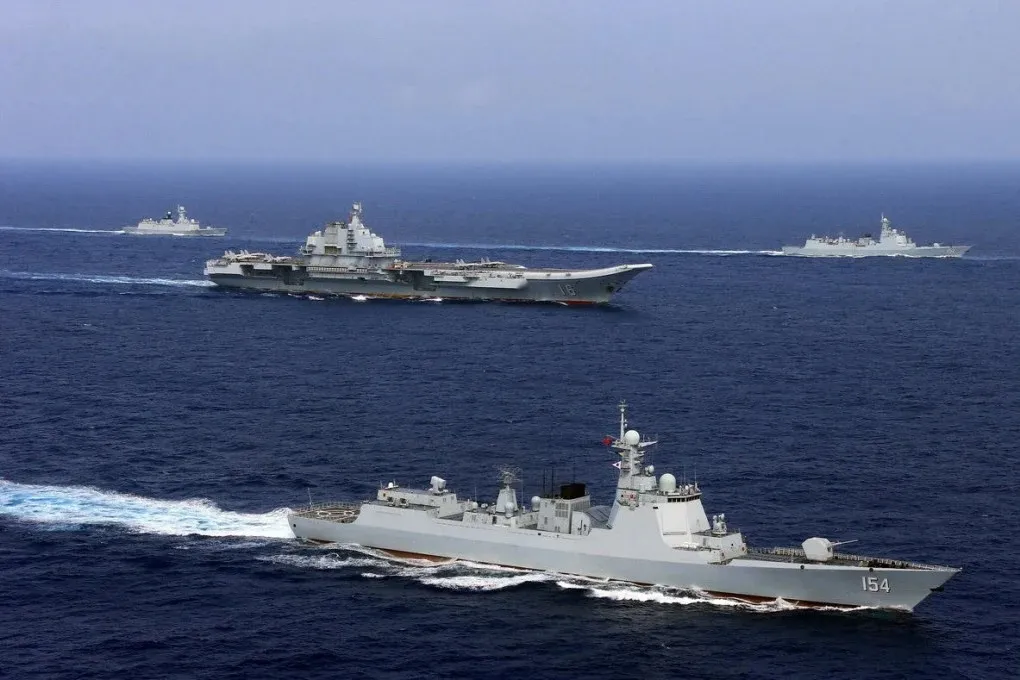
Joint naval exercises involving several members of the BRICS grouping — including China, Russia, Iran, and South Africa — have begun off South Africa’s coastline, underscoring growing geopolitical strains in global maritime security.
The weeklong drills, titled Will for Peace 2026, started on Saturday and are being led by China from Simon’s Town, a strategic port where the Indian and Atlantic oceans converge. According to China’s Ministry of National Defence, the exercises include rescue missions, maritime strike simulations, and technical exchanges among participating navies.
South Africa, the host nation and current chair of BRICS, described the manoeuvres as a necessary response to increasing maritime tensions worldwide.
Who Is Taking Part — and Who Is Observing
China and Iran have deployed destroyers, while Russia and the United Arab Emirates contributed corvettes. South Africa is participating with a mid-sized frigate.
At the opening ceremony near Cape Town, Chinese officials confirmed that Brazil, Egypt, Indonesia, and Ethiopia are attending as observers. South Africa’s joint task force commander, Captain Nndwakhulu Thomas Thamaha, said the drills go beyond routine military cooperation.
“These exercises are a clear statement of intent,” Thamaha said, describing them as part of a “BRICS Plus” framework aimed at protecting shipping lanes and maritime economic activity. The BRICS Plus format allows the bloc to engage countries beyond its original five members.
All BRICS members were invited, South African officials said.
Why the Drills Matter
South Africa has previously conducted joint naval exercises with China and Russia, but this year’s drills come at a particularly sensitive moment.
The South African Department of Defence said the exercises reflect a shared commitment to securing maritime trade routes and strengthening operational cooperation in support of peaceful maritime security.
The timing is notable. The drills began just days after the United States seized a Russian oil tanker linked to Venezuela in the North Atlantic, citing sanctions violations. The move followed a dramatic US operation that removed Venezuelan President Nicolás Maduro from power, alongside renewed rhetoric from US President Donald Trump about exerting control over Venezuela’s oil resources.
Washington’s View of BRICS
Trump has repeatedly accused some BRICS members of pursuing anti-American policies. Relations between Washington and China and Russia remain strained, while Iran has faced direct military threats.
India, meanwhile, has been hit with steep US tariffs amid accusations that it indirectly supports Russia by purchasing Russian oil. Since returning to office in January 2025, Trump has warned BRICS countries they could face additional trade penalties if the bloc deepens coordination.
In July, ahead of the BRICS summit, Trump said the group would be dealt with “very quickly” if it became a serious challenge to US interests.
BRICS leaders later issued a joint statement criticizing the rise of unilateral tariffs and condemning military strikes on Iran, without explicitly naming the United States.
Why India and Brazil Opted Out
Two founding members — India and Brazil — are not taking part in the naval drills. While Brazil sent observers, India chose to stay away entirely.
According to geopolitical analyst Harsh Pant of the Observer Research Foundation, India’s decision reflects a careful effort to balance relations with Washington.
“These wargames are not really part of the BRICS mandate,” Pant said, noting that the bloc was created as an economic and political partnership rather than a military alliance.
Pant added that India is wary of being associated with military activities that could shift BRICS away from its original purpose or strain its ties with the United States.
A Bloc with Limits
Despite the show of unity, analysts say deep differences among BRICS Plus members — such as Iran and the UAE, or Iran and Egypt — make the emergence of a formal military alliance unlikely.
For countries like China, Russia, and Iran, the drills help project strategic alignment at a time of heightened tension with the US. For India, however, participation carries more risks than benefits.
What’s at Stake for South Africa
Hosting the drills may further strain ties between South Africa and Washington. Since Trump’s return to office, relations have deteriorated, with the US imposing 30 percent tariffs on South African goods.
Tensions have also been fueled by South Africa’s genocide case against Israel at the International Court of Justice, a move strongly opposed by the US.
Domestically, South Africa’s government faces criticism from coalition partner Democratic Alliance, which argues BRICS has no collective defense mandate and warns the exercises risk turning the country into a pawn in global power rivalries.
As geopolitical competition intensifies, the BRICS naval drills highlight both the bloc’s growing ambition — and the internal divisions that continue to define it.