


The administration of Donald Trump has appointed Marco Rubio and former UK prime minister Tony Blair as founding members of a newly created “Board of Peace” for Gaza, according to a White House statement released on Friday.
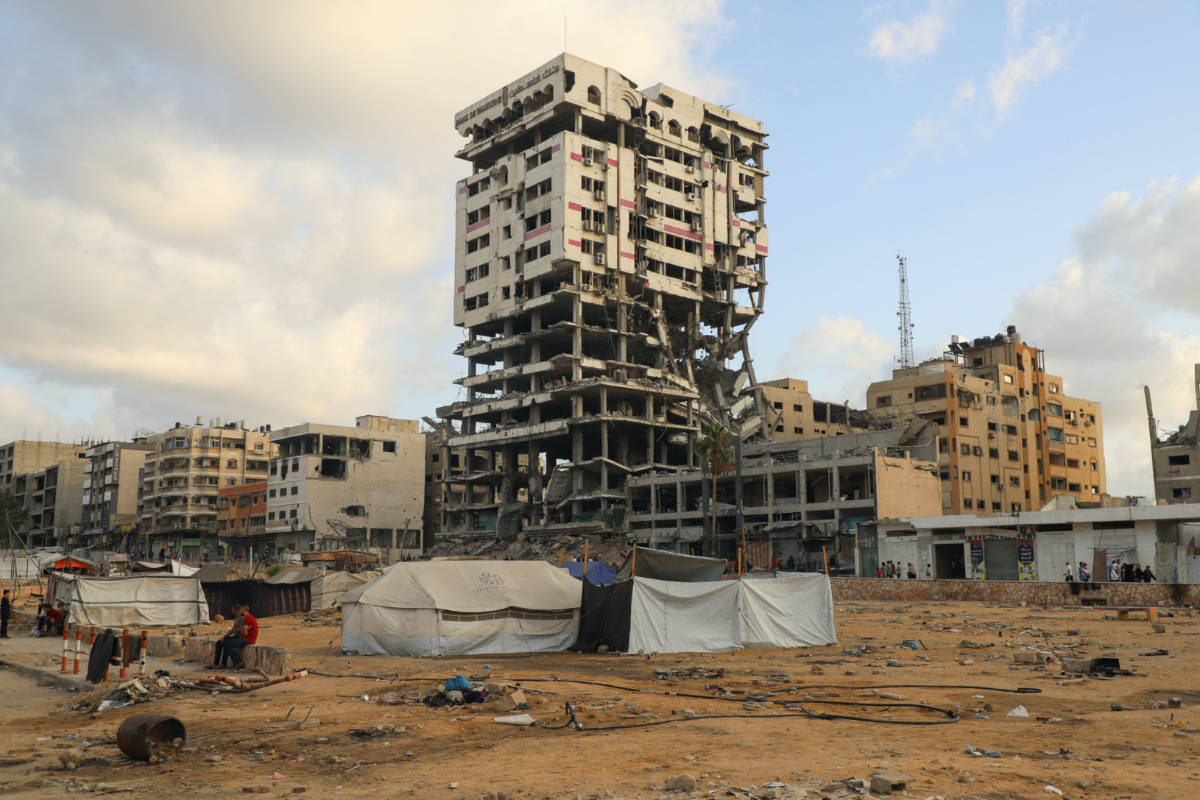
The board forms a central pillar of Trump’s 20-point plan aimed at ending the war between Israel and Hamas. It is expected to temporarily oversee Gaza’s administration and guide post-war reconstruction efforts.
Trump will serve as chairman of the board. In remarks a day earlier, he described the group as the “most prestigious board ever assembled,” adding that further appointments would be announced in the coming weeks.
Founding Members and Mandate
Alongside Rubio and Blair, the founding executive board will include Trump’s Middle East envoy Steve Witkoff and the president’s son-in-law Jared Kushner. Also named are private equity executive Marc Rowan, Ajay Banga, and US national security adviser Robert Gabriel.
Each member will be assigned a portfolio deemed “critical to Gaza’s stabilisation and long-term success,” the White House said, without detailing specific responsibilities.
Blair, who served as UK prime minister from 1997 to 2007 and later as Middle East envoy for the Quartet — comprising the US, EU, Russia and the UN — brings long-standing experience in the region, officials noted.
Parallel Palestinian Governance Structure
The announcement follows the creation of a separate Palestinian technocratic body, the National Committee for the Administration of Gaza (NCAG), a 15-member panel tasked with managing day-to-day governance in the territory after the war.
The NCAG will be led by Ali Shaath, a former deputy minister in the Palestinian Authority, which administers parts of the occupied West Bank not under Israeli control.
The White House said Nickolay Mladenov, a Bulgarian politician and former UN Middle East envoy, will serve as the Board of Peace’s representative on the ground in Gaza, coordinating with the NCAG.
Security Force and Reconstruction Plans
Trump’s plan also calls for the deployment of an International Stabilisation Force (ISF) to support security in Gaza. According to the White House, the force will train and assist vetted Palestinian police units and will be led by Jasper Jeffers.
The ISF’s mandate will be to “establish security, preserve peace, and create a durable, terror-free environment,” the statement said.
A separate “Gaza executive board” is also being formed to support governance, featuring some of the same appointees as the founding board alongside additional members.
Fragile Ceasefire and Humanitarian Concerns
The US peace plan came into effect in October and has entered its second phase, though uncertainty remains over Gaza’s long-term future and the fate of its 2.1 million residents.
Under the first phase, Israel and Hamas agreed to a ceasefire, a hostage-prisoner exchange, a partial Israeli withdrawal, and an increase in humanitarian aid. Witkoff said phase two would focus on reconstruction and full demilitarisation, including the disarmament of Hamas and other armed groups.
The ceasefire remains fragile. Gaza’s health ministry says hundreds of Palestinians have been killed in Israeli strikes since it began, while Israel reports casualties from attacks by Palestinian groups. The United Nations has warned that humanitarian conditions remain severe and has called for the unrestricted flow of aid.
The war began after the Hamas-led attack on southern Israel on October 7, 2023, which killed about 1,200 people and saw 251 taken hostage. Since then, Gaza’s health ministry reports more than 71,000 deaths from Israeli military operations — figures that remain contested and difficult to independently verify.
As the Board of Peace takes shape, questions persist over how the proposed structures will operate in practice and whether they can deliver lasting stability in Gaza.