


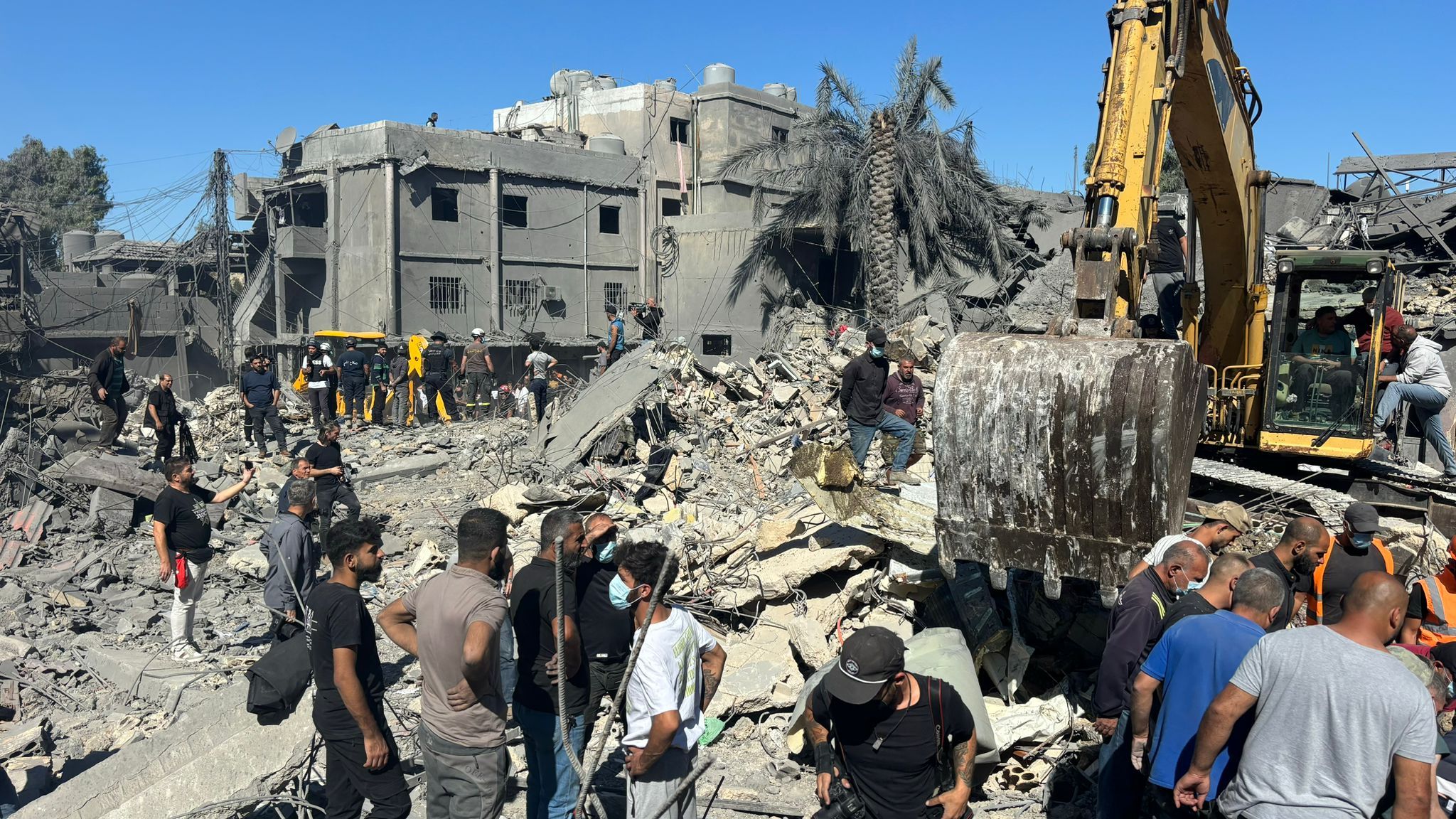
As bombs struck Lebanon’s capital, hundreds of wounded civilians rushed to hospitals across Beirut, turning emergency rooms into scenes of panic, grief and exhaustion.
At the American University of Beirut Hospital, families arrived in tears, many desperately searching for missing relatives. Children looked for parents and siblings, unsure whether they were alive. The hospital quickly became one of the main centres receiving victims after Israeli forces launched attacks on more than 100 targets across Lebanon in just 10 minutes on Wednesday, despite widespread belief that a ceasefire linked to the US and Iran would also protect Lebanon.
Dr Salah Zeineldine, the hospital’s chief medical officer, said AUB received around 76 injured people in less than an hour. Six of them did not survive. He described the hospital as an epicentre for the victims of the attacks, as doctors and nurses worked under intense pressure to treat a sudden wave of critical cases.
Children Among the Most Seriously Hurt
The scale of the casualties has shocked even experienced medical workers. According to Lebanon’s Ministry of Public Health, the death toll from Wednesday’s attacks rose to 303, with 1,150 injured in a preliminary count released on Thursday.
Dr Zeineldine said many of the most seriously wounded patients arriving at AUB Hospital were children. The oldest child treated there was 12 years old, while two babies had to be taken straight to intensive care. One was only a few months old, and the other was just weeks old.
The Health Ministry also said at least 110 of those killed were children, women and elderly people. Doctors reported that many injuries were caused by collapsing buildings, falling debris and blast pressure, which left patients with crushed bodies, broken bones and severe head trauma.
Medical staff said the victims did not fit the pattern of a targeted military strike. Instead, they described an attack that hit civilians from all walks of life, including children, women, men and older residents. Although Israel said the operation targeted Hezbollah, hospital workers said the casualties they treated were overwhelmingly civilian.
Doctors Say the Scale of the Crisis Is Unlike Anything Before
Lebanon’s healthcare system is no stranger to emergencies. Hospitals and medical teams have endured years of war, political instability and economic collapse, including the 2023 to 2024 conflict with Israel. But doctors say this latest wave of violence has pushed the system into a new and more dangerous phase.
Dr Zeineldine said what happened on Wednesday was different from previous crises in both scale and intensity. He described it as a major challenge for Beirut, saying the city had never seen so many people lost in a single day in this way.
At Rafik Hariri University Hospital, a medical coordinator from Doctors Without Borders said injured parents were calling out for their children while relatives arrived carrying photographs of missing loved ones, hoping someone had seen them.
At Hotel-Dieu de France Hospital, Lebanese Red Cross president Dr Antoine Zoghbi repeatedly described the situation as a nightmare. Though his hospital received fewer patients than AUB, he warned the strike was placing extra strain on a healthcare system that had already been severely weakened. He said hospitals have managed to keep functioning so far, but questioned whether they could continue if attacks of this scale happen again.
Shortages and Exhaustion Raise Fears for What Comes Next
Doctors across Beirut are increasingly worried that the healthcare system may not be able to hold if the attacks continue. The concern is not just about the number of casualties, but also about the shortage of essential supplies.
At Geitawi Hospital, Dr Alain Kortbaoui said Lebanon’s ongoing war and economic crisis have further damaged imports and exports, making it harder to secure medication and equipment. He said hospitals are already dealing with uncertainty over whether they will have what they need to treat future patients.
The World Health Organization has also warned that some hospitals in Lebanon could run out of life-saving trauma kits within days as medical stocks continue to fall after mass casualties caused by the strikes.
Rising oil prices linked to the broader US-Israel war on Iran are adding another layer of pressure. In Lebanon, many hospitals rely on generators because of repeated electricity cuts. That means higher fuel costs directly affect hospital operations, even as staff continue working through fatigue and emotional shock.
Doctors said hospitals will keep operating unless directly attacked, but after one of the most intense assaults in modern Lebanese history, many admit they no longer know what to expect next.
Solidarity Remains Strong, but Doctors Say the Real Solution Is Ending the War
Despite the devastation, many people in Lebanon responded with solidarity. After the Lebanese Red Cross appealed for blood donations, the call spread rapidly on social media and people began arriving at Beirut hospitals to help. Both Lebanese citizens and foreigners joined the effort, showing support for the wounded and for overworked medical teams.
Dr Zoghbi said moments of crisis often bring people together in Lebanon, but he also acknowledged that community support can only do so much against the deeper damage caused by war and displacement. He said the country carries lasting wounds, and that hospitals can only keep going by preserving supplies and staying operational.
For doctors on the front line, however, the most important form of support is political, not only medical. Dr Zeineldine said the message could be summed up in three simple words: stop the war.
As Beirut hospitals continue to care for the injured, doctors warn that without an end to the violence, the strain on Lebanon’s already fragile healthcare system will only grow worse.