


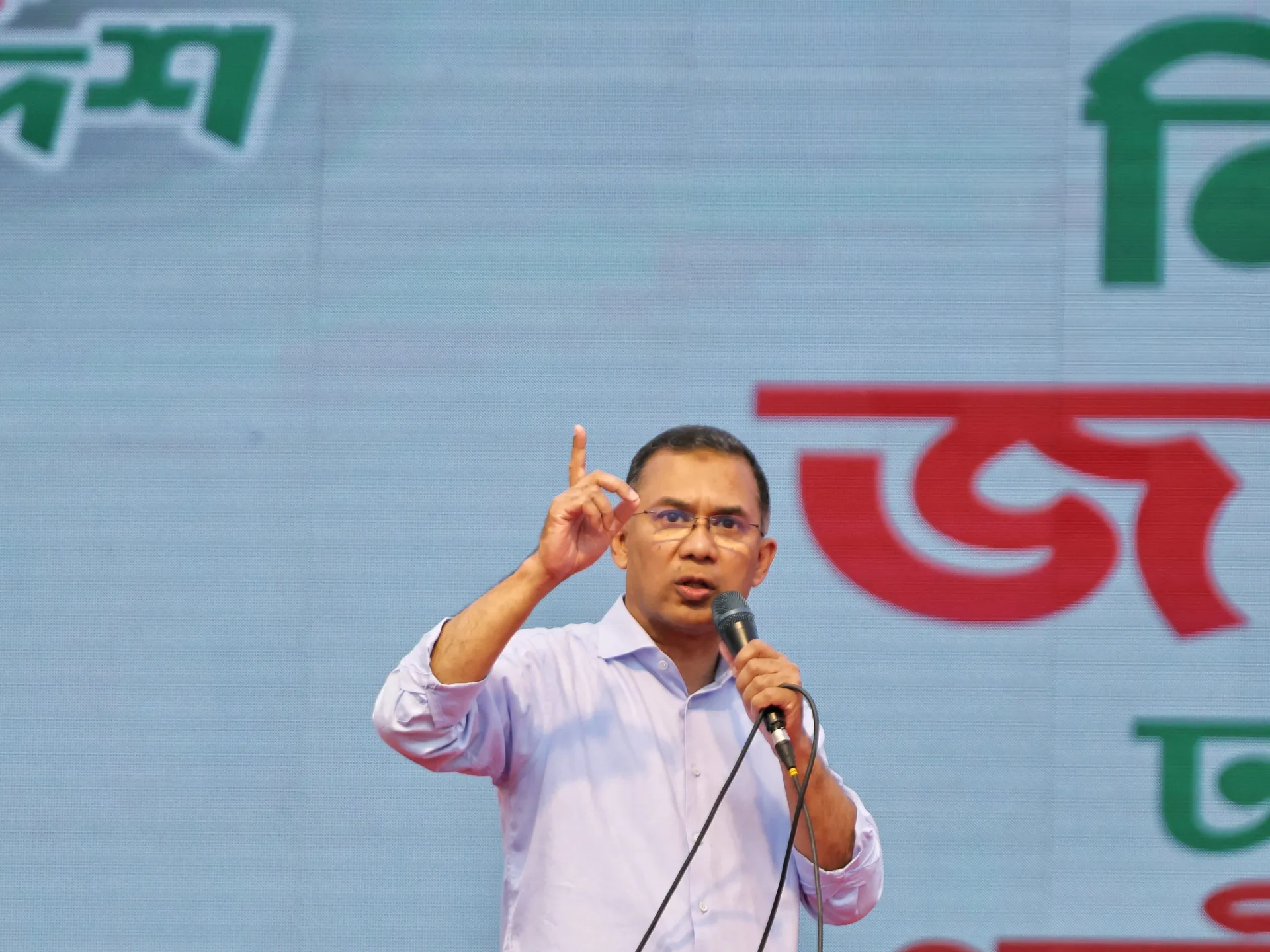
Bangladesh prime minister-in-waiting Tarique Rahman has called for national unity following a decisive electoral victory by the Bangladesh Nationalist Party (BNP) in the country’s recently concluded parliamentary elections. In his first public remarks since the results were confirmed, Rahman dedicated the win to citizens who had long struggled for democratic progress.
Speaking on Saturday, Rahman stressed the importance of cohesion despite political differences. He noted that while viewpoints and political paths may vary, the nation’s broader interests require collective unity. According to him, unity serves as a source of strength for the country, whereas division only weakens national progress.
Official Results Confirm BNP Majority
The Bangladesh Election Commission released the official gazette of newly elected members of parliament, confirming the outcome of Thursday’s landmark vote. The BNP-led alliance secured 212 of the 299 parliamentary seats, establishing a commanding majority. In comparison, the Jamaat-e-Islami-led alliance obtained 77 seats.
Meanwhile, the National Citizen Party, which is associated with youth activists and aligned with a Jamaat-led bloc, managed to win only six of the 30 constituencies it contested. The result underscored the challenge of transforming grassroots protest energy into widespread electoral support.
Interim Leadership and Transition of Power
Interim leader Muhammad Yunus congratulated Rahman and acknowledged the scale of the BNP’s victory, describing it as a landslide outcome. Yunus, an 85-year-old Nobel Peace Prize laureate, indicated that the transfer of authority to an elected administration would soon follow. He expressed confidence that Rahman’s leadership could steer the nation toward stability, inclusiveness, and sustainable development.
The transition is expected to mark a significant step in restoring a fully elected government after a politically sensitive period in Bangladesh.
Opposition Response and Acceptance of Results
Despite earlier concerns regarding vote counting, the opposition Jamaat-e-Islami ultimately accepted the overall election outcome. Party chief Shafiqur Rahman stated that the group respects the rule of law and acknowledges the final results, even after previously raising questions about alleged irregularities.
He later clarified that the party would function as a responsible and peaceful opposition, emphasizing vigilance and principled engagement in parliamentary politics moving forward.
International Reactions to the Election Outcome
International responses quickly followed the announcement of the results. United States Secretary of State Marco Rubio extended congratulations to the BNP, Tarique Rahman, and the people of Bangladesh. He also conveyed Washington’s intention to collaborate with the incoming government on regional security and economic advancement.
Such statements reflect global attention on Bangladesh’s political direction and its potential impact on regional stability.
A Remarkable Political Comeback
Rahman’s victory represents a notable political return. The 60-year-old leader only came back to Bangladesh in December after spending 17 years in exile in the United Kingdom, away from the country’s intense political landscape.
His political legacy is deeply rooted in Bangladesh’s history. His father, former President Ziaur Rahman, was assassinated in 1981, while his mother, Khaleda Zia, served three terms as prime minister and remained a dominant political figure for decades.
In his speech, Rahman emphasized that the electoral triumph belonged not only to his party but to the nation as a whole. He described the outcome as a victory for democracy and for citizens who had long aspired to democratic governance and made sacrifices to achieve it.
Political Context and Election Landscape
The election also took place without the participation of Sheikh Hasina’s Awami League, which was barred from contesting. This absence significantly shaped the competitive dynamics of the polls and contributed to the broader political shift observed in the results.
Addressing supporters initially in English before switching to Bangla, Rahman reiterated that the success of the BNP reflects the will of pro-democracy citizens across the country. He framed the victory as a collective achievement rather than a partisan milestone.
As Bangladesh prepares for the formal transition to a newly elected administration, Rahman’s call for unity signals an attempt to stabilize the political climate and foster cooperation across ideological divides while guiding the country toward its next phase of governance.