


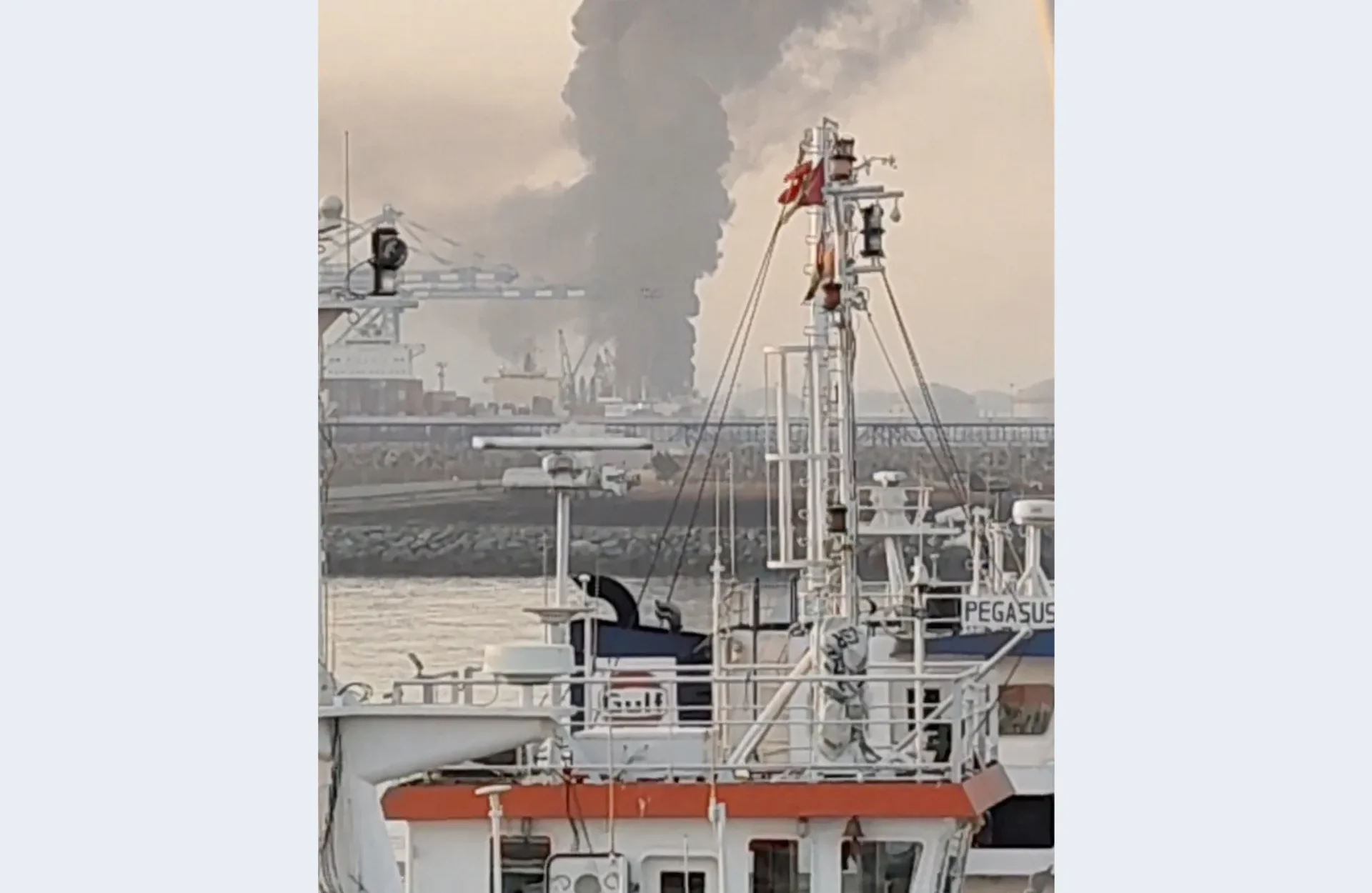
The United Arab Emirates says it has come under Iranian missile and drone attacks for the second consecutive day, adding new strain to an already fragile security situation in the Gulf. Iran, however, has firmly denied carrying out any such operations, creating a fresh dispute over what exactly is unfolding in the region.
According to the UAE’s Defence Ministry, the latest attack happened on Tuesday, just one day after earlier strikes reportedly injured at least three people and caused a fire at a major oil facility in Fujairah. The full impact of the new incident was not immediately clear. Iran’s Islamic Revolutionary Guard Corps rejected the accusation, saying its forces had not launched any missile or drone attacks against the UAE in recent days and insisting that if such an operation had taken place, it would have been publicly acknowledged.
Gulf tensions rise as Hormuz crisis worsens
The renewed accusations come at a highly sensitive moment, with fears growing that the confrontation between Iran and the United States could slip back towards open war. Washington recently launched a new operation called Project Freedom, aimed at helping vessels pass through the Strait of Hormuz. That narrow waterway is one of the world’s most important energy routes, carrying about one-fifth of global exports in oil and gas.
Since the joint US-Israeli strikes on Iran in late February, Tehran has effectively exerted control over the strait by attacking vessels or threatening ships that try to cross without its approval. That disruption has rattled world energy markets, sending oil and gas prices sharply higher. In response, the United States imposed a naval blockade on Iranian ports and shipping on April 13, further deepening the standoff.

Monday’s attack set off the latest escalation
The UAE says the current round of attacks began on Monday, when Iran reportedly launched 15 missiles, most of them ballistic, towards Emirati territory. Authorities said all of them were intercepted, but a fire still broke out in Fujairah, which hosts a crucial oil terminal. That facility has played a major role during the conflict because it allows exports to move through the Gulf of Oman without relying fully on the Strait of Hormuz. It handles about 1.7 million barrels a day, roughly half of the UAE’s export capacity.
Three Indian nationals were injured in that earlier incident, prompting India’s government to condemn the attack as unacceptable. Even so, Washington said Iran had not technically breached the ceasefire. US Defense Secretary Pete Hegseth described the American operation to protect commercial shipping as temporary and stressed that US forces had not entered Iranian waters or airspace.
A fragile ceasefire under growing pressure
Although a ceasefire between the US and Iran has been in place for about four weeks, the latest events suggest how unstable that pause remains. On Monday, Iranian forces said they had fired on US warships. US Central Command denied any ships had been hit, but confirmed that cruise missiles were launched at American naval assets and US-flagged commercial vessels. US forces said they responded by destroying six Iranian small boats along with incoming missiles and drones.
During the five weeks of war before the ceasefire began on April 8, the UAE was reportedly targeted by at least 2,800 missiles and drones, more than any other Gulf country or even Israel. That record has left the country especially exposed as the regional confrontation continues to intensify. The latest exchange of claims and denials now adds to fears that the Gulf may once again be edging closer to a broader military escalation.