


The Gulf region saw a moment of relief late on Tuesday after Iran and the United States agreed to a two-week truce, temporarily halting more than a month of intensifying attacks and heated rhetoric. Only hours before the pause was announced, tensions had appeared close to spiralling further. US President Donald Trump had issued a stark warning, while Tehran threatened more strikes across the Gulf and other areas. Yet just 90 minutes before the deadline set by Trump for Iran to fully reopen the Strait of Hormuz, the US president announced that both sides had agreed to suspend attacks for two weeks.
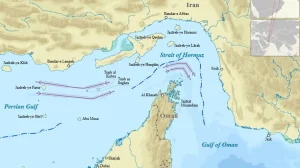
The temporary halt came with a key condition: maritime traffic must resume through the Strait of Hormuz, one of the world’s most critical energy corridors. Roughly 20 per cent of global oil and liquefied natural gas shipments normally pass through the narrow waterway. Iran had sharply disrupted traffic there in response to joint US-Israeli attacks that began on February 28.
In another statement, Trump said a 10-point proposal submitted by Iran offered what he described as a workable starting point for negotiations. Iranian state media reported that one element of the proposal called for Tehran to maintain control over the Strait of Hormuz. Iranian Foreign Minister Abbas Araghchi also said passage during the two-week truce would only happen in coordination with Iran’s military.
Gulf Countries Fear a Fragile Deal
Although talks are expected to begin this weekend in Islamabad, Pakistan, experts say Gulf governments are watching developments with caution. Their concern is not only about whether the ceasefire will hold, but also about what kind of deal Washington may ultimately accept.
Analysts say several Gulf states worry the US, eager to secure a political breakthrough and step away from the conflict, could accept terms that allow Iran to retain some leverage over the Strait of Hormuz. For energy-producing Gulf nations, that possibility raises serious alarm.
Hesham Alghannam, a Saudi Arabia-based scholar at the Malcolm H Kerr Carnegie Middle East Center, said there is a clear fear that political optics could outweigh the region’s long-term security concerns. In his view, any arrangement that leaves Iran with meaningful influence over the strait would expose Gulf countries to prolonged instability and economic pressure.
The six Gulf Cooperation Council nations all welcomed the truce, but they also made clear that reopening the Strait of Hormuz is essential and that any agreement must lead to a durable and lasting solution. A short-term pause, while helpful, does little to ease fears if the underlying threat remains in place.
Hormuz Remains the Centre of Concern
For Gulf capitals, the worst possible outcome would be a weakened but still defiant Iranian leadership holding effective influence over the strait. Such a scenario would leave the region vulnerable to repeated disruption and strategic pressure.
That concern deepened further after remarks from Trump early on Wednesday, when he suggested the possibility of a joint US-Iran venture to introduce tolls in the Strait of Hormuz. He presented the idea as a way to secure the waterway. The White House later clarified that the administration’s immediate focus remains reopening the strait fully and without restrictions, including tolls or other limitations.
Still, the comment added to unease across the Gulf, where governments already fear that the end of active fighting may not mean the end of Iranian military capability.
Despite US claims that the conflict significantly damaged Iran’s military firing capacity, Tehran still demonstrated an ability to launch targeted attacks. Even after the ceasefire announcement, dozens of Iranian missiles and drones were launched at the United Arab Emirates, Kuwait, Qatar and Saudi Arabia.
Throughout the conflict, GCC countries have largely maintained a defensive position, choosing not to enter the war directly. However, frustration appears to be growing. Bahrain and the UAE, among others, have adopted increasingly firm rhetoric, warning that their patience should not be viewed as endless.
Diplomatic Pressure Builds at the United Nations
Concern over freedom of navigation in the Gulf also surfaced at the United Nations. On Tuesday, a Bahrain-sponsored resolution at the UN Security Council called for authorisation of defensive missions to keep the Strait of Hormuz open. The proposal received backing from Qatar, the UAE, Saudi Arabia, Kuwait and Jordan, but it was vetoed by Russia and China.
The UAE’s permanent representative to the UN, Mohamed Abushahab, said no single country should be allowed to shut down such a vital artery of global commerce. He argued that the Security Council had failed to act and warned that the strait must not become a bargaining tool for Iran or a pressure point in wider international politics.
Analysts say a broader escalation would carry major consequences for Gulf economies, potentially reversing years of effort to build the region into a stable centre for finance, tourism and culture. The war has already damaged that image, and regional diplomacy in the months leading up to the conflict was partly driven by a desire to prevent precisely this kind of fallout.
Talks May Pause the War, Not the Dispute
Even if Gulf concerns are reflected in future negotiations, there is still no certainty that Iran and the United States will reach a lasting ceasefire.
While the Strait of Hormuz has become the immediate focal point, the issue of Iran’s nuclear programme remains unresolved. Trump has repeatedly insisted that Iranian uranium enrichment on Iranian soil must end. Iran, however, has signalled it is willing to discuss limits but not the full dismantling of its programme.
That gap remains one of the biggest obstacles to a permanent settlement. White House spokeswoman Karoline Leavitt underscored that point by saying the president’s red lines have not changed, particularly regarding Iranian enrichment.
For now, the two-week truce offers the Gulf a brief pause from open confrontation. But for governments across the region, the deeper question is whether this is the start of a real diplomatic solution or simply an unstable break before the next crisis. Based on your provided text, the core concerns remain centred on free navigation, regional security, and whether any final agreement truly removes the threat hanging over the Gulf.