


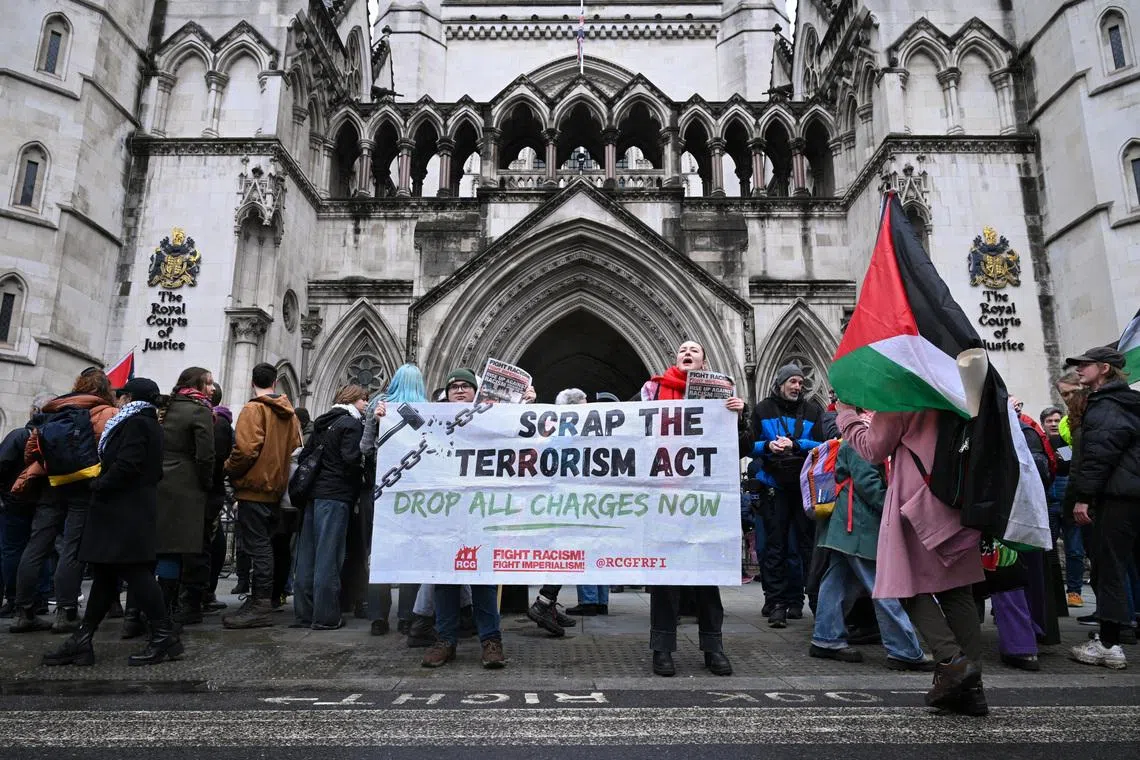
The High Court in the United Kingdom has ruled that the government acted unlawfully when it designated the pro- Palestine campaign group Palestine Action as a terrorist organisation.
The judgment, delivered on Friday, marks a significant legal development in a case that has drawn national attention over issues of free speech, protest rights and counterterrorism policy.
Despite the ruling, the court ordered that the ban remain temporarily in force while the government prepares to challenge the decision through the appeals process. Membership in or support for the group therefore continues to be treated as a criminal offence for the time being.
Government to Appeal the Decision
Following the ruling, UK Home Secretary Shabana Mahmood said the government strongly disagreed with the court’s findings and confirmed plans to appeal.
“I am disappointed by the court’s decision and reject the view that proscribing this organisation is disproportionate,” she said in an official statement, adding that the case would be pursued in the Court of Appeal.
A further hearing has been scheduled to determine whether the government has sufficient grounds to proceed with its appeal, a process that legal observers say could take months or even years.
Court Cites Disproportionate Measures
According to reporting from outside the Royal Courts of Justice in London, the judge stated that while Palestine Action had engaged in or encouraged unlawful activity, that alone did not justify its classification as a terrorist group.
The court concluded that the government’s response was disproportionate and that existing criminal laws could address specific offences without imposing a blanket proscription.
Judicial reasoning also highlighted concerns that the ban interfered with fundamental rights, including freedom of expression and freedom of assembly.
Reaction From Campaigners and Supporters
Palestine Action co-founder Huda Ammori, who brought the legal challenge against the ban, described the ruling as a major victory.
She argued that the decision represented a defence of civil liberties and criticised the original designation as an excessive use of state power. Ammori also warned that any government appeal could prolong legal uncertainty for individuals who have already faced arrest for supporting the group.
Supporters gathered outside the court reportedly reacted with celebrations as news of the verdict emerged, viewing the judgment as a vindication of protest rights.
Wider Political and Public Context
The government first announced plans in June to ban Palestine Action under anti-terrorism legislation, placing the organisation in the same legal category as internationally designated armed groups such as al-Qaeda and ISIL (ISIS). The move sparked legal disputes, protests and criticism from civil liberties advocates who argued it risked criminalising political dissent.
The decision also comes amid broader political debate in the UK over policy related to Israel’s war in Gaza, with large public demonstrations calling for a ceasefire and accountability measures.
Campaign group Defend Our Juries said thousands of people had been arrested during silent protests expressing support for Palestine Action, including individuals holding placards with political messages. The group claimed many of those arrested now face serious legal consequences under terrorism-related charges.
Legal and Political Implications
Legal analysts note that the ruling could have significant consequences for ongoing cases involving activists and supporters, though any immediate changes depend on the outcome of the government’s appeal.
The judgment is also seen as a setback for the current administration, which has faced criticism from some quarters for what opponents describe as heavy-handed responses to protest movements.
For now, the legal status of Palestine Action remains unresolved, with the ban still technically in place until the appeals process is concluded.