


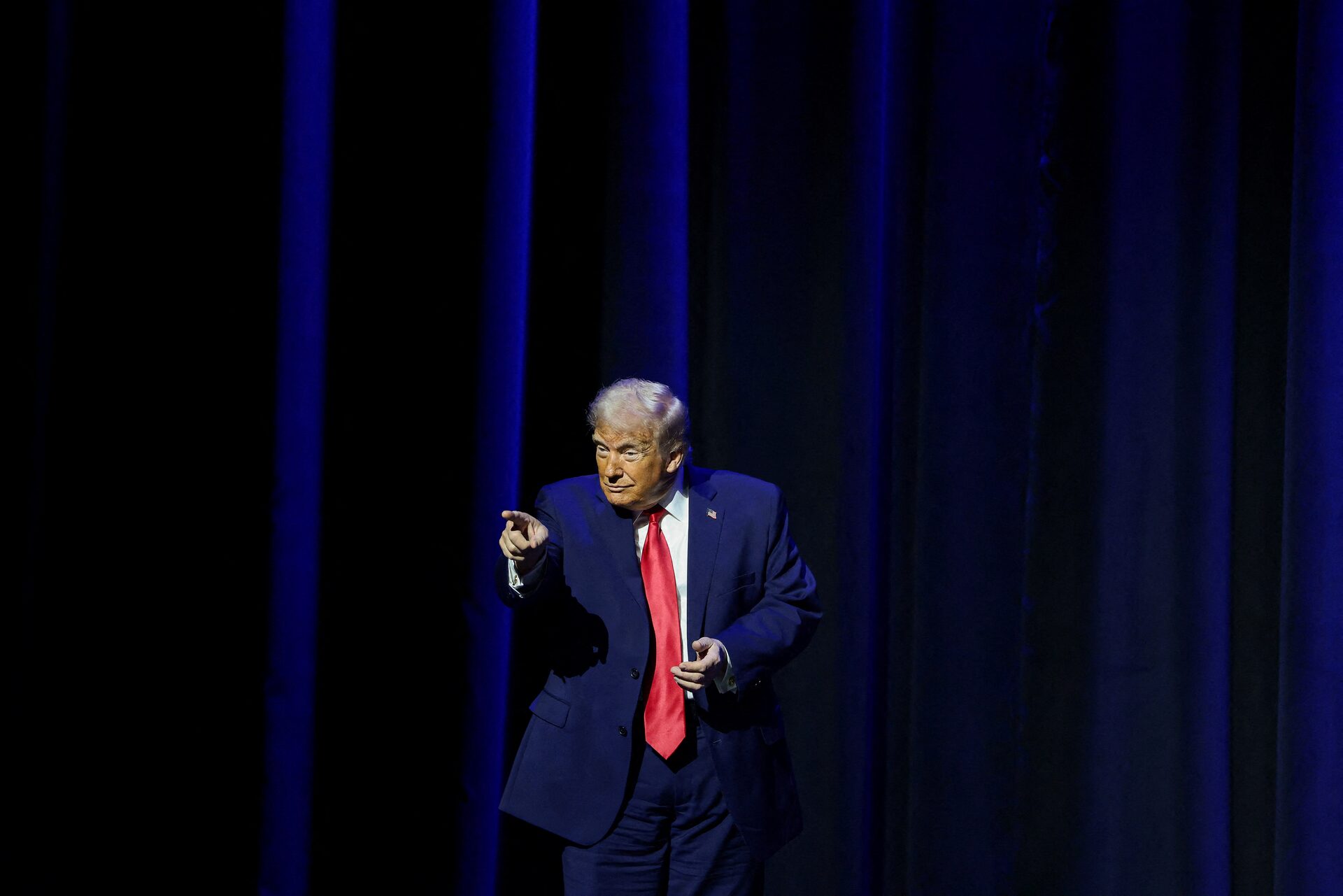
President Donald Trump has positioned himself as the Republican Party’s leading voice on the cost of living in an election year. But a review by Reuters of his recent speeches shows a president repeatedly declaring inflation beaten while rarely acknowledging the financial strain many Americans say they still face.
Across five major economic speeches since December, Trump said inflation had been defeated or was “way down” nearly 20 times and claimed prices were falling almost 30 times. Those assertions contrast with official data and with consumers’ everyday experiences at grocery stores and gas stations.
Prices Still Bite Despite Lower Inflation
Taken together, the speeches portray a president struggling to reconcile his core message — that he has resolved the cost-of-living crisis — with inflation hovering near 3 percent over the past year and continued price pressure on household essentials.
Government data show that since Trump returned to office a year ago, the price of ground beef has risen about 18 percent, while ground coffee prices are up roughly 29 percent. Food prices overall increased more than 3 percent in the year through December 2025, while average hourly earnings rose just 1.1 percent over the same period.
Republican strategists told Reuters that this gap between rhetoric and reality risks damaging Trump’s credibility — and that of his party — ahead of November’s midterm elections, when control of Congress is at stake.
“He can’t continue making claims that are demonstrably false,” said Republican strategist Rob Godfrey, warning the messaging could hurt candidates in competitive races.
Mixed Messaging Raises Party Concerns
Opinion polls suggest voters remain dissatisfied with Trump’s handling of the economy. A January Reuters/Ipsos survey found that 35 percent of Americans approve of his economic performance, up slightly from December but well below the 42 percent approval he enjoyed when he first took office.
One source close to the White House said Trump needs to address affordability more directly and take his message to key districts through personal visits, adding that his current approach “is not resonating.”
White House spokesman Kush Desai defended Trump’s emphasis on immigration, arguing that illegal immigration strains public services, disrupts businesses, pressures housing markets and suppresses wages.
Desai added that Trump frequently argues he is still cleaning up what he describes as the economic damage left by his Democratic predecessor, Joe Biden.
Trump Veers Off Topic in Economic Speeches
The Reuters review found that when Trump was not declaring inflation defeated, he devoted nearly half of his speaking time to grievances and unrelated topics.
Over roughly five hours of speeches, he spent about two hours discussing issues outside the economy. Illegal immigration dominated those digressions, accounting for 30 to 40 minutes of his remarks.
During several speeches, Trump made disparaging remarks about Somali Americans in Minnesota and repeatedly criticized Representative Ilhan Omar, a prominent Democrat and frequent critic of his policies.
Omar has previously said Trump’s rhetoric fuels threats against her and the communities she represents.

Strategists Warn of ‘Message Drift’
Republican strategists expressed concern that Trump’s meandering speaking style — which he calls “the weave” — is overshadowing his core economic message.
Doug Heye, another Republican strategist, said voters want clarity on how Trump plans to lower costs. “But they have no memory of what he says about the economy because of the sheer volume of his rhetoric,” he said.
At the World Economic Forum in Davos in January, Trump spent more than 20 minutes addressing economic issues before abruptly shifting to attacks on European leaders, NATO and the media, then pivoting back to the US economy.
Policy Proposals and Economic Reality
Trump does outline policy ideas in his speeches, including tax cuts that took effect last month, proposals to eliminate taxes on tips, overtime and Social Security benefits, efforts to lower mortgage rates, housing costs and prescription drug prices, and a plan to cap credit card interest rates temporarily.
Most economists expect the tax cuts to provide some relief in the months ahead. However, analysts told Reuters that many of Trump’s newer proposals are unlikely to significantly ease living costs before November — and some, such as limiting credit card interest rates, could restrict access to credit for lower-income households.
Echoes of Biden’s Inflation Trap
Former economic officials from previous administrations say Trump risks repeating the mistake made by Biden in 2024, when Democrats emphasized strong economic indicators while failing to acknowledge persistent price pain.
“We talked past people on inflation,” said Jared Bernstein, former head of Biden’s Council of Economic Advisers. “The numbers were improving, but there wasn’t much we could do about prices already locked in.”
With inflation easing only gradually and prices still elevated, strategists say voters are looking less for declarations of victory and more for evidence that leaders understand their economic struggles.