


As Bangladesh enters the final stretch of election campaigning, political parties are rolling out ambitious pledges on jobs, cash assistance and social protection — promises that resonate deeply with voters but raise doubts about feasibility amid economic strain.
Mohaiminul Rafi, a 27-year-old graduate, has spent years preparing for Bangladesh’s civil service exams, which he sees as the most dependable path to job security. As politicians court voters like him with pledges of cash handouts, interest-free loans and mass job creation, he remains cautious.
“Of course cash support would help,” Rafi said. “But what matters more is a healthy job market and recruitment based on merit.”
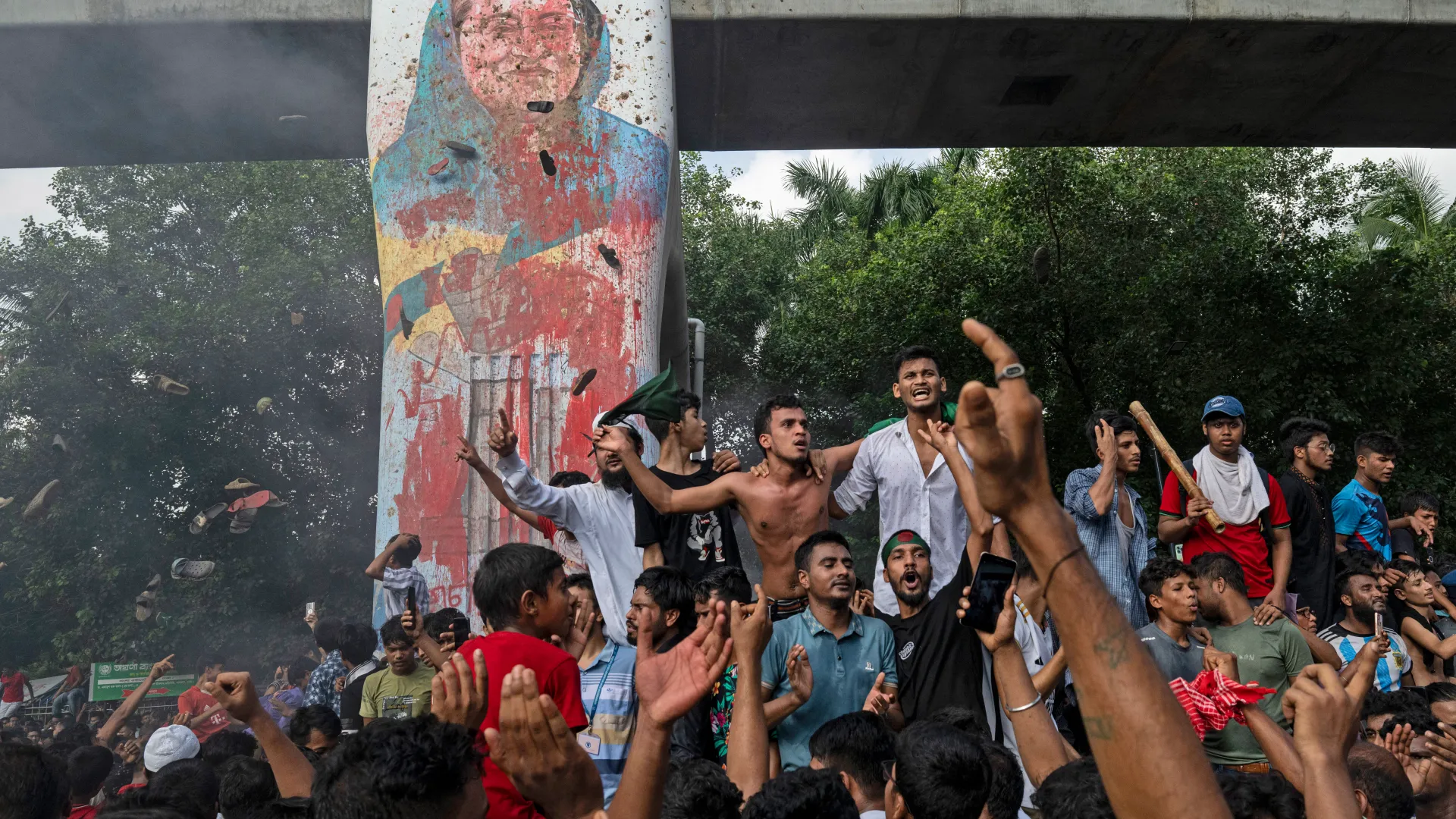
Rafi was among the young protesters who took to the streets in 2024 over a controversial job quota system — demonstrations that later escalated into a nationwide uprising that removed former prime minister Sheikh Hasina from office.
Bangladesh will now vote on February 12, with Hasina’s Awami League barred from contesting.
A Fragmented Political Field
The election is expected to centre on two main blocs: a coalition led by the Bangladesh Nationalist Party (BNP), and an alliance spearheaded by Jamaat-e-Islami, which has attracted liberal partners, including the protest-born National Citizen Party.
Campaigning has intensified across the country, with leaders and activists addressing rallies, neighbourhood meetings and online audiences. Across platforms, the message is consistent: job creation, relief from high prices, tax reform, and an end to corruption and discrimination.
Yet voters and analysts alike say the scale of the promises risks colliding with economic reality.
“Everyone talks as if jobs and social security can be switched on overnight,” Rafi said.
An Economy Under Pressure
The pledges are being made against a challenging economic backdrop. Growth has slowed to around 4–5 percent in recent years, down from more than 8 percent before the pandemic. Inflation has remained stubbornly high, eroding purchasing power and pushing up living costs.
Private investment has stagnated at about 22–23 percent of gross domestic product, while Bangladesh’s tax-to-GDP ratio remains below 7 percent — far lower than regional peers and well short of what economists consider necessary to fund public services sustainably.
Economist Hossain Zillur Rahman, executive chairman of the Dhaka-based Power and Participation Research Centre, said the interim administration led by Nobel laureate Muhammad Yunus stabilised some macroeconomic indicators after Hasina’s ouster.
But he said household-level distress and business confidence have been largely ignored.
“The economy is marked by persistent inflation, employment emergencies and stagnant wages,” Rahman said, adding that weak engagement with businesses has left investment at a standstill.
Competing Welfare Promises
Both major blocs are promoting expansive welfare programmes, though neither has released a full manifesto.
The BNP’s flagship proposal is a “family card” issued in a woman’s name, offering monthly cash support or essential goods to millions of households. Party leaders say the plan reflects an investment in people, health, education and small industries.
Economists warn, however, that nationwide implementation would require roughly doubling current social protection spending, which already consumes about 2 percent of GDP.
“You cannot provide quality social security at that level,” said Centre for Policy Dialogue researcher Towfiqul Islam Khan.
Jamaat-e-Islami, by contrast, is proposing a unified “smart social security card” linking national identity, health care, taxation and welfare benefits, arguing that integration and digitalisation would reduce corruption and leakage.
Youth, Jobs and Education
Young voters — about one-third of the electorate — are central to campaign strategies. Official data shows unemployment among graduates stands at 13.5 percent, with nearly 900,000 degree holders out of work.
The BNP has pledged to create 10 million jobs within 18 months, expand digital employment, and introduce international payment gateways to support freelancers.
Jamaat has focused on training and placement, promising to skill millions of young people, establish job banks, and provide interest-free loans to unemployed graduates — loans that would eventually need to be repaid.
Economists caution that meeting such targets would require sustained growth of 8–10 percent and a sharp rise in investment — conditions that currently appear distant.
Tax Cuts, Farmers and Healthcare
Jamaat has proposed cutting corporate tax to 19 percent and reducing value-added tax to 10 percent, arguing that better enforcement could offset revenue losses. The BNP has been less specific, instead promising deregulation and a more business-friendly environment.
Both parties have also targeted farmers with pledges of subsidised inputs, easier credit and insurance, while expanding healthcare access through recruitment drives, free medicines and new hospitals.
Analysts broadly welcome the focus on agriculture and health but warn that inflation, fiscal constraints and weak institutions could undermine delivery.
Big Promises, Familiar Doubts
For many voters, simplified pledges such as “family cards” or “social security cards” are appealing precisely because they are easy to grasp, said Asif Shahan of Dhaka University.
Still, voters remain wary of whether benefits will be distributed fairly or channelled to political loyalists.
Rahman said the election offers a chance to reset economic direction, but expectations should be tempered.
“An election may reduce uncertainty,” he said, “but dramatic improvements are unlikely without deeper reforms.”
Rafi, the job seeker, put it bluntly: “Promises are easy.”
“But if extortion in business and bribery in hiring don’t end,” he added, “then we’ll be right back where we started.”