


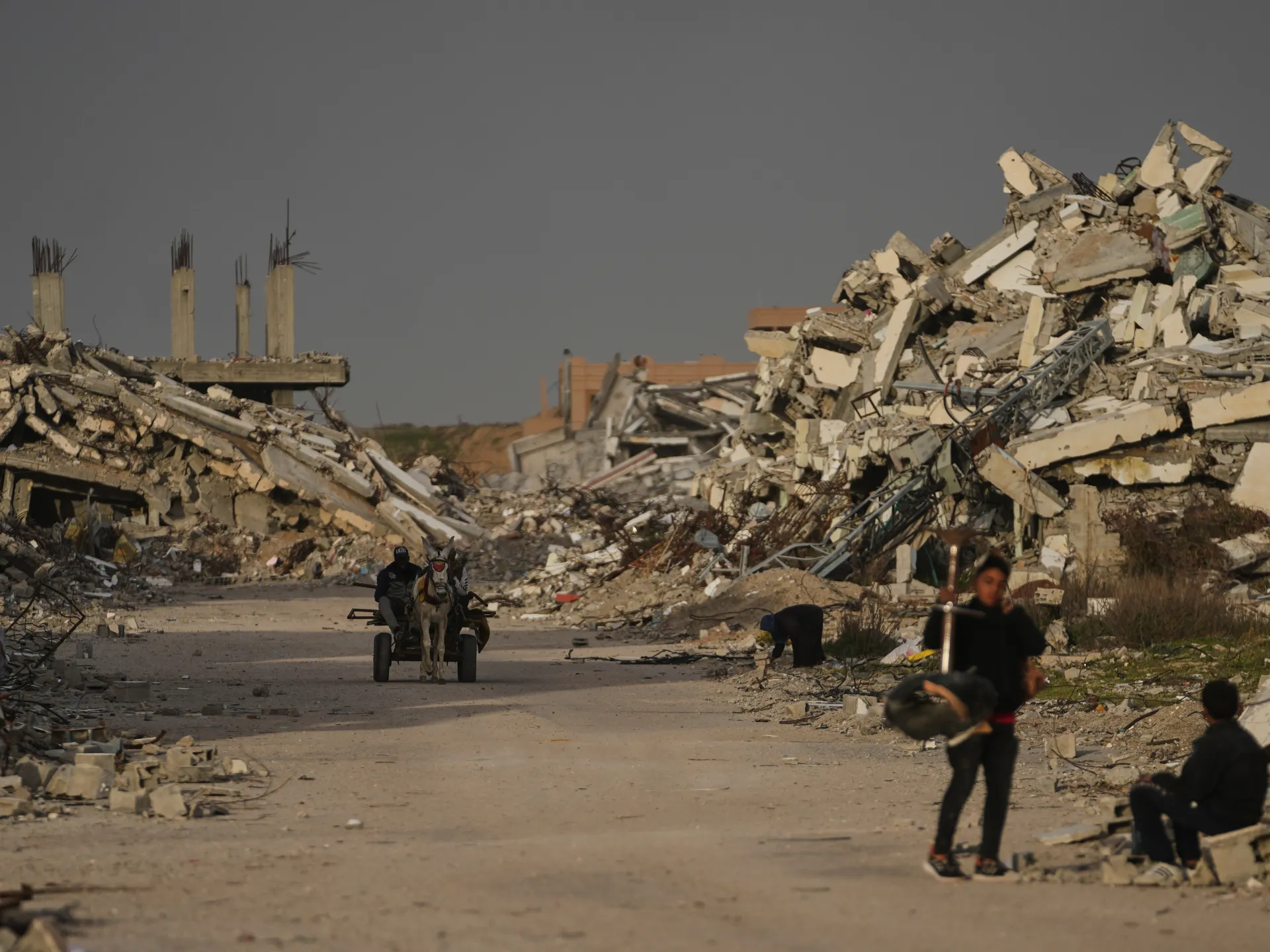
For many Palestinians in Gaza, securing an income has become a daily struggle as Israel’s ongoing blockade, repeated ceasefire violations, and prolonged conflict continue to devastate the local economy.
With infrastructure in ruins and key industries largely shut down, traditional employment has nearly vanished. As a result, residents are increasingly forced to pursue alternative and often unstable sources of income simply to survive.
From Professional Careers to Survival Work
Hala Mohammed al-Maghrabi, 24, represents a growing group of young professionals whose education no longer guarantees employment. After graduating as a nurse in 2023, she spent two years volunteering in the healthcare sector, hoping her efforts would eventually lead to paid work. That opportunity never materialised.
“Volunteering doesn’t cover basic living costs,” al-Maghrabi said. “Prices kept rising, and without a steady income, it became impossible to rely on this path.”
With Gaza’s healthcare system overwhelmed and underfunded, she ultimately left her profession. Al-Maghrabi turned instead to social media marketing and online commerce, building new skills in digital marketing to generate a modest income.
“This wasn’t what I planned for,” she said. “But even limited earnings help me meet daily needs and get through these conditions.”
Unemployment Reaches Historic Levels
Her experience reflects a broader economic crisis across Gaza. According to figures released in 2024 by the Palestinian Central Bureau of Statistics, unemployment stands at 69 percent overall and rises to nearly 80 percent among people aged 15 to 29.
Young people make up around 70 percent of Gaza’s population, meaning most residents face severe economic hardship. Many hold university degrees yet remain unable to find work aligned with their training.
Gaza’s gross domestic product has fallen by more than 82 percent as a result of the war and the destruction of economic infrastructure. Roughly 80 percent of the population now depends on international aid due to food shortages and the collapse of income sources.
Small Businesses Forced to Reinvent Themselves
The economic downturn has also hit business owners hard. Mohammed al-Hajj, once active in general trade and food supplies, said his business was effectively wiped out.
“My warehouses and goods were destroyed, and import costs and licences became impossible to afford,” he said. “Everything I worked for disappeared overnight.”
With limited options, al-Hajj repurposed part of his property into a small workspace with internet access, offering students and professionals a stable place to work or sit online exams.
“This came after all other options were exhausted,” he said. “It solved a problem for others, and it became my only source of income.”
Innovation Born Out of Necessity
As conventional jobs disappear, innovation has shifted from being optional to essential. Some Palestinians have turned crisis into opportunity by rethinking how limited resources can be used.
Ahmed Fares Abu Zayed, whose small electricity generation business shut down when fuel shortages hit, sought an alternative approach rather than closing permanently.
“We began thinking about how to generate energy using what was available around us,” he said. “That’s when we started producing electricity systems powered by plastic waste instead of fuel.”
The project, born out of necessity, provided a rare example of innovation creating broader benefits for the community.
Experts Highlight Role of Small Initiatives
Project manager and business specialist Maram al-Qarra said such initiatives are vital in Gaza’s fractured labour market.
“The issue isn’t a lack of skills or talent,” she explained. “It’s the absence of an economic system capable of absorbing that talent.”
She noted that even small-scale projects can revive parts of the economy by creating jobs and supporting related services. “When traditional employment collapses, innovation becomes the only way to create opportunities instead of waiting for them,” she said.
Between Opportunity and Exploitation
Across Gaza, many qualified professionals — including doctors, engineers and nurses — now sell water, vegetables or second-hand goods on the streets. These activities are driven by necessity rather than ambition.
“We don’t really have choices,” one young resident said. “Survival is the only goal.”
At the same time, desperation has created conditions for exploitation. Mahmoud, a Gaza resident, said the lack of regulation and support has pushed some people toward risky or unethical practices.
“People are forced to accept unfair financial arrangements just to access their own money,” he said, noting that remittances are sometimes paid out at steep discounts.
Finding Purpose Amid Crisis
Despite these challenges, some initiatives continue to provide hope. Abu Zayed said his energy project not only met immediate needs but also created employment.
“It provided work for dozens of young people in manufacturing and maintenance,” he said. “They gained skills they would never have accessed in the traditional job market.”
“Even in the harshest conditions,” he added, “a small idea can grow into something that supports the community and restores a sense of purpose.”